.svg&w=384&q=75 "Pitchgist logo")

2026 World Cup Preview: Teams to Watch in North America
With the 2026 World Cup in North America now only weeks away, the first 48‑team edition feels less like an expansion and more like an experiment on a grand scale. The giants arrive with questions, scars and, in some cases, a sense that this might be the last dance for a generation.
France (1): One last charge for Deschamps
Two titles, two final defeats on penalties in the last seven tournaments. No other nation has lived at the sharp end of the World Cup quite like France over the past quarter-century.
This will be Didier Deschamps’ farewell. In charge since 2012, the coach who turned chaos into serial contention admits it feels “strange” to know the end is coming. His squad, though, looks in no mood for sentiment.
France have rolled into North America with momentum. They beat Brazil 2-1 in March, then dismantled Colombia 3-1 with an entirely different starting XI, both matches staged on US soil. Nine games unbeaten since last June, they know these conditions, these stadiums, this travel rhythm.
And that attack. Reigning Ballon d’Or winner Ousmane Dembele, Kylian Mbappe, Michael Olise, Rayan Cherki. It is pace, invention and sheer volume of threat. Stop one, another appears. Opponents are not just facing a team; they are facing waves.
Deschamps’ last act could yet be his most ruthless.
Spain (2): A machine missing a cog
Spain arrive as European champions and as a side that simply forgot how to lose after Euro 2024. Luis de la Fuente has built a team that hums with repetition and control, a structure in which individuals shine because the system is so precise.
The brightest of those individuals is 18-year-old Lamine Yamal. Or should be. The Barcelona winger is out with a hamstring injury, and reports suggest he could miss Spain’s first two group games. For a teenager already central to everything La Roja do in the final third, that is a jolt.
The injuries do not stop there. Fermin Lopez, another Barcelona talent, is set to miss the tournament entirely with a foot fracture. Mikel Merino, who struck eight goals in 10 games for Spain in 2025 from midfield, has not played since January.
Yet when Spain look down at the team sheet, they still see Rodri — Ballon d’Or winner in 2024 — and Pedri. They still see technicians who can suffocate a game, dictate tempo and force opponents to chase shadows.
The machine has lost a few cogs. It still looks capable of grinding teams down.
Argentina (3): Messi’s kingdom, one more time
Argentina do not just arrive as holders. They arrive as a team that has learned to live with the weight of being world champions.
Lionel Scaloni’s side took the 2022 World Cup in a storm of emotion, then came back to the United States and won the 2024 Copa America with a colder edge. They then cruised through South American qualifying, finishing top with a comfort that underlined their superiority.
And yet, again, everything bends towards one man.
Lionel Messi turns 39 next month. That 2022 tournament felt like the culmination of a lifetime, a level of influence and performance that may be impossible to replicate. But this is his new home. He has 12 goals in 13 MLS games for Inter Miami this year and moves around US pitches like a player who knows every blade of grass.
Around him, Argentina bristle with attacking talent. Lautaro Martinez brings penalty-box menace, Julian Alvarez offers tireless movement and finishing, and Nico Paz, the Tenerife-born playmaker now with Como, adds another creative thread.
Messi may no longer need to carry them. He just needs to guide them.
England (4): New manager, same burden
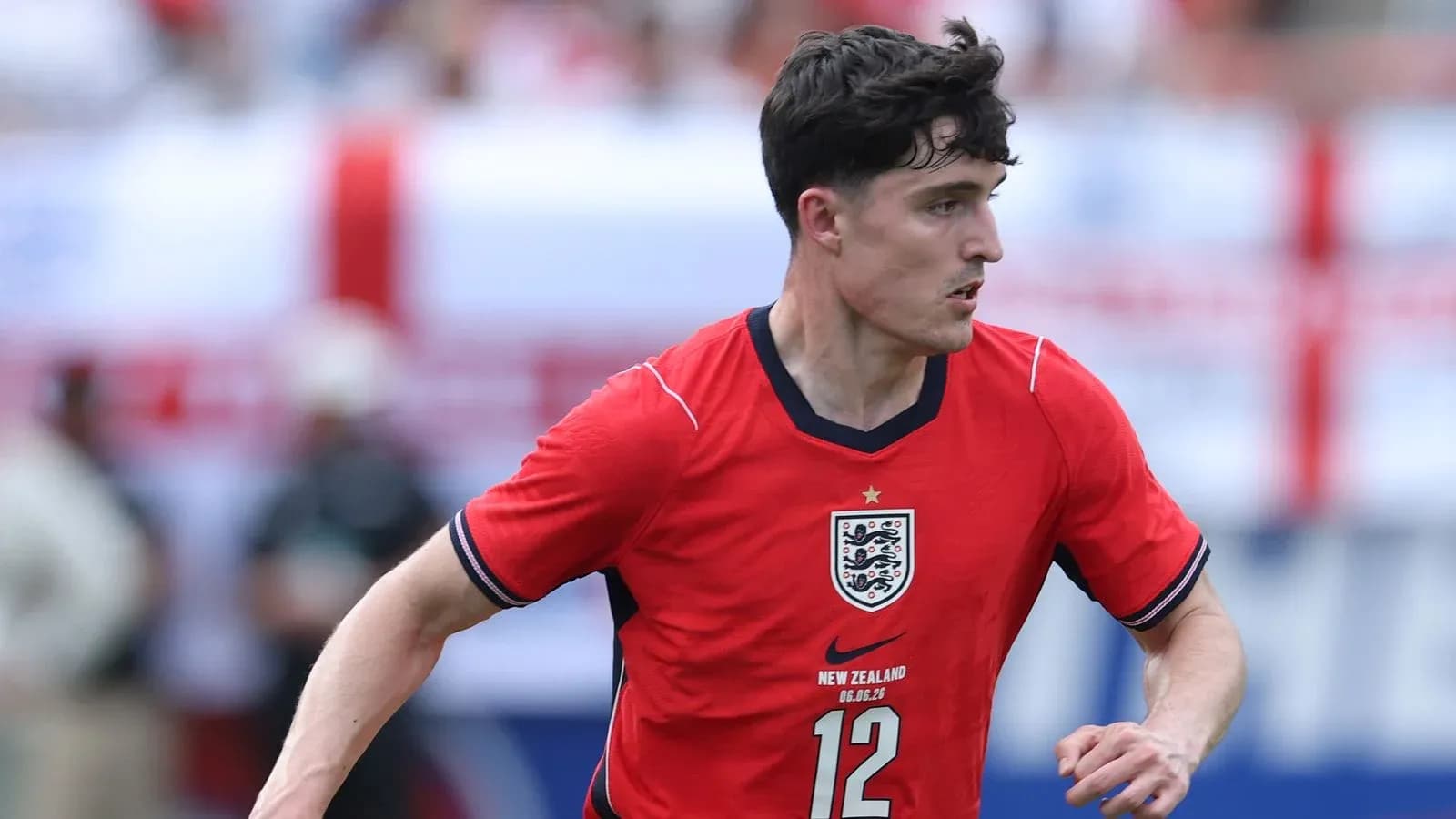
England have lived a decade on the edge of something. Under Gareth Southgate they reached a World Cup semi-final in 2018, a quarter-final in 2022, and lost agonisingly in the finals of the last two European Championships. The near-miss has become a habit.
Now comes Thomas Tuchel.
The German steps in with a clear brief: end a wait for a major trophy that stretches back to 1966. England eased through qualifying and possess depth that most nations envy, yet the doubts have not disappeared.
The March window underlined that. A draw with Uruguay, a defeat to Japan, performances that raised questions about balance and conviction. Key names such as Jude Bellingham and Cole Palmer have endured uneven campaigns, flashes of brilliance punctuated by physical and mental fatigue.
Harry Kane, though, has not slowed. The Bayern Munich striker has 58 goals this season, a staggering return that keeps him at the centre of England’s hopes. Feed him, and they can beat anyone.
Tuchel inherits talent and trauma. How quickly he can bend both to his will will define England’s summer.
Portugal (5): Between Ronaldo and the future
Portugal arrive with a familiar name still casting the longest shadow. Cristiano Ronaldo, now 41, heads to his sixth World Cup. His presence remains monumental, his influence impossible to ignore.
The question is whether that presence drives them or drags them.
On paper, this is a squad built to dominate the middle of the pitch. Vitinha, Joao Neves, Bernardo Silva, Bruno Fernandes — a quartet that can control games, break lines, and create chances from every angle. They do not need to play solely for Ronaldo. They can play through anyone.
Recent form, though, has been uneven. Portugal lifted the UEFA Nations League last year, a reminder of their capacity to win knockout football. Yet qualifying brought stumbles, including a loss in Ireland in which Ronaldo was sent off. He did not feature in their last outing, a 2-0 friendly win over the USA in Atlanta.
The midfield screams modernity. The attack still orbits a legend. How coach and captain navigate that tension will decide how far Portugal go.
Brazil (6): Ancelotti and an identity crisis
Brazil have turned to an Italian to restore their soul. That alone tells a story.
Carlo Ancelotti’s appointment is a statement and an admission. The Selecao, five-time world champions, have wrestled with their identity for years, veering between nostalgia and pragmatism. Since lifting the trophy in 2002, they have reached only one semi-final — the 7-1 humiliation by Germany on home soil in 2014.
Their recent qualifying campaign underlined the uncertainty. Fifth place in South America, six defeats in 18 games, a record that strips away the aura as much as the points.
Ancelotti’s squad selection exposes the lack of depth. Neymar, now 34 and back at Santos, returns to the fold despite not being capped since 2023. It is a nod to his enduring talent, but also to the gaps elsewhere. Vinicius Junior has become the undisputed attacking leader, the player expected to carry Brazil in the defining moments.
Ancelotti has already framed the challenge. “The World Cup won't be won by a perfect team — because a perfect team doesn't exist,” he insists. “It will be won by the most resilient team.”
Brazil will need that resilience as much as any side here. Their name still intimidates. Their football must catch up.
Germany (10): Dangerous in the shadows
Germany sit behind the Netherlands, Morocco and Belgium in the rankings. On paper, they are outsiders. On memory, they are never that.
Recent history has been brutal. Group-stage exits in 2018 and 2022, a quarter-final elimination as hosts at Euro 2024. The aura of inevitability that once surrounded the Mannschaft has been stripped away, piece by piece.
Julian Nagelsmann’s task is to build something new from those ruins. The raw materials are hardly modest. Joshua Kimmich remains a standard-bearer in midfield, Florian Wirtz brings creativity and courage between the lines, and Kai Havertz offers a rare blend of versatility and big-game nerve.
Germany might not look like champions-in-waiting. They rarely have in recent years. Yet tournaments have a habit of waking this country up.
In a World Cup without a flawless favourite, that should worry everyone else.