.svg&w=384&q=75 "Pitchgist logo")
Zinedine Zidane Returns as France Head Coach
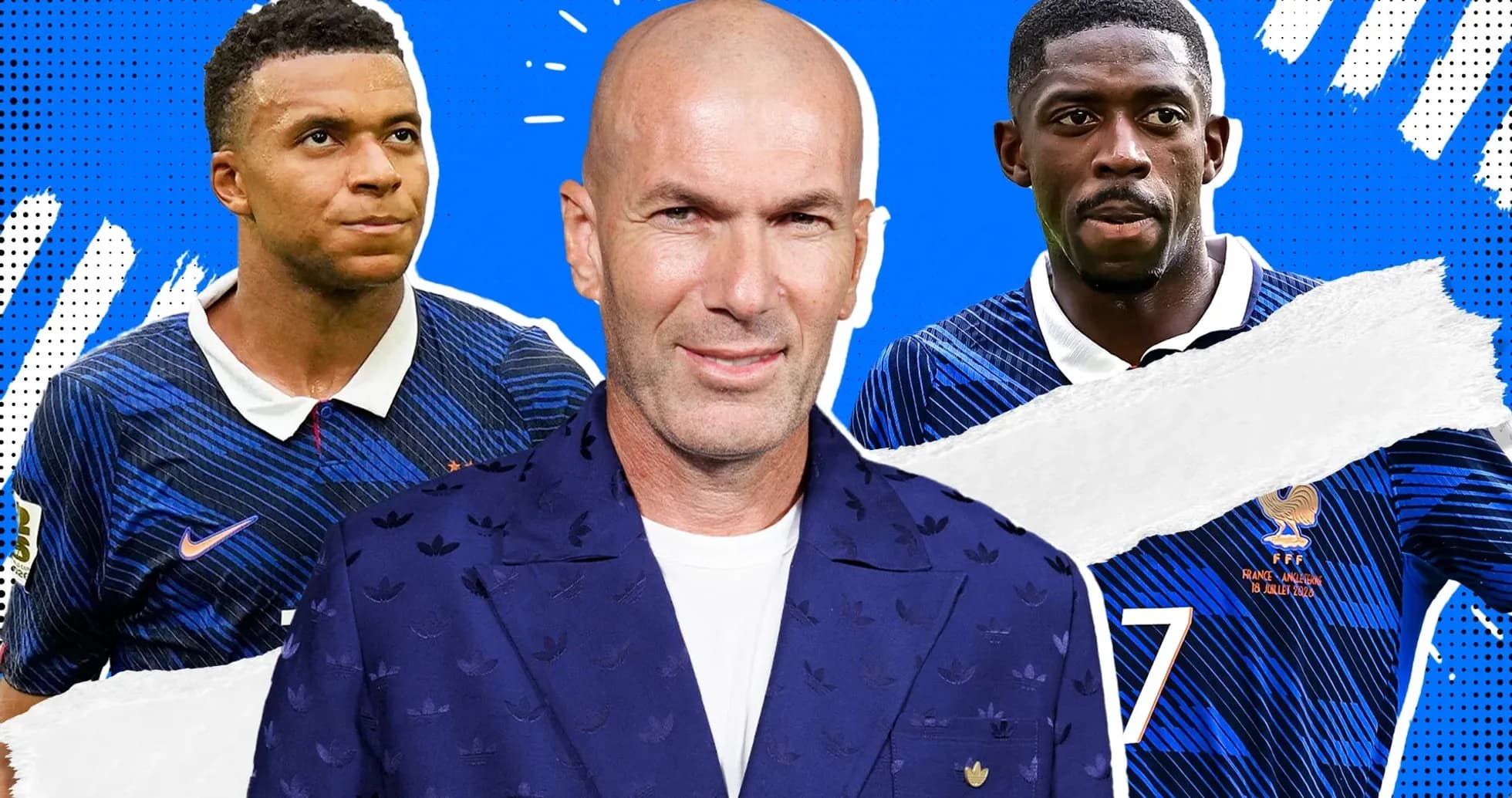
Zinedine Zidane comes home. Not to Turin or Madrid this time, but to the only dugout he has truly coveted: France.
After years of whispers, hints and inevitable headlines, the French Football Federation finally made it official. Zidane replaces his former team‑mate Didier Deschamps as head coach of Les Bleus, ending a 14-year reign and beginning one of the most intriguing chapters in modern international football.
The End of an Era, the Start of Another
Deschamps leaves behind a towering legacy. World champions in 2018, World Cup finalists in 2022, a team restored from the chaos of the post-2010 era to the summit of the game. Fourteen years in charge of a national side is an eternity; he spent them rebuilding not just results, but reputation.
French Football Federation president Philippe Diallo underlined that point, calling it “an exceptional moment” and stressing how Deschamps “restored the image of Les Bleus on the pitch.” It is a changing of the guard at the very top of French football, and not a quiet one.
Into that space steps Zidane, the most obvious successor and yet the most daunting one. The worst-kept secret in football is now the most scrutinised appointment in Europe.
Zidane’s Long Wait
Zidane has been out of work since leaving Real Madrid in 2021. Five years without a job in the dugout for a man who won three straight Champions League titles would usually trigger questions. In this case, the answer was simple: he was waiting.
He admitted as much at his unveiling on Tuesday morning, describing the France role as “the only thing I wanted to do after my experience at Real Madrid.” Offers came. He turned them down. Club projects, big salaries, glamorous leagues – all passed over because he had one job in mind.
“I’ve often said it: there’s nothing greater than the French national team,” he said. “So it’s a joy and obviously a great source of pride to become the manager of this French national team. It’s also a responsibility.”
The word “responsibility” hung in the air. Zidane knows what this shirt means. He wore it as a boy in the youth ranks, then as the elegant conductor of the greatest French side of all, lifting the World Cup in 1998 and the Ballon d’Or in the same year. Now he carries it in a different way.
He thanked Diallo, the executive committee and the federation for their trust, and made a point of acknowledging Deschamps’ 14 years of service. One generation of 1998 heroes has handed the keys to another.
From Los Blancos to Les Bleus
Zidane arrives with a managerial CV that needs little embellishment. At Real Madrid, he did what almost no one else has done: dominate Europe and survive the pressure. Three consecutive Champions League titles, two La Liga crowns, two UEFA Super Cups, two Club World Cups. A burst of silverware that placed him among the elite coaches of his era almost overnight.
That success is why his absence from the touchline has felt so striking. Yet he insists the time away has not dulled his hunger.
“I am truly happy. I am ready for the challenge, it motivates me,” he said. “The only thing that motivates me is being able to work for this team and see them continue to win.”
That line matters. France are not a fallen giant in need of resurrection; they are a powerhouse that expects to stay on top. Zidane is not coming in to clear rubble. He is coming in to refine, to refresh, to push a team that fell in the World Cup semi-finals back to the very top.
Pride, Ambition and the Road to Euro 2028
Zidane’s gaze is already fixed on the next major horizon: Euro 2028 in the UK and Ireland. Preparation starts now, with a squad rich in talent and expectation.
He spoke of “high ambitions” for the national team and reflected on his own journey through every layer of the French setup, from youth teams to the senior side. That path, he suggested, has shaped his understanding of what the job means and what it demands.
“I have known it since I was a child, I started in the youth teams, I went through every stage until reaching the senior national team, the pinnacle,” he said. “The only thing that motivates me is being able to work for this team and see them continue to win.”
The message is clear: this is not a romantic return for nostalgia’s sake. Zidane wants trophies. He wants France not just competitive, but dominant.
A Giant Steps Back Into the Arena
For all his medals and all his aura, Zidane still walks into a pressure cooker. Deschamps leaves a team used to finals and deep tournament runs. The standard is brutal: anything less than contending for every major title will feel like a step back.
Diallo called the appointment “exceptional,” and it is. Few nations can replace a World Cup-winning coach with a World Cup-winning captain who also happens to be one of the most successful managers of his generation.
Zidane, 54 now, has waited five years for this. He turned down clubs, turned down comfort, held his nerve and his line. He wanted France. Only France.
Now he has it. The question is no longer whether Zinedine Zidane would take the job. It is what he will do with a golden generation, a demanding nation, and a touchline that has been waiting for him since 1998.