.svg&w=384&q=75 "Pitchgist logo")
Zidane Takes Over as France's Head Coach: A New Era Begins
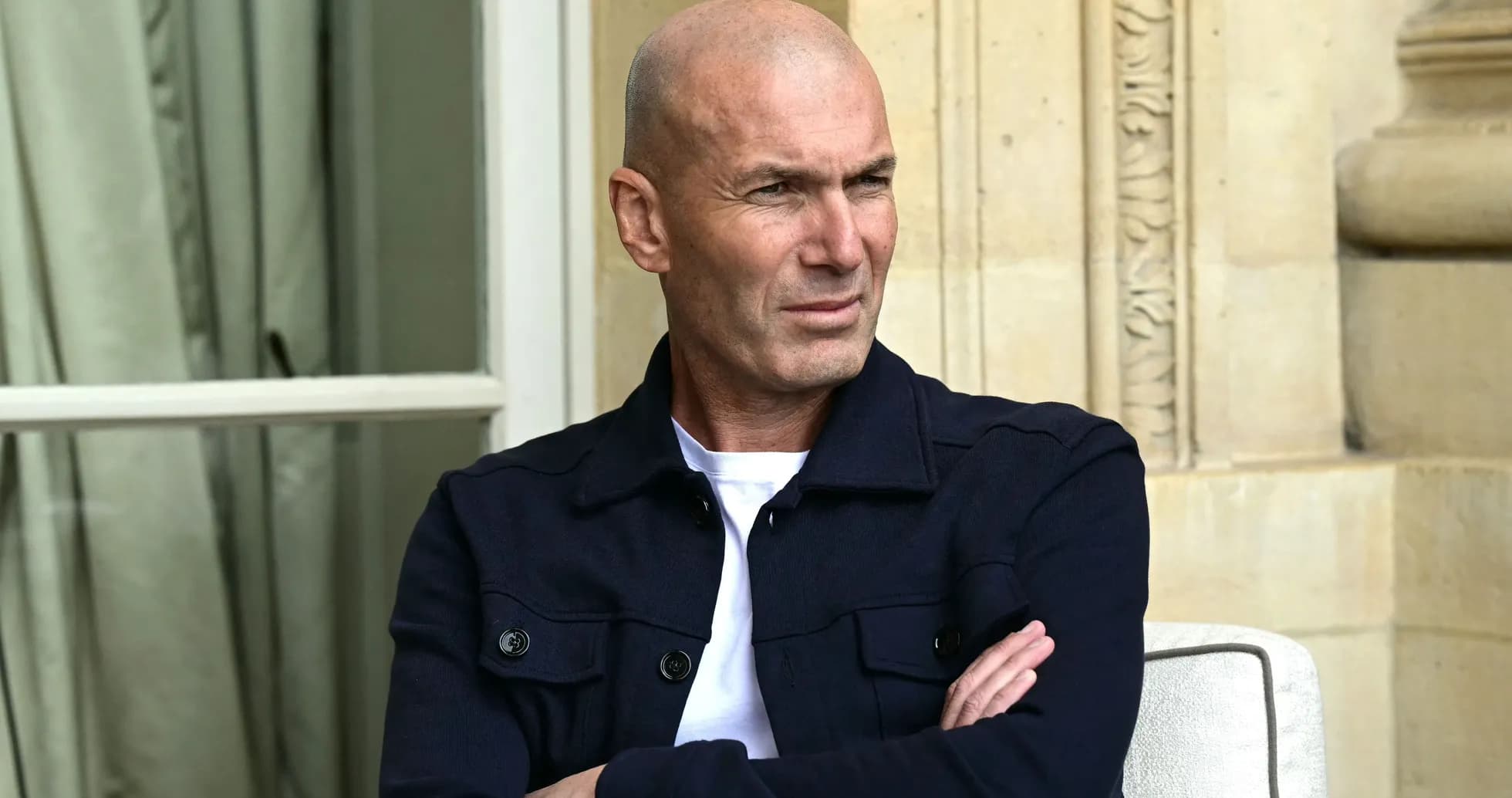
The wait is almost over. The French Football Federation has set the date that should confirm what the country has been expecting for years: Zinedine Zidane back on the bench, this time as head coach of Les Bleus.
On Thursday, the federation announced it will hold a press conference on Tuesday 28 July 2026 at its headquarters, starting at 11am, with president Philippe Diallo front and centre. The executive committee will meet in an extraordinary session earlier that day, and out of that room will walk the new national team coach.
Didier Deschamps steps aside after 14 years in charge. No farewell lap of honour, no grand ceremony. Just a clean cut. The stage is being cleared for his successor.
All signs point to Zidane. Reliable French outlets have already named him as the man chosen to lead France into a new cycle, and the federation’s carefully choreographed timing only feeds that sense of inevitability.
Zidane’s Long-Awaited Return
For Zidane, this is the job he has been waiting for.
He has been out of coaching since leaving Real Madrid in June 2021, a five-year sabbatical by choice rather than necessity. Offers arrived, and plenty of them. Club projects, national teams, big money, big promises. He turned them down, holding out for the one role that has followed his name like a shadow: the France job.
Now, the path is clear. Zidane, the leading candidate to replace Deschamps — his teammate in the 1998 World Cup-winning side — has already reached an agreement with the federation. Only the final touches remain, mainly around the composition of his backroom staff, before he officially starts.
One potential obstacle has already been removed. Recent reforms in France around salary caps for public-related institutions sparked questions about what Zidane could earn in the role. The answer came swiftly: he has obtained a special exemption from the relevant government authorities. The financial framework will not stand in the way of this appointment.
No Gentle Introduction
If Zidane hoped for a soft landing, the calendar has other ideas.
His first matches come in a packed UEFA Nations League schedule between September and November, and France will be thrown straight into high-level, high-pressure encounters.
The new era is set to open on 25 September with a trip to Turkey. Three days later, France head to Belgium on 28 September, a second away test in quick succession against one of Europe’s most talented squads.
Then comes the one that feels different.
On 2 October, Zidane will walk out at the Stade de France for his first home match as national team coach, against Italy. The fixture carries a particular charge for him: five formative years as a player at Juventus, deep ties to Italian football, and a rivalry that has marked modern French history.
That edge could sharpen even further. Deschamps has been strongly linked with taking over the Italian national team following his departure from France. If those reports turn into reality, the storyline writes itself: the man who led France for more than a decade facing the man who succeeds him, with two footballing nations watching every move.
The schedule does not relent. France host Belgium on 5 October, renewing one of Europe’s most tactically intriguing matchups. On 12 November, Zidane’s side travel to Italy for the reverse fixture, before closing the group stage at home to Turkey on 15 November.
France’s Nations League Fixtures
- Turkey v France, 25 September
- Belgium v France, 28 September
- France v Italy, 2 October
- France v Belgium, 5 October
- Italy v France, 12 November
- France v Turkey, 15 November
No warm-up games. No extended bedding-in period. Zidane walks into a furnace and has to shape a team that already expects to compete for every trophy on offer.
Deschamps leaves behind a culture of results, resilience, and silverware. Zidane arrives with the aura of a legend and the weight of a nation’s expectations.
The date is set, the cameras will be ready, and one question will hang over that press room on 28 July: can the greatest player of his generation now become the architect of France’s next great team?