.svg&w=384&q=75 "Pitchgist logo")
Roshn League's World Cup Journey: From Glory to Regret
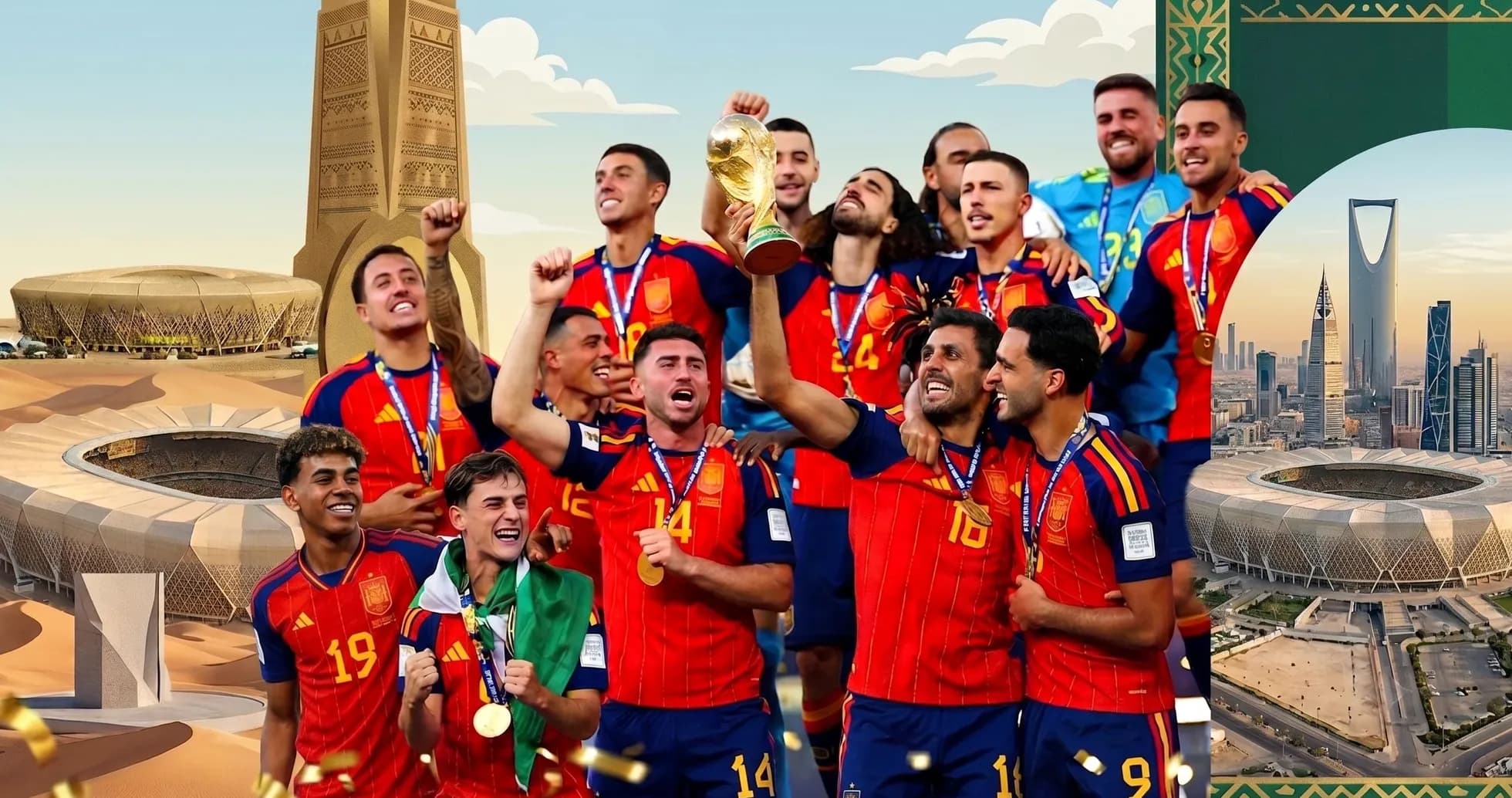
Two summers ago, the Saudi Roshn League could point proudly at the podium. When Spain ruled Europe at Euro 2024, two of their own – Nacho Fernandez of Al-Qadisiyah and Aymeric Laporte of Al-Nassr – stood in the thick of the celebrations. The league had skin in the game, medals around necks, flags raised high.
This time, as Spain climb to the very top and seize the 2026 World Cup, the view from Saudi Arabia is very different.
Spain’s champions have no Roshn League presence. Not one.
From centre of the party to watching from afar
The contrast is stark. In 2024, Saudi clubs could claim a direct share of Spain’s glory. Nacho and Laporte were standard-bearers for a project that wanted to be part of the biggest nights in football.
Now the Roshn League is full of Spanish players, but when Luis de la Fuente named his squad for the World Cup – the group that married icy tactical control with hard-edged defensive discipline and edged Argentina with a single, decisive goal in the final – not a single one of them made the cut.
The talent is there. The badges are not.
It could have been very different. Several Spain stars now basking in world champion status came close to Saudi moves in recent seasons. Deals were discussed, stories leaked, negotiations advanced. Then, at the final step, something always broke down.
Had even one of those transfers crossed the line, a Saudi club would now be able to say: a world champion plays for us.
The Laporte what‑if
No name captures that sense of regret quite like Aymeric Laporte.
He has just finished building a defensive wall alongside Pau Cubarsi, anchoring Spain’s run to the title. Calm on the ball, ruthless without it, Laporte gave De la Fuente the platform to let the rest of the side breathe. Spain’s back line did not just resist pressure; it dictated matches.
All of this came only a season after Laporte walked away from Al-Nassr and returned to Athletic Bilbao.
His spell in Saudi Arabia had promised a marquee partnership with Cristiano Ronaldo and a shot at regional dominance. Instead, it ended in a slow, sour unraveling. Under Italian coach Stefano Pioli, Laporte found himself sanctioned, training alone, and ultimately frozen out of the final matches of the campaign. He later described the atmosphere at Al-Nassr as “difficult”, pointing to constant upheaval in management and on the coaching staff.
From that fractured exit, he stepped back into European football. One year later, he is a world champion and a cornerstone of Spain’s golden summer. The Roshn League, which once had him in its ranks, can only watch and wonder what might have been.
And Laporte is not alone. Across Spain’s World Cup-winning squad, there are names that appeared on Saudi scouting lists, that were linked in reports, that hovered on the edge of signing. None of those moves materialised. None of those medals will be coming back to the Kingdom.
No champions, but plenty of presence
Yet the story of the Roshn League at this World Cup is not one of absence. It is one of reach.
Forty-nine players from Saudi clubs took part in the 2026 tournament. Forty-nine. That number alone underlines how deeply the league has embedded itself in the global game. Shirts from across the Roshn League walked out in opening matches, knockout ties, and medal deciders.
The missing piece is clear: no player from a Saudi club climbed the final step to become a world champion. But the platform, the exposure, the experience – all of that is very real.
And it comes with a concrete reward.
The World Cup dividend
According to French newspaper L’Equipe, FIFA’s club benefits programme paid 4,300 euros per day for each player involved at the World Cup, covering the period from 1 June to 19 July 2026. The total budget: 305.3 million euros.
Saudi clubs were not just sending players; they were cashing in.
No one profited more than Al-Hilal. The Riyadh giants sent 12 players to the tournament, more than any other Saudi side, and became the biggest financial beneficiary from the Kingdom. Their full-back Theo Hernandez stayed with France all the way to the third-place match. He left without a bronze medal, but with a deep run that kept the payments flowing and his profile sky-high.
Just behind them, Al-Ahli and Al-Nassr each had nine players on World Cup duty. For Al-Ahli, the standout story came in attack. Ivan Toney helped England carve out a bronze-medal finish, writing his own chapter in the national team’s history while adding serious weight to his value back in Jeddah.
Money is one thing. What those players bring back with them – big-tournament sharpness, tactical lessons from the highest level, the confidence of having faced the best – is another.
Stars who return stronger
Al-Qadisiyah, who once celebrated Nacho’s European triumph, sent six players to this World Cup. Their Mexican forward Julian Quinones lit up the group stage and beyond, scoring four goals and delivering a decisive assist across five matches.
For a club looking to push higher at home, that kind of performance is priceless. Quinones returns not just as a key foreign signing, but as a proven force on the world stage, a player who has felt the weight of knockout football and thrived under it.
This is where the Roshn League’s gamble on international talent begins to pay off. Even without a world champion in their ranks, Saudi clubs are sending players into the furnace of the World Cup and getting back hardened, battle-tested leaders.
The medals, for now, belong elsewhere. The experience does not.
Spain’s coronation in 2026 underlines how close the Roshn League has come to draping itself in that ultimate glory, and how far it still has to go. The scouting is sharp. The ambition is obvious. The money is on the table.
The question now is simple: when the next World Cup comes around, will a Saudi club finally take that last step and bring a world champion home?