.svg&w=384&q=75 "Pitchgist logo")
World Cup VAR Analysis: Why Iran’s Goal Was Disallowed and The Debate Over Ngoy’s Red Card
The video assistant referee continues to spark debate across global football competitions. At this year's 104-match FIFA men's World Cup, numerous incidents have drawn attention to how VAR decisions are reached and their adherence to both protocol and the laws of the game.
Andy Davies, a former Select Group referee with over a decade of top-tier experience in England's Premier League and Championship, offers insights into these key moments and the reasoning behind VAR interventions during the tournament.
Iran vs. Belgium: Offside Denies Iran’s Early Goal
Match officials: Referee Darío Herrera;
VAR Hernán Mastrángelo
Incident time: 25 minutes
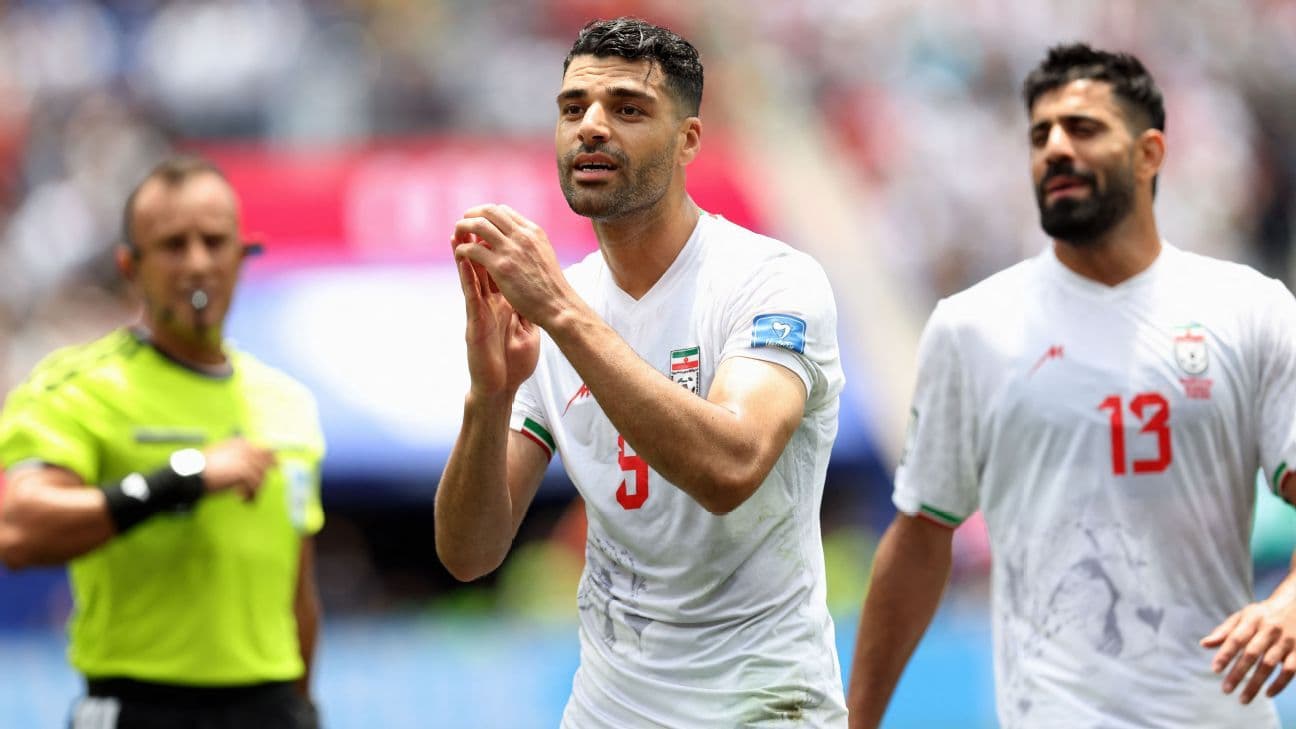
Mehdi Taremi appeared to give Iran the lead following a clever free-kick routine reminiscent of a famous goal from the 2022 World Cup. However, after a lengthy VAR review, the goal was ruled out due to offside. The technology revealed that Taremi’s backside was marginally ahead of the last defender when the ball was played, even though he faced away from goal.
The decision was ultimately correct but sparked questions about the time taken for the review despite advanced technology. Complex positioning and multiple players involved complicated the analysis, requiring manual verification alongside automated tools.
Ngoy’s Red Card for Denial of Goal-Scoring Opportunity
Incident time: 66 minutes
Belgium defender Nathan Ngoy lost control of a pass near his own half and then fouled Iran’s Taremi who was through on goal. The referee issued a straight red for denying a clear goal-scoring chance. VAR quickly confirmed the decision after reviewing the situation.
The key consideration was Taremi’s proximity to goal, absence of defenders covering him, and the goalkeeper’s position, all supporting the red card. Although some might debate the exact distance, the foul met the criteria for DOGSO.
Paraguay’s Almiron Sent Off for Concealing His Mouth
Match officials: Referee Ivan Barton;
VAR Khamis Al Marri
Incident time: 45+3 minutes
Following a confrontation triggered by a foul, Miguel Almiron covered his mouth while speaking to an opponent, leading to an immediate red card after VAR review. This new IFAB rule aims to prevent players from hiding offensive or racist comments.
The rule distinguishes confrontational from friendly exchanges, allowing the former to be penalized. The decision reinforced that such behavior will not be tolerated in this World Cup.
United States vs. Australia: VAR Overturns Offside Call for Freeman’s Goal
Match officials: Referee Felix Zwayer;
VAR Bastian Dankert
Incident time: 43 minutes
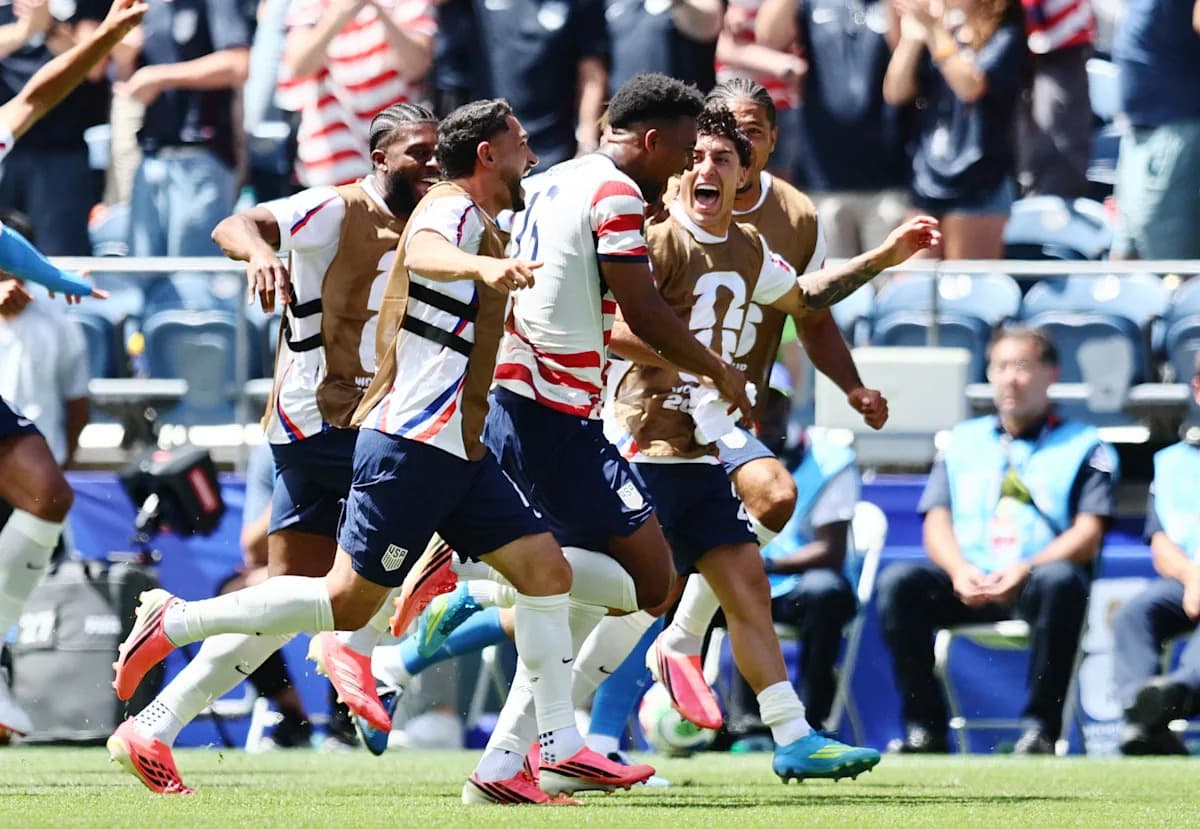
After Sergiño Dest’s shot deflected up, Alex Freeman reached the ball first and scored, but the linesman raised the flag for offside. VAR showed Freeman was onside at the moment of the shot, leading to the goal being allowed.
Concerns arose from Australia's belief that teammate Folarin Balogun obstructed the goalkeeper, but replays confirmed no impact on the keeper’s ability to make the save. The intervention corrected the on-field call properly.
Canada vs. Qatar: Penalty Reversed and Red Card Issued
Match officials: Referee Cristian Garay;
VAR Juan Lara
Incident time: 33 minutes
Qatar's Homam El Amin was initially penalized with a penalty kick and yellow card for tripping Tajon Buchanan. VAR overturned the penalty to a free kick outside the box and upgraded the yellow to a red card after confirming the foul occurred beyond the penalty area.
This switch also aligned with the updated double jeopardy law, which accounts for the scoring opportunity based on the restart type.
Qatar’s Madibo Red Card for Challenge Causing Injury
Incident time: 51 minutes
Assim Omer Madibo was upgraded from yellow to red after a VAR review revealed his challenge caused a broken leg to Ismaël Koné. While the initial contact seemed minor in real time, slow-motion exposed a secondary action that led to the injury.
The referee accepted the VAR's recommendation without viewing the pitch-side monitor, a process allowed under current protocol but unusual in practice.
England vs. Croatia: Penalty Awarded and Retaken Due to Encroachment
Match officials: Referee Clement Turpin;
VAR Jerome Brisard
Incident time: 9 minutes
Luka Modric fouled Noni Madueke in the box, resulting in a penalty. Harry Kane’s first attempt was saved, but a VAR review showed encroachment by the goalkeeper and defender Josko Gvardiol during the save phase, prompting a retake.
The VAR handled both reviews swiftly and correctly, applying a recent law change that only penalizes encroachment if the player becomes involved after the goalkeeper’s save.
Argentina vs. Algeria: Messi’s Foul Cleared Despite Stud Contact
Match officials: Referee Szymon Marciniak;
VAR Tomasz Kwiatkowski
Incident time: 30 minutes
Lionel Messi fouled Algeria’s Aïssa Mandi with studs contacting his calf and ankle. The referee called a foul but issued no card. VAR checked and upheld the decision.
Many believe this should have been a red card offense due to the nature of the challenge, but no clear error was identified by VAR. Messi was fortunate given the severity of contact.
France vs. Senegal: No Penalty After On-Field Review
Match officials: Referee Alireza Faghani;
VAR Abdullah Atif Abdulrahman Alshehri
Incident time: 62 minutes
Kylian Mbappé was clipped by Sadio Mané inside the box, yet the referee denied a penalty. VAR prompted an on-field review, but the referee maintained his decision, explaining Mbappé initiated contact.
The tackle appeared late and made no contact with the ball, raising questions about the decision. The explanation given was weak and may affect the referee’s future assignments.
Sweden vs. Tunisia: VAR Uses Ball Tracking to Award Goal
Match officials: Referee Yael Falcón Pérez;
VAR Juan Lara
Incident time: 84 minutes
Mattias Svanberg scored just seconds after entering the game, but was flagged offside. VAR overturned the call using Adidas’ Connected Ball Technology, detecting a slight flick from teammate Alexander Isak that reset the offside phase.
This technology helped overturn a call impossible to judge by eye, allowing the fastest goal ever by a substitute at a World Cup to stand.
Switzerland vs. Qatar: Semi-Automated Offside Tech Fails Temporarily
Match officials: Referee Said Martínez;
VAR Guillermo Pacheco
Incident time: 14 minutes
FIFA’s new semi-automated offside system malfunctioned during a key moment involving Remo Freuler. Officials had to manually draw offside lines. FIFA later confirmed a brief technical outage but insisted the VAR followed normal procedures.
This glitch raised doubts among fans, though the final ruling stood with no offside called.
United States vs. Paraguay: Yellow Card Changed After Mistaken Identity
Match officials: Referee Danny Makkelie;
VAR Carlos Del Cerro Grande
Incident time: 53 minutes
Tim Ream was initially booked for a foul on Miguel Almirón, but VAR revealed no contact was made. The yellow card was revoked, and Almirón received a yellow for simulation instead.
This application of the new law to correct mistaken identity is seen as a positive step to discourage diving.
Mexico vs. South Africa: Three Red Cards in Opening Match
Match officials: Referee Wilton Pereira Sampaio;
VAR Nicolás Gallo Barragán
South Africa’s Sphephelo Sithole received the tournament’s first red card for denying a goal-scoring chance. Later, Themba Zwane was sent off for striking an opponent’s face, a decision viewed by some as harsh given the lack of violent intent.
Finally, Mexico’s César Montes was shown a red for a DOGSO foul. Some questioned whether the attacker’s next move was a shot or a cross, which influences the DOGSO assessment. VAR upheld the decision despite the debate.