.svg&w=384&q=75 "Pitchgist logo")
World Cup Highlights: Salah's Historic Win for Egypt
The World Cup’s North American swing delivered a bit of everything: lightning warnings in Philadelphia, political tension in Los Angeles, Cape Verde refusing to blink, and Mohamed Salah dancing in the streets of Vancouver after writing a new chapter in Egypt’s history.
And all of it played out against a backdrop where even an England flag couldn’t make it past security.
Storms threaten France’s date with Iraq
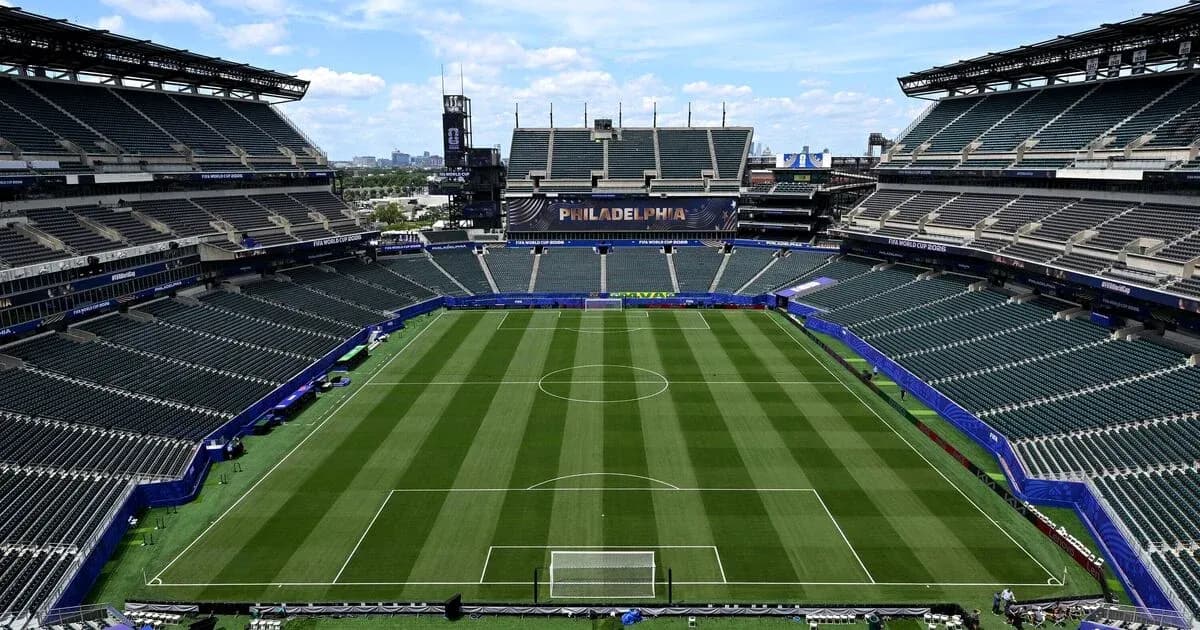
France’s group-stage meeting with Iraq in Philadelphia, scheduled for a 10pm kick-off, sits under a darkening sky and an even darker forecast.
Local reports have described the incoming weather as “apocalyptic”. Several thunderstorms are expected to turn severe, bringing damaging winds, intense lightning and even a risk of isolated tornadoes. Under FIFA protocol, a single lightning strike within eight miles of the stadium stops everything.
Lauren Lambrugo, chief operating officer of Philadelphia Soccer 2026, laid out the drill: once lightning hits that radius, fans are ushered off their seats and into the concourses or emergency shelters. Then the clock starts. Thirty minutes without another strike before anyone is allowed back out and the players can re-emerge.
One flash in the wrong place, and France–Iraq turns from football match into logistical puzzle.
Salah finally gets Egypt dancing
Vancouver witnessed something Egypt had never managed before: a World Cup win.
It did not come easy. New Zealand struck first, Finn Surman losing his marker and thundering a textbook header home from a corner. His leap, his timing, his power – straight out of a coaching manual. At half-time, Egypt were 1-0 down and staring at another chapter of World Cup frustration.
Then the game flipped.
Egypt came flying out after the break. Wave after wave. The pressure finally told as Ziko dragged them level approaching the hour, capping what had become one-way traffic towards the New Zealand goal.
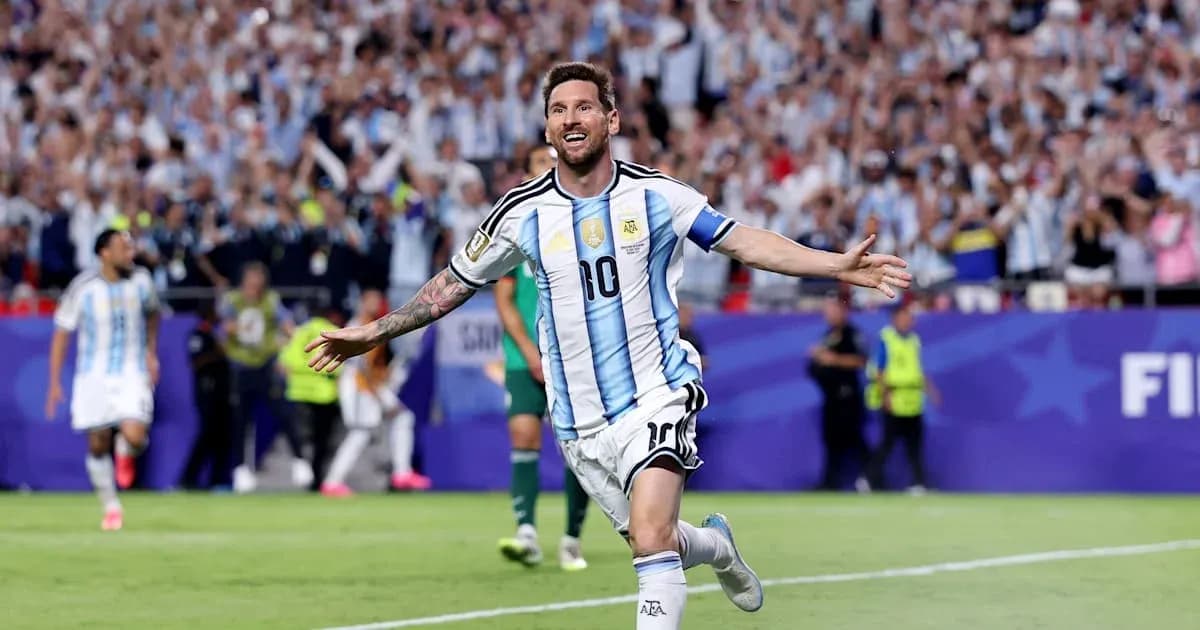
Once parity arrived, inevitability wore the No. 10 shirt.
Mohamed Salah, who had already gone close with a free-kick in the first half, took over. A neat one-two, a low, precise finish, and Egypt were suddenly driving towards history. His first goal at this tournament, and perhaps the most significant in his country’s World Cup story.
New Zealand reeled. Egypt did not let them breathe. Trezeguet stepped up to slam in a third, a finish that felt like a signature on a landmark night. By the final whistle, the Pharaohs had turned a deficit into a 3-1 win and their first ever victory on this stage.
Hours later, footage emerged of Salah in Vancouver, away from the stadium glare, singing and dancing in the streets. For a player who has carried a nation’s hopes for years, this was release.
New Zealand, still without a win in their World Cup history after nine attempts, are left wondering how a match they led and controlled for 45 minutes slipped so brutally away.
Cape Verde keep swinging at the giants
In Miami, Cape Verde’s debut campaign added another gripping chapter. Uruguay, weighed down by expectation and already under scrutiny back home, could not shake them off.
The islanders struck first, and did so in style. Kevin Pina stepped up from around 30 yards and unleashed a laser of a free-kick, a sensational strike that ripped into the net and stunned Uruguay.
Marcelo Bielsa’s side responded with the kind of aerial power you expect from them. A ball into the box was headed against the post, rebounding perfectly for Araujo to dive and nod home the equaliser. Cape Verde protested – one of their players was down with cramp – but the referee let play continue. Uruguay were level.
Momentum swung again. A deep cross, another dominant Araujo header across the six-yard box, and Canobbio arrived to tuck it past Vozinha. In a flash, Uruguay had turned 0-1 into 2-1 and the stadium roared.
Cape Verde did not fold.
With Uruguay seemingly in control, Helio Varela pounced on chaos. Muslera wandered into no man’s land, a mistake begging to be punished. Varela, just three minutes after coming on, seized on the error and rolled the ball into an empty net for 2-2.
Uruguay pushed, but the damage was done. Cape Verde left with another point and another historic moment. They now face Saudi Arabia knowing that a win sends them into the knockouts. Uruguay, winless and bruised, must find a performance against Spain or risk a group-stage exit that will ignite an inquest back home.
Bielsa confirmed that key duo Giorgian de Arrascaeta and Ronald Araujo will not feature against Spain, and will remain out until at least a possible round of 32. Qualification is no guarantee. Lose to the European champions and see either Cape Verde or Saudi Arabia win, and Uruguay likely fall short as one of the best third-placed sides.
Spain wake up – and Yamal arrives
In Atlanta, Spain looked every bit like European champions again.
Lamine Yamal returned to the starting XI and immediately changed the temperature of the match. It took him minutes to mark his World Cup with a goal. Mikel Oyarzabal, under pressure after a poor showing against Cape Verde, whipped a tempting ball across the box and Yamal ghosted in to tap home. Simple finish, huge statement.
Spain did not stop there. Oyarzabal turned from provider to scorer, striking twice before the first drinks break. His first was a tidy close-range finish, his second the sign of a player who had heard the criticism and decided to answer it.
Saudi Arabia were overwhelmed. Spain eased off after the early blitz but still found a fourth. Marc Cucurella’s shot caused the damage, Hassan Al Tambakti’s touch diverted it into his own net – the eighth own goal of these finals.
A late Ferran Torres effort was ruled out for offside after a lengthy VAR check, but it barely mattered. Spain’s 4-0 win left them with one foot in the knockouts and, crucially, with their swagger restored.
Yamal, speaking afterwards, captured the moment simply. He called it “special”, recalling how he watched the last World Cup in class at school and had always dreamed of not just playing at one, but scoring. In Atlanta, he did both.
Belgium, Iran and a night of frustration
Across the continent in Los Angeles, Belgium and Iran played out a goalless draw that left both teams with two points from two matches and a mountain to climb in Group G.
Iran thought they had struck first when Mehdi Taremi found the net, only for VAR to rule it out for offside. It was a warning Belgium did not fully heed. The game stuttered and stalled, with quality in short supply.
After the break, Belgium briefly sparked into life. A wild goalmouth scramble saw three Belgian players swing at chances inside the six-yard box, only for Iran’s defenders to throw themselves in the way and somehow keep the ball out.
Then came the turning point. Nathan Ngoy hauled down Taremi just past halfway, with no covering defender in sight. The referee showed red for denying a clear goalscoring opportunity, and VAR backed the decision. Belgium, down to ten, were left clinging to the point rather than chasing three.
Maxim De Cuyper still had the chance to win it, but his first-time effort went straight at Alireza Beiranvand. When the whistle went, 0-0 felt about right.
Roy Keane, watching on ITV, did not sugar-coat it. He called the game “rubbish”, criticising the passing, movement and decision-making, and arguing that Iran actually looked more comfortable when they had fewer decisions to make and could sit deep.
Belgium now face New Zealand in their final group game, Iran meet Egypt. Both know another slip could be fatal.
Anthem boos and protest banners
Off the pitch, the political undercurrents around Iran’s campaign remain impossible to ignore.
The Iranian national anthem was booed for a second straight game, with captain Alireza Jahanbakhsh refusing to be drawn directly on the reaction. He spoke instead about playing for all Iranians, at home and abroad, regardless of ideology, and stressed that the team’s job was to give everything on the pitch and try to make people happy.
Outside the stadiums, Iranian fans have continued their protests. In Los Angeles, ahead of the match against Belgium, demonstrators made clear they did not feel the national team represented them. One protester described the situation as “very political”, saying they wanted the fall of the Islamic Republic and insisting the team “support the regime”.
The World Cup stage, once again, has become a megaphone.
England: injuries, curfews and a banned flag
Back in England’s camp, Thomas Tuchel juggles fitness concerns and discipline ahead of Tuesday’s meeting with Ghana in Boston.
Bukayo Saka, managing a long-standing Achilles issue from Arsenal’s title run-in, missed group training on Saturday and followed an individual programme. He returned to full training behind closed doors in Kansas City on Sunday, offering a major boost. Tuchel had hinted he might not risk Saka until the final group game against Panama, but the winger insists he is fit and that the problem has not deteriorated.
Declan Rice remains a doubt after hobbling off in the opener against Croatia. With a win enough to secure progression – and possibly top spot – Tuchel faces a delicate balancing act between caution and ambition.
Off the field, the manager has imposed a strict curfew. Defender Dan Burn revealed that some players had to cut short a concert outing to make it back on time, cowboy hats and all, after a friends-and-family day that saw relatives fly in. Tuchel’s message is clear: enjoy the downtime, but on his terms.
Even England’s supporters have run into restrictions. A flag featuring a submarine was barred from the stadium at the Croatia match under FIFA’s rules banning military imagery. Barrow FC, whose nickname and imagery are tied to submarines, responded with a tongue-in-cheek social media post, blurring out the offending design.
The lines of what can and cannot be displayed at this World Cup are being tested in the stands as much as on the pitch.
Doku, family and a furious backlash
Belgium’s Jeremy Doku has found himself at the centre of a fierce debate that cuts to the heart of modern football’s demands on players.
The Manchester City winger missed the Iran game with a chest infection, as reported by Belgian outlet RTBF, but his situation is complicated by his desire to leave the camp for the birth of his first child in the second week of July.
Doku has been clear: this is his first child and he “would definitely want to be there”. He acknowledged that football brings “many other considerations” and said the federation understands and supports its players, leaving the final decision open with a “we’ll see what we can do”.
His stance drew a furious on-air attack from L’Equipe presenter France Pierron, who called the birth “a disgusting moment” where the father is “useless” and argued he should not leave a “childhood dream” like a World Cup. Her comments sparked outrage and she has since apologised and been suspended, according to reports in France.
Ollie Watkins, speaking from England’s camp and talking as a father of two, offered a very different perspective. He backed Doku, stressing that “it only happens once, your first child”, calling it a blessing and saying missing that moment would be “tough”. For Watkins, the decision is personal and “not anyone else’s business”.
Between those two views lies a question every player at a major tournament dreads: how much of your life do you surrender for the shirt?
Scotland, respect and Brazil’s intent
Elsewhere, Brazil’s Lucas Paqueta addressed the looming Group C meeting with Scotland. A draw would be enough for both sides to reach the round of 32, but Paqueta dismissed any notion of playing for a stalemate.
He spoke of “great respect” for Scotland, stressing that every team at the World Cup deserves study and preparation. Then he made Brazil’s stance plain: regardless of the opponent, the goal in every match is to win.
Respect, yes. But no charity.
England, Ghana and the noise ahead
While storms threaten in Philadelphia and protests echo in Los Angeles, Boston is quietly filling up. England fans have started to arrive, cowboy hats packed away, flags double-checked for compliance.
Ghana await, physical and fearless. England’s injury list is short but significant. Their curfew is strict, their manager demanding, their route to the knockouts clear.
The weather can stop a match. Politics can drown out an anthem. VAR can erase a goal. But at some point, in Boston, Kansas City, Miami or Philadelphia, someone will have to step up as decisively as Salah did in Vancouver.
Who does it next will shape the rest of this World Cup.