.svg&w=384&q=75 "Pitchgist logo")
United States Beats Australia 2-0 in World Cup Showdown
Soccer was always going to win here. On a bright, temperate Friday in the Pacific north-west, in a rare World Cup meeting of two nations that actually agree on the word, the United States beat Australia 2-0, punched their ticket to the knockout round and, in all likelihood, planted a flag at the top of Group D.
What had been billed as a tight, attritional contest largely lived up to its promise. What changed was who handled the moments that mattered.
A stage built for stakes
Seattle Stadium felt less like a neutral World Cup venue and more like a fortified home ground. Three thick pockets of yellow marked out the Australia support at the south end, noisy and defiant, but they were swallowed by a crowd that roared for the US and rarely relented.
Then came the flyover. Four military helicopters thundered over the stadium just as the last notes of the national anthem died away, the kind of choreographed spectacle that turns a group-stage fixture into an occasion. The message was clear: this was not just another game.
Both teams arrived with the weight of a sport on their shoulders. In the US and Australia, soccer fights for attention, squeezed by older, richer domestic pastimes. World Cups become referendum and showcase all at once. In a balanced Group D, with both sides fresh off impressive opening wins, this one never needed artificial hype.
It did, however, have a major subplot. Christian Pulisic’s calf had dominated the buildup. The American star limped out of the opener at half-time and spent the week training alone. Mauricio Pochettino waited until shortly before kick-off to confirm what many feared: Pulisic was not available. A US attack already under the microscope would have to solve a disciplined Australian back line without its sharpest individual weapon.
If Australia needed any extra edge, it had been handed to them in the form of American punditry. “Layup” and other dismissive tags had been attached to the Socceroos from afar, a lazy reading of a side that had impressed in its first match. Inside the US camp the tone was different. Players and staff lined up to praise Australia’s quality, repeating the respect almost like a pre-match mantra.
The opening minute proved those words weren’t empty.
Early scare, early break
Barely 60 seconds had passed when Alex Freeman’s loose pass invited trouble. Mohamed Touré pounced, driving at Chris Richards and squeezing off a low shot from a tight angle. Matt Freese smothered it, but the warning landed. Any sense of a “layup” vanished.
The US response was to take the ball and keep it. They began to probe, stretching Australia’s back five, switching play, asking questions down both flanks. The game settled into the pattern both coaches had forecast: physical, tense, every yard contested.
Then the first crack.
Antonee Robinson stepped up from left-back and fizzed a pass into Folarin Balogun, stationed wider than usual in the space Pulisic might normally occupy. Balogun simply went. He burned past Jacob Italiano, hit the byline and whipped in a vicious low ball. Defender Burgess, caught on the move and unsighted, could only deflect it into his own net.
For the second straight match, the US had an early lead via an own goal. Paraguay had crumbled when it happened to them. Australia did not. The back line, marshalled by Harry Souttar, stayed upright, organized, stubborn.
Two minutes after going behind, they almost hit back. Touré held off his marker, rolled the ball into Mathew Leckie’s path, and Leckie tried to bend an audacious outside-of-the-boot effort around Richards from the edge of the box. The idea was better than the execution; the shot flew high and wide.
The physical edge both sides had promised began to show in flashes. Nishan Velupillay clattered into Tyler Adams in front of the US bench, drawing howls from the home crowd. Jordan Bos went into the book for a hand to Weston McKennie’s face. Later, Alessandro Circati joined him after clipping Malik Tillman’s heel as the American surged toward the penalty area. Australia defended the resulting free-kick bravely, bodies flung in front of the ball.
The game simmered rather than boiled. Then, on 39 minutes, it lurched.
Freeman’s redemption and a crucial cushion
A clash of heads between Freeman and Paul Okon-Engstler left both players down and needing treatment. They got back to their feet, stayed on, and within moments Freeman had gone from culprit to hero.
The move started with Tillman, who refused to let a lost cause die on the Australian endline. He wrestled with Velupillay, kept his balance, and forced a dangerous free-kick near the corner. Robinson rolled the set piece back to the top of the box, where Sergiño Dest stepped onto it and drove a shot goalward. Souttar launched himself into the line of fire, the ball cannoned off him, and chaos followed.
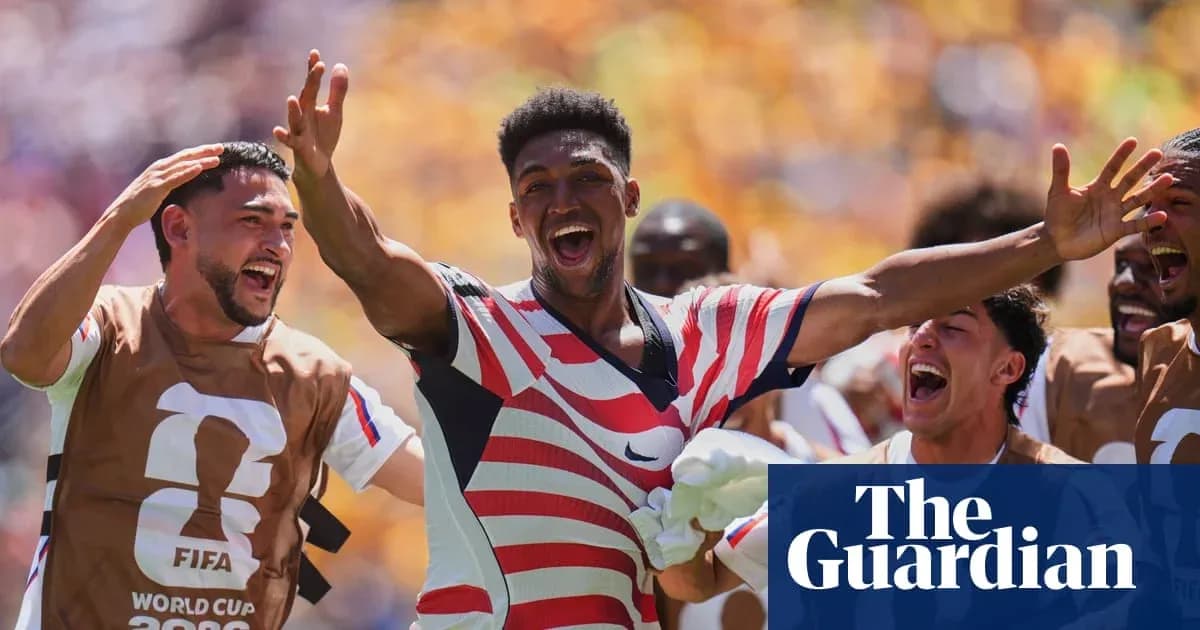
Freeman reacted first. From close range, he bundled the rebound over the line. The flag went up, the goal went to review, and for a few long seconds 66,925 people held their breath. The check ended, the goal stood. The stadium erupted.
By the time Freeman, now back in his usual centre-back station, finished celebrating, he was surrounded not just by his backline partner but by teammates who had sprinted from the bench to share the moment. A defender who had almost gifted Australia a dream start had instead given his own team a precious 2-0 cushion before the break.
Australia trudged off at half-time having been second-best but not overwhelmed. The problem for Tony Popovic was obvious: his team needed more threat, and they needed it quickly.
Popovic rolls the dice
Popovic responded with a manager’s version of an all-in shove. He made multiple changes and tweaked the shape, chasing the game with bolder intent.
Jason Geria replaced Burgess. The two scorers from the Socceroos’ previous match, Nestory Irankunda and Connor Metcalfe, came on for Touré and Velupillay. The result: a more aggressive 4-3-3 when they had the ball, snapping back into the familiar five-man back line without it.
The risk was obvious. With more players committed forward, space would open for the US in transition. Seven minutes after the restart, that danger flashed in neon.
McKennie seized on a loose ball and immediately slid Balogun through the middle. Only Souttar gave chase. Balogun bore down on goal, weighed his options, and shot. Souttar, stretching every inch of his frame, managed to get the block in. The chance died, but the message was clear: one more US goal and the contest was over.
Australia kept coming. Robinson collected the United States’ first yellow card in the 56th minute as he chopped down a developing attack on his side. Popovic doubled down again just after the hour, sending on Cristian Volpato for Leckie.
Volpato almost changed the narrative instantly. Irankunda surged down the right, tore into space and cut the ball back. Volpato met it inside the box but leaned back and drove his shot over the bar. Minutes later Metcalfe forced Freese into a save that looked better than it was; the US goalkeeper gathered comfortably.
On the touchline, the contrast in approach sharpened. Popovic kept adding attacking pieces, introducing Jackson Irvine for Okon-Engstler to push even more bodies forward. Pochettino went the other way, tightening the screws. Robinson, Dest and Ricardo Pepi made way for Sebastian Berhalter, Auston Trusty and Joe Scally, a set of substitutions that screamed game management.
The effect was predictable but dramatic. Australia gained territory and possession. The US retreated a few yards, trusted their structure, and waited for chances to break. Circati went close in a crowded box, other half-open looks came and went, and every Australian shot that missed by inches seemed to draw an even louder “USA” chant from the stands.
The physical tone hardened again. Souttar, Balogun and Italiano all picked up late yellow cards in a flurry of on- and off-the-ball flashpoints as frustration met fatigue.
A bruising finish, and a statement made
Even the referee did not escape unscathed. Felix Zwayer appeared to suffer an odd injury late on, briefly halting play. He gathered himself and finished the match, another figure limping toward the final whistle.
On the pitch, the US never quite found the third goal that would have turned the night into a rout. They didn’t need it. The structure held, the clean sheet stayed intact, and the 2-0 scoreline reflected a side that took control early and then managed the risk with the poise of a team that expects to be around deep into this tournament.
As the clock ticked down and the tension in the stands began to ebb, Balogun turned showman, waving his arms at the crowd, demanding more noise, more celebration. Seattle responded. For one night at least, this corner of the Pacific north-west became “Soccer City, USA” in more than name.
The US are through. Top spot in Group D now hangs on what Turkey and Paraguay do, but the hosts have done their part. The bigger question lingers over the rest of the World Cup: with Pulisic still to return and the weight of a sporting culture on their backs, just how far can this team carry the game they insist on calling soccer?