.svg&w=384&q=75 "Pitchgist logo")
World Cup Highlights: Messi, Goals, and Standout Performers
Lionel Messi bent his run, softened his touch and, in an instant, turned a loose ball into art.
The pass into him for Argentina against Cape Verde was awkward, skidding and awkwardly angled. Messi killed it on the move, barely a pocket of space to work with, then with his second touch swept the ball into the top corner. No backlift, no fuss. Just that familiar, ruthless precision that has defined a career and, once again, a World Cup.
It was one of several goals that lit up this tournament. Sidny Cabral’s extra-time equaliser in the same game didn’t just level the tie; it stunned a global audience. From just inside the area, he wrapped his right foot around the ball and sent it curling into the far top corner, past Emiliano Martinez, who could only watch. The stadium didn’t so much roar as explode.
Kerim Alajbegovic offered his own masterpiece in the group stage. For Bosnia-Herzegovina against Qatar, he slalomed through defenders, balance and belief carrying him past challenge after challenge, before thundering a rising right-foot finish that screamed into the net. A solo goal of pure conviction.
Erling Haaland, meanwhile, delivered the sort of finish that makes a mockery of the word “casual”. For Norway against Brazil in the last 16, he seemed to just swing his right boot at a half-chance. In reality, it was a laser-guided strike, drilled with brutal power into the corner to crown a match-winning performance and send a heavyweight home early.
When Argentina and Switzerland locked themselves into a tense quarter-final, it took a flash of Julian Alvarez’s brilliance to rip the game open. Deep into extra time, the forward stepped into space and unleashed a swerving right-foot drive from long range that arrowed into the top corner. One swing, one moment, and a cagey tie was gone.
Antonio Nusa had already shown what clean technique under pressure looks like. For Norway against Ivory Coast, he feinted with a little shimmy inside the box, bought half a yard, then curled a precise finish into the top corner. Simplicity, on the biggest stage, is often the hardest thing of all.
Goalkeepers who refused to be beaten
If the goals were spectacular, the goalkeeping was often outrageous.
Johny Placide produced a double save for Haiti against Morocco that bordered on the absurd. First, he blocked with his legs, then sprang to his left to claw away the follow-up one-handed. It was defiance in gloves.
At the Azteca Stadium, Jordan Pickford’s performance in England’s win over Mexico underpinned one of their most memorable nights. His early stop from Raul Jimenez – diving low to his left to keep out a firm header – set the tone. England grew from that moment.
Orjan Nyland had his own crisis to solve against Brazil. When Norway defender Kristoffer Ajer inadvertently steered the ball towards his own goal, Nyland scrambled back, twisted in mid-air and managed to turn it on to the post. Anticipation, agility, and a touch of disbelief.
Aymen Dahmen’s save for Tunisia against Japan from Takehiro Tomiyasu’s close-range effort almost defied physics. The ball seemed destined to cross the line, yet somehow it didn’t. Patrick Beach for Australia did something similar against Turkey, hurling himself to his right to tip Abdulkerim Bardakci’s rising 30-yard strike on to the post.
Alireza Beiranvand’s moment came against Belgium. He couldn’t get near Kevin De Bruyne’s initial shot, but when the rebound fell to Maxim de Cuyper inside the six-yard box, Beiranvand recovered in a heartbeat, repositioned and blocked the follow-up. It was the sort of save that turns heads in coaching rooms as much as in stands.
Rodri, Messi and a Golden Ball generation
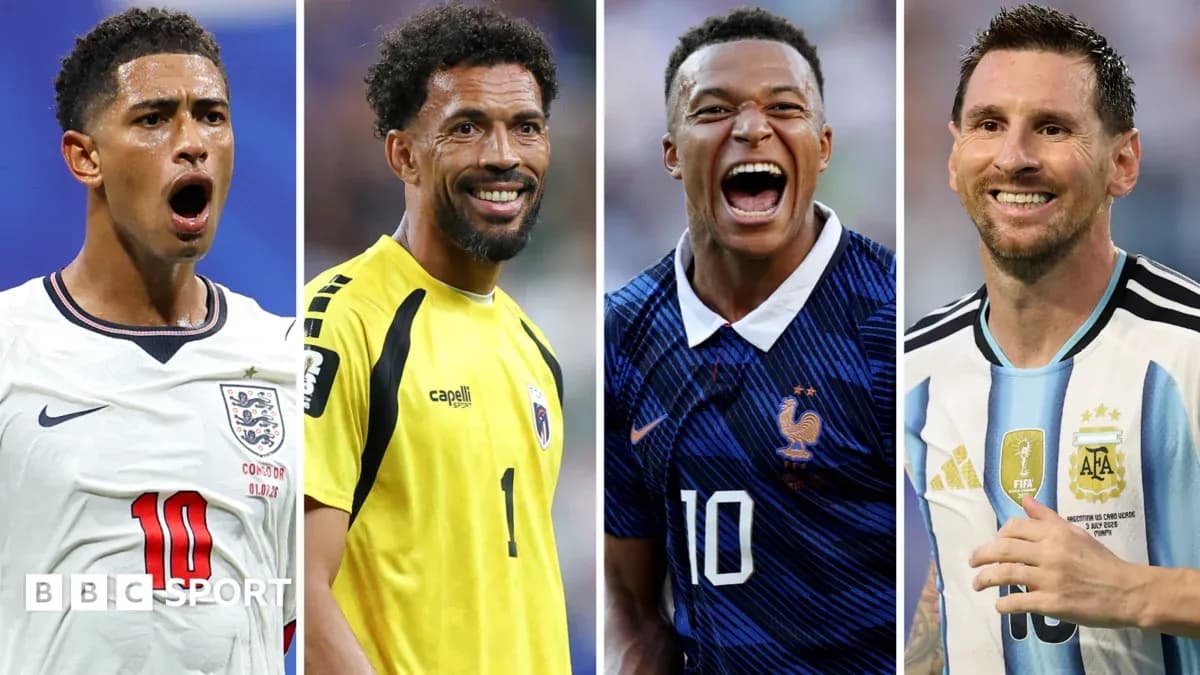
In the end, the official verdict was clear. Spain’s captain Rodri took the World Cup Golden Ball as the tournament’s best player, the metronome at the heart of a side that conceded just once all tournament. Messi claimed the Silver Ball, Kylian Mbappe the Bronze.
Rodri’s influence was relentless, his absence unthinkable for both Spain and Manchester City. He anchored the best team in the competition, dictating tempo, extinguishing danger and quietly dominating the biggest nights.
Yet the conversation never strayed far from Messi. At 39, this was supposed to be a farewell tour. Instead, it became another chapter in his domination. He orchestrated Argentina’s charge, especially in that breathless semi-final against England, where he slowed the chaos to his own rhythm and pulled strings from deep.
Mbappe, relaxed and razor-focused from his earliest news conferences, played like a man intent on owning the stage: goals, leadership, work off the ball, the full package. For England, Jude Bellingham dragged his country through games by sheer force of will, then elevated his level again as the tournament grew sharper. He looked every inch the future of his national team.
Others impressed too. Michael Olise, despite being marshalled out of the semi-final against Spain, left the tournament with seven assists and a scissor-kick against Sweden that had the press box on its feet before the ball crashed off the post. For some, he was the revelation. For others, this was simply confirmation.
John Murray summed up the wider mood around Messi: doing this at 39, he argued, is almost an affront to the laws of physics. Many agreed. He is not just extending his career. He is reinforcing his claim to be the greatest.
Pau Cubarsi and a new wave
If Rodri ran Spain, Pau Cubarsi completed them.
Nineteen years old, ever-present, and named Fifa’s best young player after playing every minute of Spain’s campaign, the Barcelona centre-back looked like he had been patrolling international defences for a decade. He was immense in the semi-final win over France, reading danger, stepping out with the ball, never flustered. A star of the future, and very much of the present.
He was not alone. Morocco’s Ayyoub Bouaddi, long admired by Lille fans and Ligue 1 regulars, used this World Cup to introduce himself to a global audience. His performance against Brazil in New York New Jersey Stadium was a masterclass in intelligent movement, drawing comparisons with Patrick Vieira and Luka Modric.
Erling Haaland hardly fits the usual “breakout” label, yet his impact in the US turned him into a genuine household name across a new continent. Cape Verde’s 40-year-old goalkeeper Vozinha went the other way: from near anonymity to global cult hero. Seven sensational saves in a 0–0 draw with Spain on their World Cup debut, eight more as they pushed Argentina to the brink. His Instagram following rocketed from around 50,000 to more than 29 million. A folk story written in real time.
The USA’s Alex Freeman used the spotlight well. His performances at full-back were so assured that Mauricio Pochettino publicly suggested he could become one of the world’s best in his position. Switzerland’s Johan Manzambi, just 20, played with a grin and the swagger of a street footballer, scoring three times in four games before injury halted his run. Aston Villa’s move for him, at around £50m, underlines how quickly his stock has risen.
Mexico’s 17-year-old midfielder Gilberto Mora, promoted into the starting line-up, carried an air of Luka Modric in his movement and passing. He looked destined for the top. The next generation did not just arrive; it took centre stage.
Nights that shook stadiums
Some moments will live longer than the trophy lift.
The Azteca for Mexico v England might have been the beating heart of the entire tournament. The atmosphere, according to those who have seen seven World Cups, was as intense as anything they had ever experienced. The Mexican national anthem became a wall of sound, a spine-tingling roar that rolled around the stadium and refused to fade.
In Boston, Paraguay’s penalty shootout win over Germany produced scenes of raw human emotion. Fans draped in red, white and blue wept in disbelief. One father and son called it the best day of their lives. That is what the World Cup can do: turn a single night into a lifetime memory.
Messi’s opening-game hat-trick set his narrative in motion, a clear message that he was not done and that Argentina were coming again. But the most astonishing single strike may have belonged to Cabral. His 103rd-minute equaliser against Argentina in Miami – a clean, rising hit from the edge of the box – sent the stadium into a kind of stunned joy. Argentina eventually edged it 3-2, yet the goal became an instant classic.
Cape Verde’s run, pushing the defending champions to the brink, embodied the spirit of the expanded format. They were the smallest nation ever to reach the knockout stages, and they played like they had no intention of wasting the opportunity.
Around the US, the tournament became a travelling carnival. Tailgates with beer and sausages from the back of pick-up trucks, strangers asking for selfies with “the guy from the BBC”, and the same question echoing in different cities: “Is it coming home?”
Giants that stumbled
Not everyone left with stories they will want to tell.
Brazil looked nothing like Brazil. Under Carlo Ancelotti, they moved slowly, attacked without imagination and trudged through the tournament until Norway picked them apart in the last 16. Every flaw was exposed.
Senegal arrived with perhaps the most gifted squad in their history. Off-field issues clouded the camp, and when they went 2-0 up against Belgium in the last 32, it seemed they might still salvage something. Instead, tactical errors and poor game management turned a statement win into a collapse. A squandered chance for a golden generation.
Scotland’s failure to sneak through as a best third-placed team stung, made worse by the wait for confirmation. Portugal and Cristiano Ronaldo fell to Spain 1–0 in the last 16, their campaign never matching pre-tournament expectations despite three goals from the veteran forward.
The USA started fast, carried a wave of home optimism, then lost their way amid controversy around Folarin Balogun and a limp exit to Belgium. France, loaded with attacking talent, delivered a flat, lifeless semi-final against Spain. Brazil, again, were a disappointment. Many thought Ancelotti’s side would go deeper. So did they.
Even the final itself carried a note of frustration for some. Staged at MetLife Stadium in New Jersey, it was criticised as expensive, awkward to reach and soulless compared to more intimate, fan-friendly venues like Philadelphia’s sports complex. A showpiece in a giant bowl, but not everyone’s idea of a World Cup finale.
The supporters who owned the World Cup
If the football wrote the headlines, the fans provided the soundtrack.
Mexico’s support, both at home and in the US, was relentless. The passion, the colour, the warmth – even in defeat – left a mark. In a Mexico City restaurant on the eve of their clash with England, an MC asked diners where they were from. When “England” was announced, the room broke into spontaneous applause. That was the tone: rivalry, yes, but drenched in respect.
Curacao’s fans, from a nation of just 150,000, somehow filled Philadelphia with noise. Brazil’s travelling army turned American cities into temporary outposts of Rio and Sao Paulo. When they came to town, entire neighbourhoods seemed to change colour.
Colombia’s fans took over Arrowhead Stadium in Kansas City and turned it into a party. Norway’s support introduced their Viking row to the world: thousands in red shirts sitting in lines, leaning back in unison, roaring as one. It became a viral ritual, especially when players joined in on the pitch after matches.
In Los Angeles, Mexico’s presence was unmistakable. Green shirts everywhere, fireworks after wins, car horns and chants long into the night. Norway’s supporters also provided one of the tournament’s sharpest ironies, singing “You’re going home” at England in Miami as they led 1-0 in the quarter-final. Moments later, Jude Bellingham equalised.
At the Azteca, the Mexican fans made two matches feel like a pilgrimage. In Miami and Kansas City, Argentina’s support rolled in with numbers above 60,000, a wall of blue and white noise that never stopped singing. They didn’t just attend games. They took them over.
In the end, this World Cup belonged to many: to Rodri’s control, to Messi’s enduring genius, to Cabral’s audacity, to Vozinha’s heroics, to the kids like Cubarsi and Mora who played as if they’d been waiting for this stage their entire lives.
But as the dust settles, one question hangs over everything we have just seen: after a tournament like this, with legends stretching their careers and teenagers tearing up scripts, who really wants to wait four more years?