.svg&w=384&q=75 "Pitchgist logo")
MLS Seizes World Cup Momentum: A New Era for Soccer in the US
“Thanks world, we’ll take it from here.”
That’s the line Major League Soccer has chosen as its rallying cry, delivered by Lionel Messi, Son Heung-min, David Beckham and a cast of MLS stars in a slick new campaign aimed squarely at the millions of fresh eyes the World Cup has just delivered to the sport in the United States.
The pitch is simple: you’ve fallen for football over the past month – now come and see what’s happening in your own backyard. The league is even dangling free tickets for new fans as the regular season kicks back into gear.
Dan Courtemanche has been around long enough to recognise a moment. The MLS executive vice-president joined the project in 1995, before a single league ball had been kicked. He watched it grow out of a FIFA condition attached to the 1994 World Cup bid into a 10‑team start‑up in 1996 with no purpose-built stadiums. Three decades on, he’s looking at a 30‑club competition with almost as many soccer-specific grounds and a country that has just devoured another World Cup.
“The World Cup has now exposed millions of people to Major League Soccer,” Courtemanche says. “We’re going to continue to capitalise on that momentum.”
The obvious question follows: could this be the World Cup that finally nudges MLS into the company of the game’s elite domestic leagues?
World Cup wave hits home
On the evidence of the past month, football in the US is no longer a niche obsession. Predictions that sky‑high ticket prices would leave banks of empty seats proved hollow; stadiums were full, colour and noise spilling into streets and bars long after the US were knocked out.
The numbers on television were just as striking. The US defeat to Belgium in the last 16 drew more than 33 million viewers on Fox – the most-watched football match ever on a single US network. England’s last‑16 win over Mexico went even bigger: a combined 45 million people watched in English and Spanish across Fox and Telemundo, the largest football audience in US history.
Those figures live in the same neighbourhood as the NFL’s regular-season blockbusters. They don’t yet touch the Super Bowl, which reached a record 127.7 million viewers across English and Spanish broadcasts and streaming in 2025, helped as ever by a half‑time show – Kendrick Lamar that year – that pulls in viewers who barely glance at the scoreline.
But for a sport that once fought for scraps on cable, those World Cup ratings are a statement. And MLS, which has been quietly posting steady growth since 1996, believes it’s ready to cash in.
“I think we’re looked at as the top, one of the top leagues commercially,” commissioner Don Garber said at a recent MLS event focused on the league’s future and the World Cup’s legacy. “We’ve cracked that code. Now we’ve got to crack the rest of it.”
From “retirement league” to launchpad
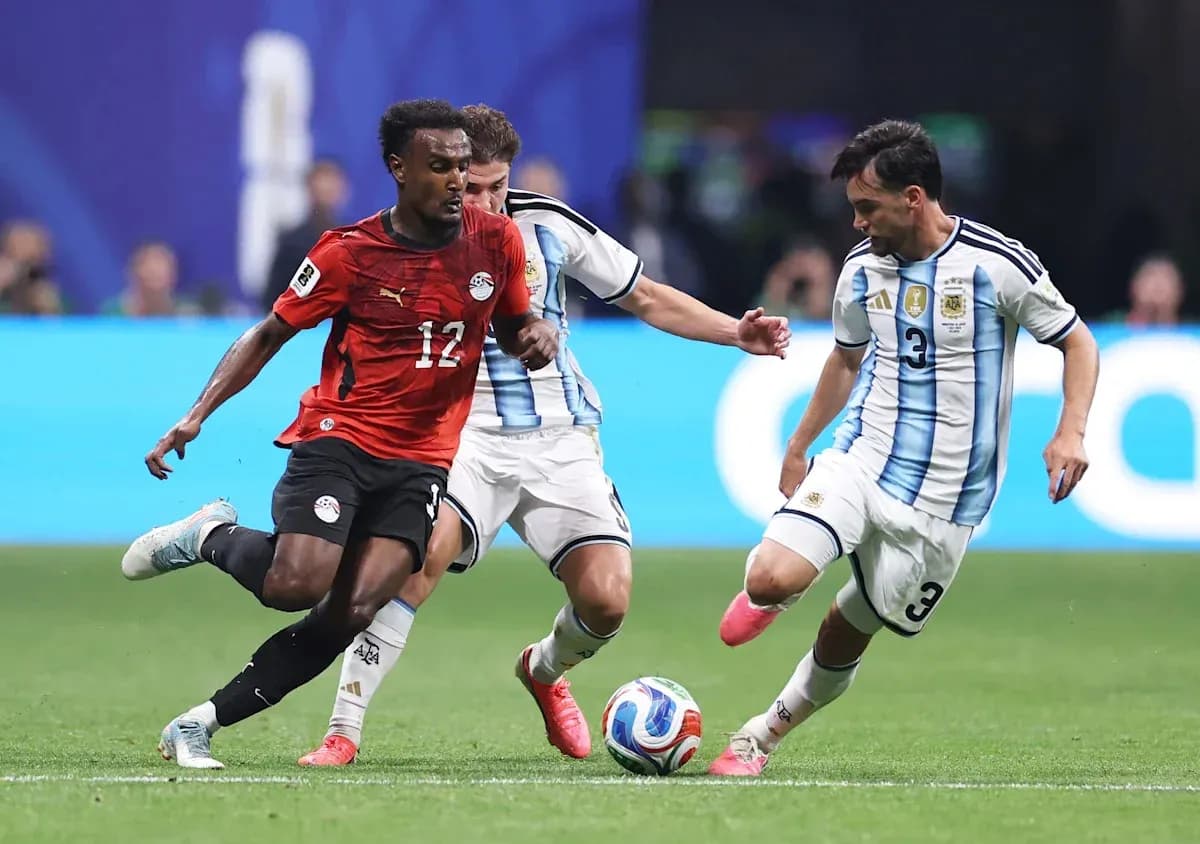
On some fronts, MLS already stands shoulder to shoulder with the established powers. Forty‑five MLS players were at the 2026 World Cup, including two in the final for Argentina: Messi and Rodrigo De Paul. For a competition once dismissed as a backwater, that kind of representation matters.
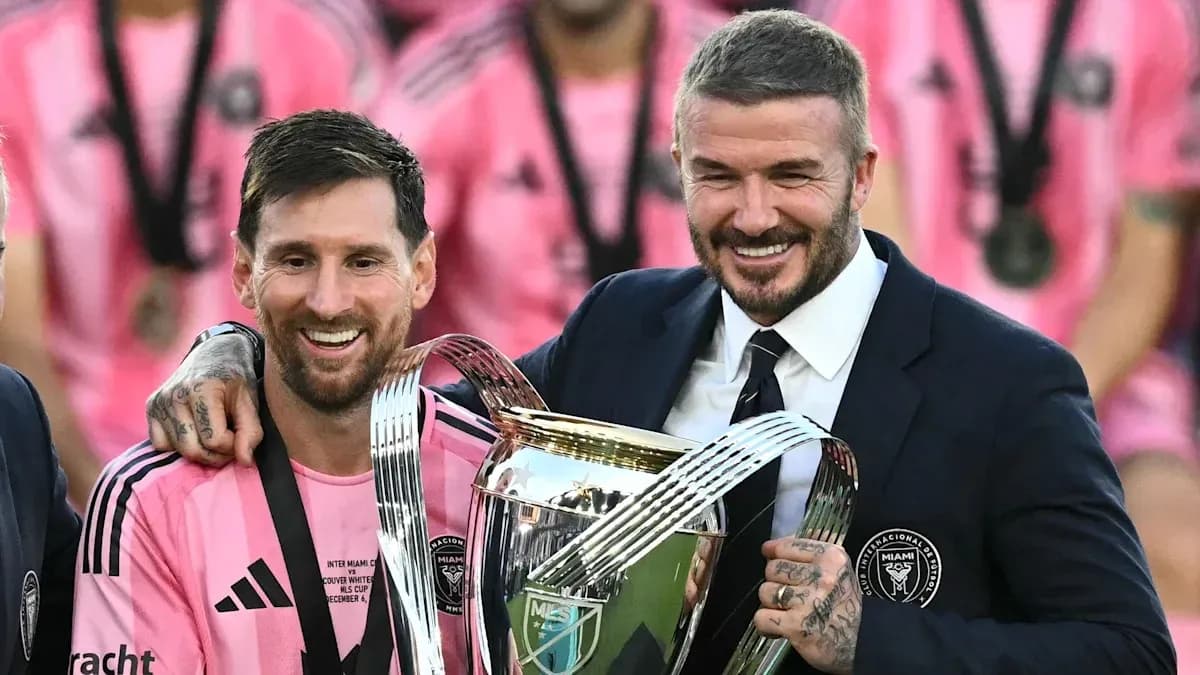
The old jibe is familiar: MLS as a retirement home, a soft landing spot where ageing European superstars top up their bank balances and their tans. Beckham did it with LA Galaxy. Messi has done it with Inter Miami CF. The stereotype still lingers.
Inside the league, they argue the reality has shifted. Courtemanche points to the average age of new international signings: 23.8 years. These are players with their best seasons ahead of them, many openly dreaming of using MLS as a springboard to Europe rather than a final stop on the way out.
The calendar is changing to reflect that ambition. From 2027, MLS will move to a summer‑to‑spring season, mirroring Europe’s timetable and making player movement between continents far smoother. The league’s leaders believe that aligning with the global game’s rhythm is a necessary step if they are serious about being judged alongside the Premier League, La Liga, the Bundesliga and the rest.
They’re also pouring money and energy into youth development. Every MLS club now runs its own academy. On the night LA Galaxy hosted a viewing party for the US win over Bosnia‑Herzegovina, the most telling sight wasn’t on the big screen. It was on the three small pitches nearby, where dozens of children ignored the broadcast to stage their own matches, sprinting over to the giant screen only when the roar of a goal washed through the crowd.
In a country where childhood is often scheduled to the minute, these were rare pick‑up games. The quality was high. Some of those kids already play for MLS academy sides.
Eight‑year‑old Landon – named after US icon Landon Donovan – stole the show, bouncing from goalkeeper to forward with the kind of joy that can’t be coached. His mother, Jen Wing, is a coach herself. Her children have attended MLS camps and travel with teams from their home in New Jersey. Landon’s dream is clear.
“LAFC,” he says, without hesitation.
The pay-to-play problem
That kind of passion is exactly what MLS wants to harness. But there’s a structural problem that critics say will cap the league’s ceiling until it’s fixed.
At the top of the pyramid, MLS academies mirror Europe’s best: they scout, train and develop elite youth players for free. The catch comes earlier in the journey. To reach the level where an MLS academy even notices a teenager, families across the US routinely spend thousands of dollars on private coaching and travel teams – a “pay‑to‑play” culture that runs deep through American youth sports.
The result is obvious: talent can slip through the cracks if it can’t afford the ladder.
League officials insist the landscape is changing. Development leagues are being reshaped, and every MLS club offers scholarships for gifted players who can’t cover the costs. Garber talks about a system that is “always improving” and a clear target: producing more players for the men’s national team and raising the physical and technical bar.
“More and more to the men’s national team and just be better, bigger, stronger, faster,” he says, listing the attributes that, in his mind, fuel belief in a better future.
If MLS wants to stand as a genuine rival to Europe’s giants, this is the grind it has to win: not just signing stars, but finding the next ones on dusty community pitches and giving them a pathway that doesn’t depend on a parent’s bank balance.
Celebrity, cash and cultural headwinds
For now, the league’s most bankable asset remains Messi. His presence has turned Inter Miami matches into travelling events, with ticket prices spiking and pink shirts appearing in cities that barely knew the club existed a year ago.
The star power doesn’t stop on the pitch. MLS has leaned hard into the American obsession with celebrity ownership. Will Ferrell is part of the group behind LAFC. Reese Witherspoon has a stake in Nashville SC. Matthew McConaughey is the most visible face of Austin FC. Magic Johnson and others have positions at LAFC. Their appearances in the stands and on broadcasts add a layer of glamour that few leagues outside the US can match.
The business case has followed. When Drew Carey bought into Seattle Sounders as an original owner in 2009, the expansion fee was $30m. Today, the club is valued at more than $900m. Beckham’s 2007 contract with LA Galaxy included an option to buy an expansion team for $25m. He exercised it and now owns Inter Miami CF, a club widely valued at over $1bn.
Money is not the issue. Attention is.
This is still a country where Friday nights belong to high school American football. That’s when the marching bands play, the cheerleaders perform, and teenagers see their names lit up on scoreboards in front of packed bleachers. Soccer, by contrast, is often tucked into Saturday mornings, watched by parents on folding chairs, the soundtrack more sideline chatter than stadium roar.
Brian Udovich has seen the pull of that culture up close. His 12‑year‑old son Croil plays in an MLS Next Level league in Southern California, right at the heart of one of the richest talent pools in the country. He says many gifted youngsters drift away from soccer as they hit their teens, lured by the pageantry and status that American football still commands.
“It just means so much more to other cultures than us,” Udovich says of football’s global weight, drawing a line between the rest of the world and the US.
Michael Bradley, now coach of New York Red Bulls after a long playing career that took him from MLS to Europe and back, sees the same cultural gap. But he doesn’t view it as a death sentence for the sport in the US. He remembers the years when the country’s lack of footballing history fed an inferiority complex, a nagging fear that the game would never truly stick.
“We don’t have the long, storied football history that other countries do,” Bradley told the BBC. “I think for a long time that led to an inferiority complex that maybe football would never really survive in the United States.”
The mood now is different. The stadiums, the viewing figures, the kids playing through World Cup matches – all of it points to a country that has stopped apologising for its version of the game.
“I think we can all unequivocally say in 2026, football is not going anywhere,” Bradley says.
The question for MLS is no longer whether the sport will survive. It’s whether this World Cup wave can finally lift a once-fragile league into the permanent, unforgiving waters where the world’s biggest competitions live.