.svg&w=384&q=75 "Pitchgist logo")

Chelsea's Record-Breaking Transfer: Morgan Rogers for £117m
Chelsea have never been shy of a headline transfer, but this one stops you in your tracks.
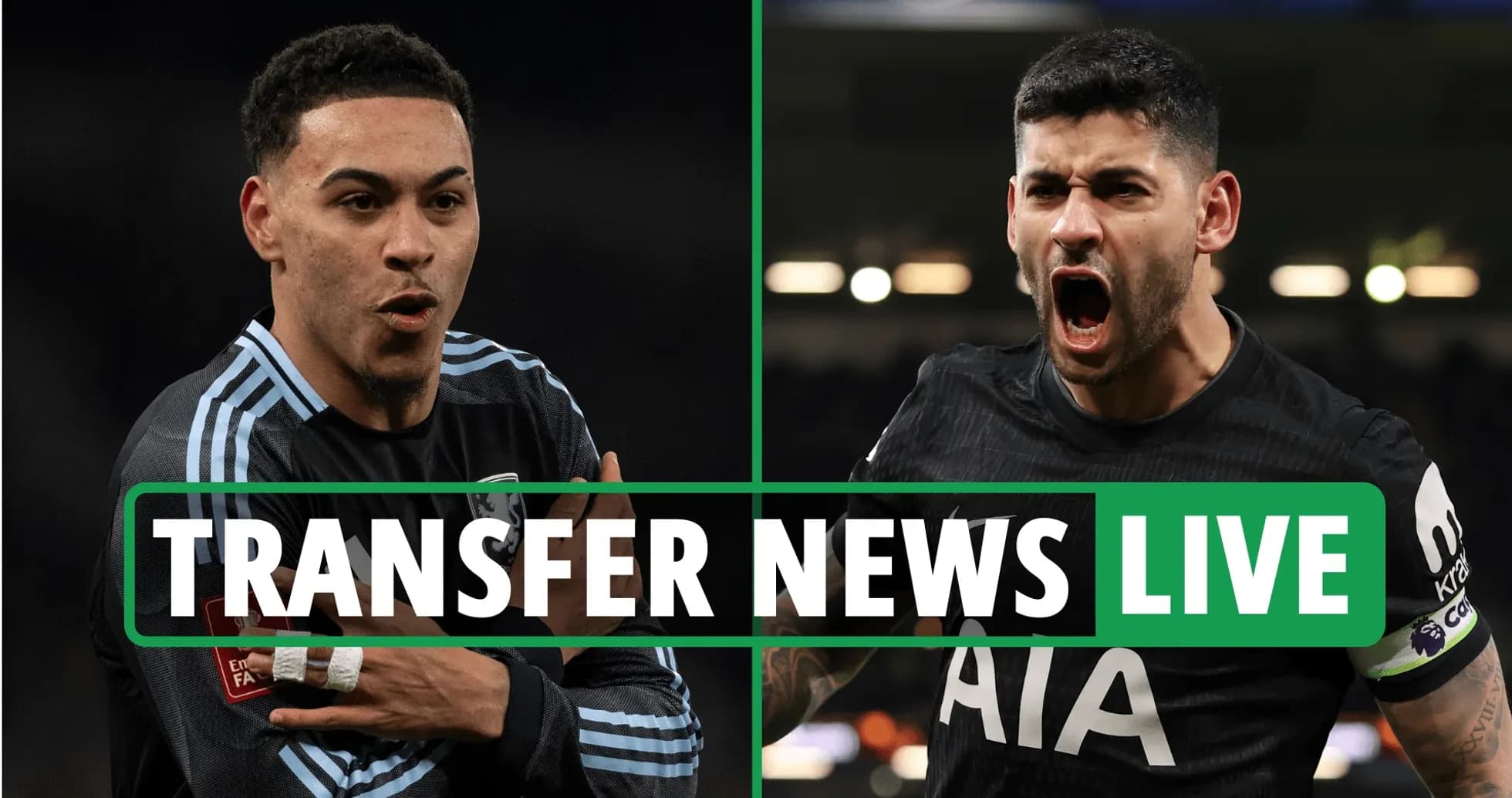
Morgan Rogers. £117m. The most expensive footballer in British history, leaving Aston Villa for Stamford Bridge on a six-year deal with an option for a seventh.
The number is staggering. The questions around it are louder still.
Chelsea buy another No 10 – and a problem
This is not a squad that was crying out for another creator in the same area of the pitch. Chelsea already have Cole Palmer, their breakout star, the player who dragged them through games last season and into the England squad.
Rogers and Palmer operate in the same pocket of grass. They went to the World Cup with one chosen instead of the other because they fill the same role. Now they are in the same dressing room, both wanting the ball in the same spaces, both seeing themselves as the side’s chief conductor.
Layer Joao Pedro on top of that. Another No 10. Another player who wants to receive between the lines, turn, and hurt teams. Chelsea have gone shopping and come back with three versions of the same luxury item.
So where does everyone play?
Does Palmer get shunted back out to the right, where his influence shrinks and his genius is diluted? Does Rogers, a player whose game is built on carrying the ball through the middle of the pitch, find himself stuck on the flank, where his strengths are blunted and he’s suddenly judged as a winger in a league full of elite wide men?
On paper, you could rip up the midfield and build around them. Sell Enzo Fernandez, accept the financial hit on a £100m signing, drop Moises Caicedo in as the single pivot and let Palmer and Rogers float ahead of him. It’s a bold idea. It’s also a huge admission that a very expensive project has already been re-routed.
What’s clear is that Chelsea have paid a record-breaking fee for a player whose best work comes in transition, in broken games, when he can pick up the ball and drive at retreating defenders. At Villa, when matches opened up, Rogers thrived.
At Stamford Bridge, teams arrive with a different plan: sit deep, slow the game, deny space. There will be no green grass to gallop into, only tight pockets and packed penalty areas. That is a different challenge entirely.
The weight of £117m
Rogers can insist the price tag is not his problem. Every big-money signing says it. It never changes the reality.
When Declan Rice and Caicedo moved for £100m, plenty of voices called those fees outrageous. The noise faded because the performances answered every question. Nobody talks about the numbers now; they talk about what those players do every week.
Rogers has to reach that point. Quickly.
His job is harsher than Rice’s or Caicedo’s. Holding midfielders can control games in quieter ways – interceptions, positioning, tempo. Rogers will be judged on the scoreboard: goals, assists, the final pass, the decisive moment. That is the hardest role to justify a fee of this size. You cannot hide when the numbers sit next to your name.
There is another concern. His Aston Villa season did not run from August to May in a straight line. By his own standards, the early months were poor. He only caught fire in the second half of the campaign, when confidence grew and the team’s rhythm suited him.
That kind of slow burn is impossible at Chelsea for a £117m signing. You cannot turn up in November. You cannot disappear for two months and hope nobody notices. Not at that price, not in that spotlight.
Arsenal left short and searching
This transfer also slices straight through Arsenal’s plans. The message it sends is blunt: Arsenal were ready to use Rogers on the left wing, while Chelsea have offered him the keys to the No 10 role he craves.
On footballing logic alone, it is a puzzling choice. One club is chasing the Premier League again and expects to go deep in the Champions League. The other is not in Europe at all. To pick the latter suggests either an irresistible promise of position, or a contract so heavy over seven years that it outweighs the lure of trophies.
For Arsenal, the consequences are immediate. They need a left winger. Not a squad filler – a player who can lift the level of an already elite side. Desire Doue fits that profile. So does Bradley Barcola at PSG. There are not many wide players available who genuinely improve a title-chasing XI. Those two are firmly on that short list.
That need is sharpened by a decision that still feels baffling: selling Leandro Trossard for a modest fee. This is a player trusted in the biggest games at the end of last season, a forward who started against top opposition because he can think quickly and finish cleanly. He never looked like a problem behind the scenes, never gave the impression of a disruptive presence. He accepted rotation, came on, did his job.
Letting that go for what amounts, in modern market terms, to loose change is a risk. Arsenal now have to spend again, and spend well, just to get back to where they were.
They want to go up a level. Without a top-class left winger, that climb becomes steeper.
Villa’s joy turns sour
If there is one club that should be basking in the glow of this summer, it is Aston Villa. Champions League football secured. A European trophy lifted. A season that rewrote expectations and reawakened a giant of English football.
Instead, the mood is uneasy.
Villa have lost Youri Tielemans and Rogers – their two most creative players, the pair who stitched together Emery’s attacking structure. Tielemans set the tempo, saw passes others did not, moved the ball into dangerous zones with calm authority. Rogers then took those situations and drove at opponents, forcing the game to bend to his rhythm.
Both gone, in the space of a few weeks.
If you asked Unai Emery at the start of the summer which players he least wanted to lose, Tielemans and Rogers would have been near the bottom of any sell list. If you are a Villa supporter renewing a season ticket, they are the names you want to see on the team sheet before you hand over your money. You pay to be entertained; those two delivered that.
Now there is the lingering fear that Ezri Konsa could follow. Arsenal need a centre-back. Chelsea do too. Konsa’s profile fits both. Villa suddenly look like a club trying to hold their structure together while the market tests every pillar.
Johan Manzambi has arrived and looks tidy enough. But “tidy enough” is a long way from replacing Tielemans or Rogers. When a club signs players at this level, you always ask a simple question: who else was pushing to get them? Were Real Madrid, Barcelona, Manchester City, Manchester United, Liverpool circling? Or was the path clear because the very top end of the game looked elsewhere?
It is the same question hanging over Arsenal’s move for Christos Tzolis. He might turn out to be a gem, a clever find. But he did not arrive with Europe’s elite locked in a bidding war for his services. That tells its own story about risk.
Chelsea have rolled the dice on a record fee for a player who still has to prove he can dominate games when the space disappears and the pressure doubles. Arsenal must rebuild a left flank they have weakened. Villa, fresh from a season of triumph, are suddenly trying to explain why their most inventive talents are walking out of the door.
For Rogers, for Chelsea, for three ambitious clubs pulling in different directions, this is more than a transfer. It is a test of judgement. And by the time we know who was right, that £117m price tag will either look like a masterstroke – or a weight that dragged an entire project off course.