.svg&w=384&q=75 "Pitchgist logo")
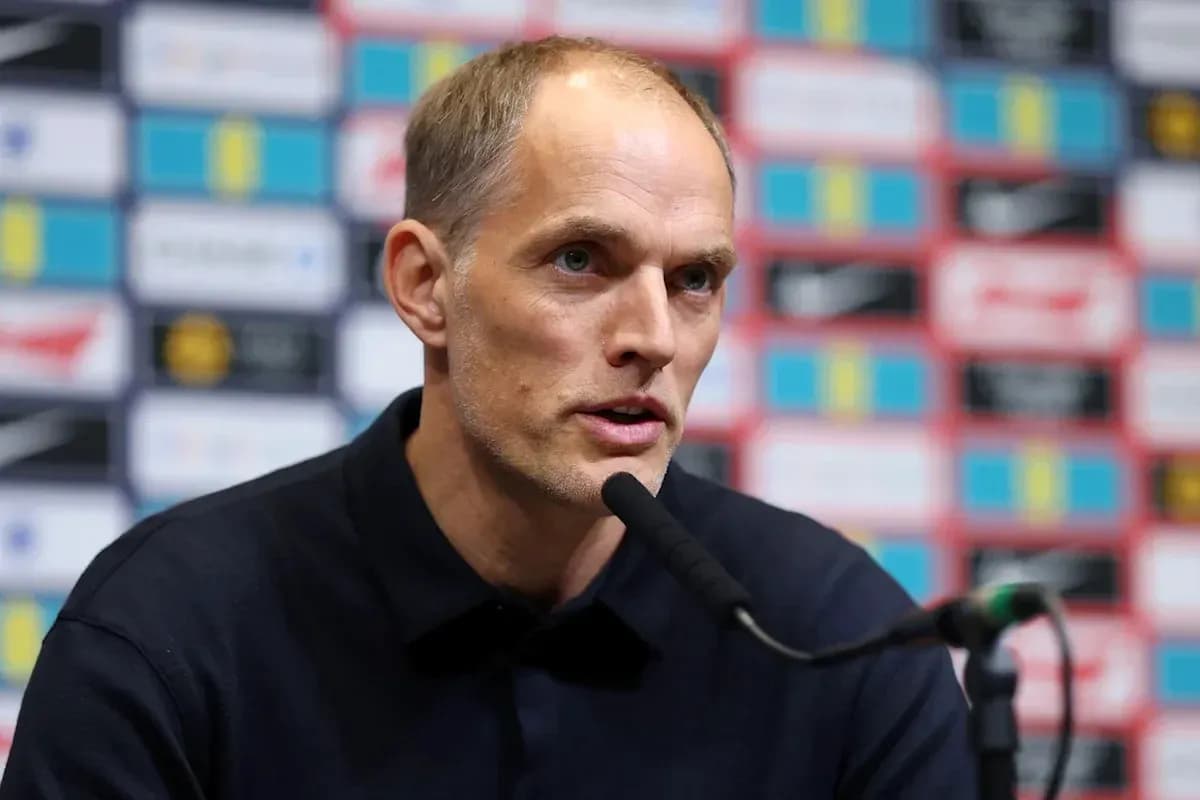
Thomas Tuchel's Bold England Squad Omissions for World Cup
Thomas Tuchel has drawn his World Cup battle lines – and he’s done it without some of England’s biggest modern talents.
Phil Foden, Cole Palmer and Morgan Gibbs-White, three creative hubs of the Premier League era, are nowhere to be seen in the squad for this summer’s tournament. Their omission headlines a list of high-profile absentees that will dominate debate long after the plane has taken off.
Big Names Left at Home
The conversation around this England squad started long before Tuchel read out a single name. Whispers hardened into certainty as it became clear that Harry Maguire, Trent Alexander-Arnold, James Garner, Luke Shaw and Adam Wharton would all miss out. Now it’s official. England head to the World Cup without some of the most recognisable faces of their recent campaigns.
Foden and Palmer, in particular, feel like the story. Both are coming off seasons that showcased their ability to bend games to their will, yet Tuchel has chosen a different path. Gibbs-White, a growing influence and a creative connector, also watches from afar.
This is not a conservative squad. It’s a calculated break from expectation.
Tuchel Rolls the Dice
If the omissions are bold, so are the inclusions. The clearest example is Ivan Toney.
Toney has pulled on an England shirt only once since 2024 and now plies his trade in the Saudi Pro League with Al-Ahli. That profile usually places a player on the fringes of the conversation, not at the centre of a World Cup plan. Tuchel has pushed him straight into it.
It is a gamble, but a deliberate one. Toney offers penalty-box presence, penalty-taking nerve, and a physical edge that few defenders enjoy facing. In a tight group, those qualities can turn one point into three.
Steel and Subtlety in Midfield
Where Tuchel has taken risks in attack and left out big names elsewhere, the heart of his side looks far more orthodox – and reassuring.
Declan Rice anchors a midfield that carries both authority and balance. Around him, Elliot Anderson, Morgan Rogers and Kobbie Mainoo arrive off the back of strong club seasons, each bringing a different texture to England’s play: Anderson’s energy, Rogers’ drive, Mainoo’s composure and intelligence between the lines.
It is a core that suggests Tuchel wants control. Not just of the ball, but of the tempo, the territory, the emotion of games that can quickly slip away on the World Cup stage.
A Group Stage That Offers No Hiding Place
England’s campaign opens on June 17 against Croatia, a nation that has repeatedly tested them on the biggest stages. That fixture alone will reveal plenty about whether Tuchel’s reshaped squad can carry the weight of a World Cup opener.
Ghana and Panama follow. On paper, England will be expected to dominate those matches. On grass, against organised, hungry sides, Tuchel’s calls on experience, creativity and physicality will be put under the microscope.
He has left out stars, backed form and instinct, and handed a lifeline to a striker rebuilding his reputation in Saudi Arabia.
Now the question hangs over the entire project: has Tuchel cut too deep, or has he carved out the exact edge England need to finally go the distance?