.svg&w=384&q=75 "Pitchgist logo")
Joshua Brenet: From Promising Talent to Curaçao's Key Player
On Sunday night in Germany, a small Caribbean island will stare down a footballing giant. And at the heart of it all, on the right flank for Curaçao, will be a 32‑year‑old full-back whose career has veered from promise to chaos and back again: Joshua Brenet.
From island roots to Europe’s shop window
Curaçao’s story is tangled with that of the Netherlands. Once a colony, now an autonomous country within the Kingdom, it has long sent its people – and its footballers – north. The flow of talent has reshaped Dutch football so deeply that Curaçaoan roots now run through the spine of the Oranje.
FIFA only recognised Curaçao as a national team in 2010, but the talent pool was already there. Of the 26 players in their current World Cup squad, just one was actually born on the island. That lone native is Tahith Chong, the winger who broke through at Manchester United, played 16 competitive games for the club, and now turns out for Sheffield United after a difficult loan spell at Werder Bremen in 2021.
Germany knows this squad better than it might care to admit. Chong is one of six players with Bundesliga or lower‑league German experience. Gervane Kastaneer had a stint at 1. FC Kaiserslautern, Riechedly Bazoer played for VfL Wolfsburg, Roshon van Eijma for Preußen Münster, while Jürgen Locadia and Brenet both passed through TSG Hoffenheim.
Nagelsmann’s gamble that blew up
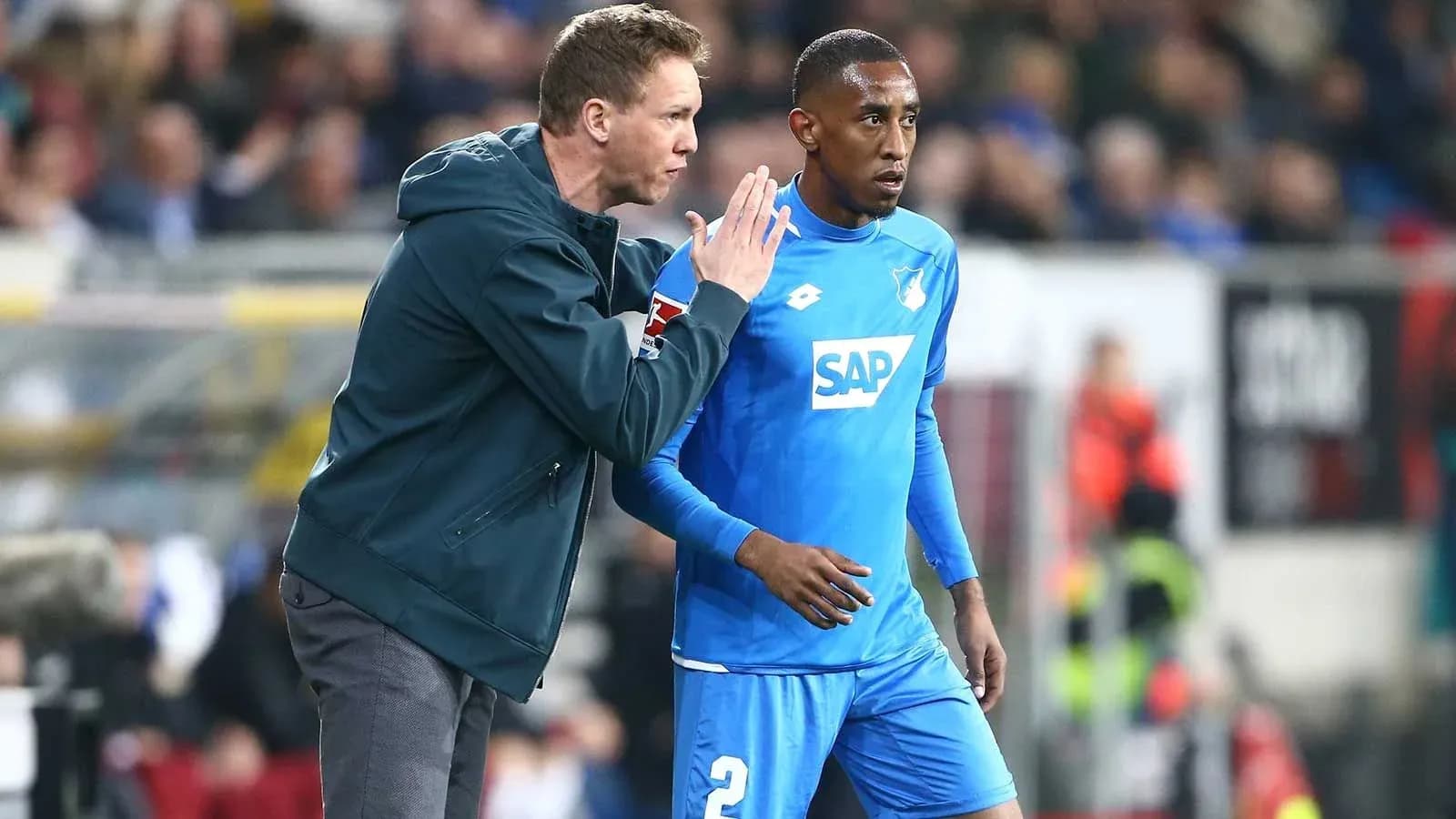
Brenet’s move to Hoffenheim in 2018 was supposed to be a step into the elite. He arrived from PSV Eindhoven for €3.5 million, a three‑time Eredivisie champion with two caps for the Netherlands and the clear backing of Julian Nagelsmann, now Germany’s national coach.
It unraveled almost immediately.
Brenet spent the first Bundesliga matches after his transfer watching from the bench. Then came Hoffenheim’s first-ever Champions League match, against Shakhtar Donetsk. On the eve of that milestone, he skipped a video session. Nagelsmann’s response was ruthless: he dropped him from the squad.
The right-back was later brought back into the fold, but the damage was done. His appearances became sporadic, his role reduced. When Nagelsmann left, Alfred Schreuder – now Nagelsmann’s assistant with the DFB – barely used him at all. Sebastian Hoeneß went even further, sending Brenet down to the reserves in the fourth-tier Regionalliga Südwest.
The pattern was grim and familiar: disciplinary problems, chronic lateness, a reputation sliding fast. Hoffenheim tried and failed to find a buyer. Only in 2022, when his contract expired, did he finally move on, joining Twente Enschede on a free transfer.
Courtrooms, red cards, and a career on the brink
On the pitch at Twente, Brenet reminded everyone why top clubs once chased him. Off it, he blew himself up.
In January 2023, Dutch authorities caught him driving without a licence. Twice. In two weeks. His licence had already been revoked in 2020 after a drink‑driving offence.
The judge did not hold back. “He clearly has no regard for authority. It seems to me as though he is continuing to play football after receiving a red card,” came the withering line from the bench. The verdict in 2024: a one‑month prison sentence.
It was not his first brush with the law. In 2021 he had already received a suspended sentence, including a fine and community service, for domestic violence. The prison term for driving without a licence was later converted on appeal to community service, but for Twente the damage was irreparable. The club terminated his contract.
From there, his career scattered across continents. Brenet signed for Al‑Rayyan in Qatar, where he made just six appearances in the 2024/25 season. He then resurfaced in Scotland with Livingston FC in the autumn, before another short‑term move took him to Kayserispor in Turkey for the second half of the campaign.
A new flag, a new purpose
For years, Brenet had worn orange. He represented the Netherlands at multiple youth levels and made his senior debut in the 2016 World Cup qualifiers. But as his club career fractured and the Oranje door closed, another path opened.
FIFA granted him permission to switch allegiance to Curaçao, the homeland of his parents. Since making his debut for the island in 2024, he has become one of their key weapons: six goals in 17 appearances, an extraordinary return for a right-back.
In their final warm‑up match against Aruba, he started on the right of defence and scored again, a reminder of the attacking thrust that once persuaded Nagelsmann to push for his signing at Hoffenheim.
Now the circle tightens.
On Sunday at 7 pm, Curaçao will walk out for their World Cup opener against Germany. On the opposite bench: Nagelsmann, the coach who once invested in Brenet, and Schreuder, the man who later froze him out.
For Brenet, it is more than a group game. It is a collision with his own past – the managers who doubted him, the league that spat him out, the country he no longer represents. He arrives scarred, controversial, and far from the polished trajectory expected of a Dutch international.
But he also arrives as something else: a leader for Curaçao, a symbol of a scattered diaspora, and a defender who, after so many self‑inflicted red cards, suddenly has the chance to write a very different kind of headline.