.svg&w=384&q=75 "Pitchgist logo")
Netherlands vs Japan: Group F Clash Ends in 2-2 Draw
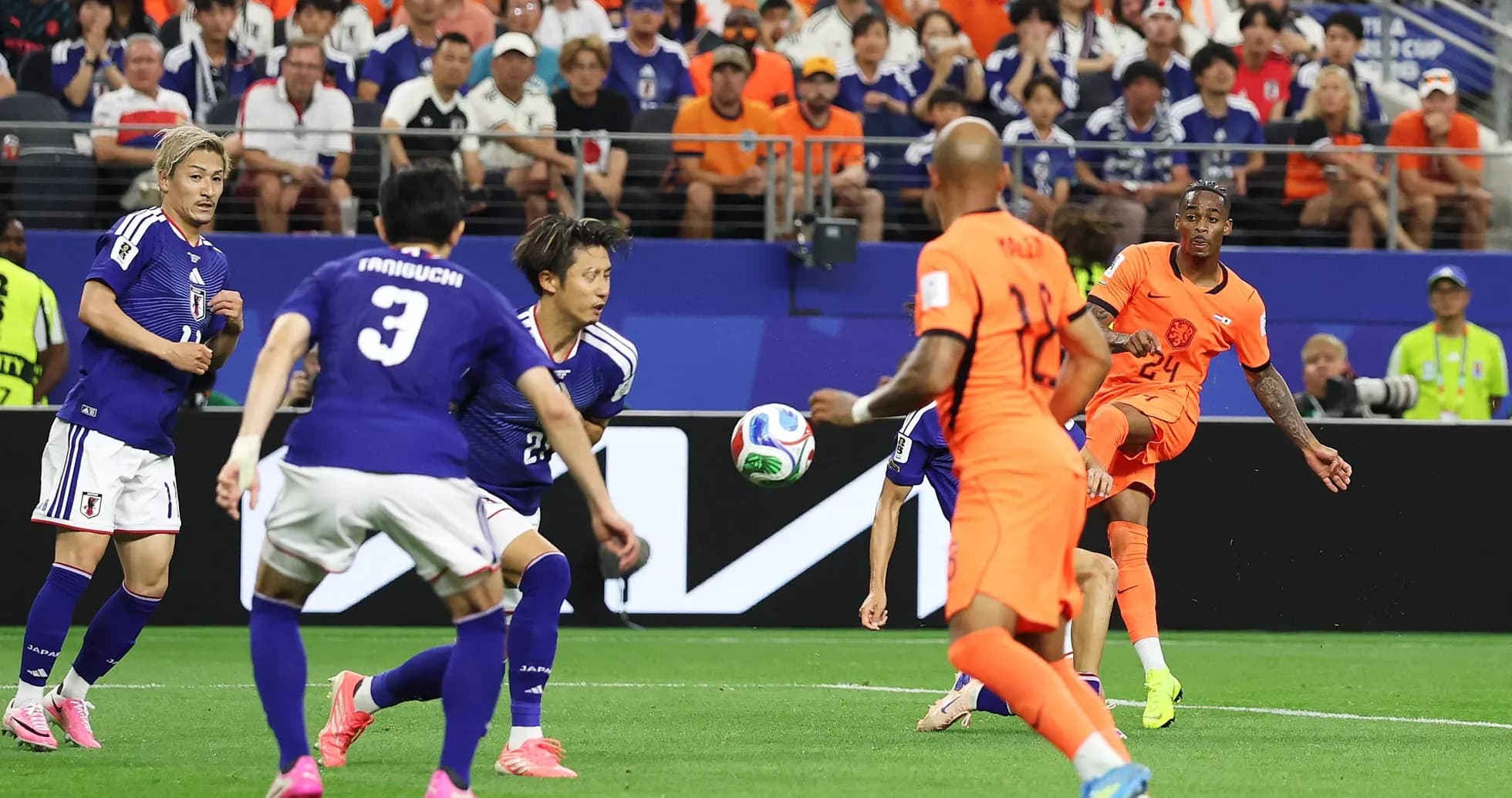
Netherlands 2-2 Japan at AT&T Stadium opened Group F with a finely balanced draw that leaves both sides on 2 points from two games, Japan staying top of the group on goal difference and Netherlands remaining second, both still firmly on course for the Round of 32 but without taking full control of the section.
Match Report
The game ignited after the interval following a cautious first half. In the 51st minute Netherlands took the lead with a set-piece style moment of authority: Netherlands goal — V. van Dijk (assisted by R. Gravenberch). The captain attacked the delivery aggressively, rewarding Netherlands’ early second-half pressure.
Japan responded quickly. In the 57th minute Japan goal — K. Nakamura (assisted by T. Kubo). A sharp combination on the flank freed Kubo to square for Nakamura, whose composed finish levelled the contest at 1-1 and exposed space behind the Dutch full-backs.
Netherlands then suffered a brief loss of discipline. In the 61st minute C. Summerville (Netherlands) — yellow card (Tripping), a booking that reflected Japan’s increasing success in drawing fouls between the lines.
Summerville answered in the best possible way three minutes later. In the 64th minute Netherlands goal — C. Summerville (assisted by R. Gravenberch). The winger cut in from the flank and finished low after Gravenberch’s incisive pass, restoring the Dutch lead at 2-1 and underlining the midfielder’s creative influence with his second assist.
Both coaches turned to their benches as the tempo rose. In the 66th minute J. Ito replaced D. Maeda (Japan), adding fresh pace to Japan’s front line. At 70 minutes Netherlands made a triple attacking reshuffle: M. Depay replaced D. Malen (Netherlands), T. Koopmeiners replaced C. Summerville (Netherlands), and Q. Timber replaced T. Reijnders (Netherlands), a move that aimed to stabilise midfield while introducing a central focal point in Depay.
Japan answered with a triple change of their own in the 75th minute to chase the game and refresh their structure: T. Tomiyasu replaced T. Watanabe (Japan), K. Ogawa replaced T. Kubo (Japan), and Y. Sugawara replaced R. Doan (Japan). The adjustments gave Japan more height and presence in the final third while shoring up the back line.
Netherlands then made a defensive-leaning switch in the 81st minute as N. Ake replaced R. Gravenberch (Netherlands), sacrificing their most productive creator to protect the lead and add an extra layer of security on the left side.
The intensity remained high. In the 83rd minute M. Depay (Netherlands) — yellow card (Roughing), the substitute forward booked after a physical challenge as Netherlands tried to disrupt Japan’s rhythm.
Japan continued to rotate their forwards in search of an equaliser. In the 84th minute K. Shiogai replaced A. Ueda (Japan), adding fresh legs up front. A minute later Netherlands made their final attacking change, with B. Brobbey replacing C. Gakpo (Netherlands) in the 85th minute, a like-for-like swap to maintain pressing energy in the front line.
Japan’s pressure was finally rewarded late on. In the 88th minute Japan goal — D. Kamada (assisted by K. Ogawa). Ogawa, introduced earlier, found space to feed Kamada, who arrived from midfield to finish clinically and make it 2-2, punishing Netherlands for retreating too deep in the closing stages.
There was still time for one more disciplinary note: in the 90+1' minute M. van de Ven (Netherlands) — yellow card (Holding), as the defender halted a Japanese transition to preserve the point. The match closed with the sides level after a second half rich in tactical swings and decisive contributions from the bench.
Fixture Statistics & Tactical Audit
- xG: Netherlands 0.79 vs Japan 0.54
- Possession: Netherlands 60% vs Japan 40%
- Shots on Target: Netherlands 6 vs Japan 3
- Goalkeeper Saves: Netherlands 1 vs Japan 4
- Blocked Shots: Netherlands 1 vs Japan 1
The underlying numbers suggest a marginally more dangerous Netherlands, but not a dominant one: their higher xG (0.79 vs 0.54) and greater shots on target (6 vs 3) reflect more frequent testing of the goalkeeper rather than a stream of clear chances. With Japan’s keeper making four saves, compared to just one for Bart Verbruggen, the Asian champions relied more on their goalkeeper and last-line defending, but their efficiency in turning limited xG into two goals underscores the quality of their final-third decision-making. Given the relatively low combined xG, a draw feels broadly fair: Netherlands’ territorial control and possession (60%) was offset by Japan’s ability to strike in key moments and exploit Dutch structural changes after substitutions.
Standings Update & Seasonal Impact
Both teams entered this Group F fixture on 1 point, having drawn their openers 2-2. The repeat scoreline means Netherlands move to 2 points with 4 goals for and 4 against, keeping their goal difference at 0 and maintaining second place in the group’s Round of 32 qualification positions. Japan also advance to 2 points with identical figures — 4 scored, 4 conceded, goal difference 0 — but remain top on tie-breakers, still occupying the leading Round of 32 slot. The result preserves a tight group, ensuring that progression will hinge on the final matchday rather than allowing either side to pull clear.
Lineups & Personnel
Netherlands Starting XI
- GK: Bart Verbruggen
- DF: Denzel Dumfries, Jan Paul van Hecke, Virgil van Dijk, Micky van de Ven
- MF: Ryan Gravenberch, Frenkie de Jong, Tijjani Reijnders
- FW: Crysencio Summerville, Donyell Malen, Cody Gakpo
Japan Starting XI
- GK: Zion Suzuki
- DF: Tsuyoshi Watanabe, Shogo Taniguchi, Hiroki Itō
- MF: Ritsu Doan, Kaishu Sano, Daichi Kamada, Keito Nakamura
- FW: Takefusa Kubo, Daizen Maeda, Ayase Ueda
Post-Match Verdict
This was a controlled but not ruthless Netherlands performance, with their superiority in possession and passing accuracy (88% vs Japan’s 84%) failing to translate into a decisive expected-goals advantage (0.79 vs 0.54). Ronald Koeman’s side were effective when playing through Ryan Gravenberch between the lines — his two assists underline his creative centrality — but the decision to withdraw him at 81 minutes coincided with a drop in their ability to retain the ball high up and relieve pressure.
Japan were compact and opportunistic, turning just three shots on target into two goals, a level of attacking efficiency that compensated for their territorial deficit. Hajime Moriyasu’s in-game management was pivotal: the introductions of K. Ogawa and T. Tomiyasu improved both their aerial presence and build-up security, with Ogawa directly assisting the late equaliser. Defensively, Japan conceded more shots on goal (6) but protected central spaces well enough that Netherlands’ xG remained under 1, suggesting that many of those efforts were from less threatening positions.
In strategic terms, Netherlands will view this as two points dropped from a position of control, while Japan can be satisfied with their resilience and bench impact. Over the longer group campaign, the draw keeps both sides firmly in Round of 32 contention but increases the pressure on Netherlands to convert possession dominance into higher-quality chances in their final group match.