.svg&w=384&q=75 "Pitchgist logo")
Special Olympics Team from Scunthorpe Prepares for National Games
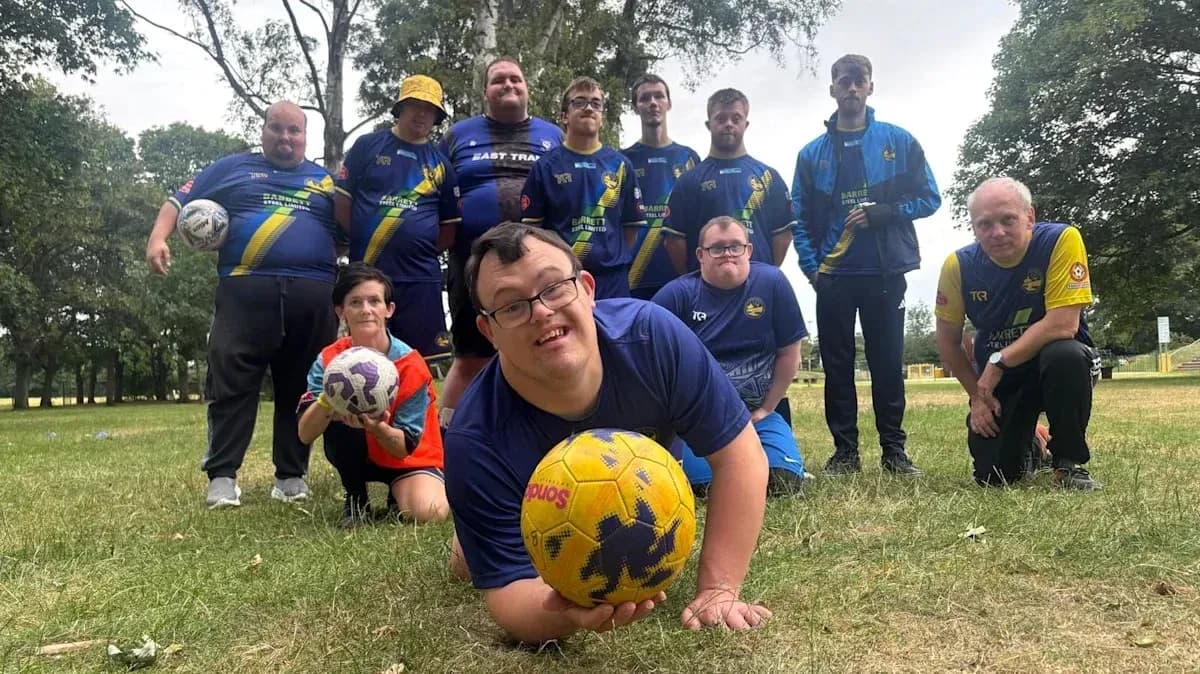
On a hot July evening in Scunthorpe’s Central Park, far from the noise building around England’s World Cup push in New York, a different kind of football story was taking shape in the shade of the trees.
No television gantries. No blaring music. Just the thud of footballs, the crackle of instructions, and a squad of players with intellectual disabilities chasing something every bit as precious as any World Cup – Special Olympics gold.
From small steps to national stage
The team began life at Bottesford Town Football Club around a decade ago, originally formed for young adults with Down's syndrome. Over time, the doors opened wider. Players with autism, ADHD and other learning disabilities joined, the group evolving into a tight-knit squad representing a broad spectrum of intellectual disability.
When these players first came together, the gains were measured in tiny increments. A bit more eye contact. A louder voice in the warm-up huddle. A first confident touch in a passing drill. Football was the vehicle, but confidence was the real currency.
Now those early steps have carried them to the brink of the Special Olympics GB National Summer Games at Alexander Stadium in Birmingham, where they will compete between 26 and 30 August. They train in their own colours, on a 4G surface, with a clear target: bring home medals.
Jake, one of the longest-serving players, does not complicate it.
“I feel happy,” he said, when asked how it felt to be heading to a national tournament. He talked about taking corners, about how to “wrap” the ball into the net, about technique as much as ambition. He won silver at the Special Olympics in 2017. This time, he has set his sights on two goals and a gold.
A mother’s push, a club’s embrace
Behind the bibs and cones is a story of persistence. Jake’s mum, Sue, has been there from the first session, driving the minibus effort in more ways than one – fundraising, organising transport, and refusing to accept that her sons’ football journey had to end at the gates of mainstream clubs.
Her younger son, Aiden, also has disabilities and is now learning to coach the team, folding his own experience into the next phase of the project.
Sue recalls how it began: her son loved football but struggled to keep up in standard teams. The pace, the structure, the expectations – all of it made the game he adored feel out of reach.
So she went to Bottesford Town FC and asked for something different: a place where Jake and his friends could actually play, not just watch from the sidelines.
“For Jake to be able to play football was just such a big thing for him,” she said. “It’s his passion. He loves football and he wanted to be able to play it.”
The club responded. They offered facilities, time and space. A sports hall for training. A 4G pitch they can use all year round. According to Sue, Bottesford Town have been “amazing”, not only in what they provided but in how they treated the players – as footballers first.
The impact has stretched beyond the touchline. Skills have sharpened, yes, but friendships have deepened. For parents who once stared into the unknown after a diagnosis, this team has become proof that their children can access more of life than the world sometimes assumes.
“When your child is born and you find out they have a disability, it’s a complete unknown,” Sue said. Her commitment, from the start, was that her boys “would access as much as possible in their lives”. Football has become one of the anchors of that promise.
Setbacks, sacrifices and a £10,000 target
The journey to Birmingham has not run in a straight line.
The team were originally accepted into the games in 2021. The anticipation built, only for the Covid-19 pandemic to wipe the tournament from the calendar. For some, the impact was brutal. Routines vanished, training stopped, social circles shrank. Sue says it “set quite a few of them back”. Jake was one of those who struggled.
Getting them back to this point has taken money as well as emotional energy. The “biggest challenge”, Sue admits, has been raising £10,000 to cover travel and accommodation so that two teams can compete at this year’s Games. Parents, coaches and supporters have thrown themselves into the task, determined that finance will not be the barrier that stops a dream.
Special Olympics GB, which offers year-round sporting opportunities for people with intellectual and learning disabilities, estimates that about 1.5 million people in Great Britain live with an intellectual disability. Its mission is to transform as many of those lives as possible through sport. This team, tucked away in North Lincolnshire, is one of the clearest expressions of that mission.
Training ramps up – and the targets sharpen
Manager Michael Potts can feel the clock ticking down to Birmingham. Sessions have intensified. The drills are sharper, the demands higher.
Training, he says, is “ramping up” and the players are “excited”. The 4G surface has played its part, giving them a consistent platform to grow technically and tactically.
As the squad expanded to include players with a wider range of intellectual disabilities, the coaching staff had to adjust. Different learning styles, different triggers, different speeds of understanding – all of it required thought and flexibility. They adapted, building a framework that allowed each player to contribute in their own way.
At the back, Mason stands in goal and talks like a man who knows what he’s protecting.
The defence, he says, is “rock solid”. He has the evidence to back it up too – he saved a penalty at his last competition and now, like Jake, is aiming for gold.
Asked what he would say to England’s men’s team as they plot their own route through a major tournament, Mason does not hesitate. Train hard. Make sure the goalkeeper throws the ball out properly. Simple, direct advice from someone who lives the position.
Taylor, another long-serving member of the group, has been with the team for 10 years and plays in defence. He feels the training is going well. His message to anyone thinking about joining a similar setup is just as straightforward: train hard. He is already looking ahead to Birmingham and predicts scoring four goals.
Eyes on Birmingham, hearts in the park
As the sun dips behind the trees in Central Park, the scene looks almost ordinary at first glance: players running through drills, a manager barking instructions, parents watching from the side.
Look closer and the details tell a richer story. The way teammates encourage each other through a tough exercise. The pride in a well-struck pass. The quiet satisfaction of a coach seeing a move they’ve practised for weeks finally click.
These are not just players preparing for a tournament. They are young adults who have carved out a space where they belong, where football is not something they are excluded from but something they own.
Special Olympics GB will offer them a grander stage at Alexander Stadium, with medals, ceremonies and memories that will last a lifetime. Yet the essence of their journey is captured in evenings like this one, in a park in Scunthorpe, where the game still feels close enough to touch.
Walking away through the park, the sound of the session fades but the impression does not. The passion is real. The professionalism is unmistakable. The ambition is only growing.
When the team return from Birmingham, the question will not be whether they have medals around their necks, but how many more of their dreams this game will have helped to unlock.