.svg&w=384&q=75 "Pitchgist logo")
Spain's Dominant World Cup Response Against Saudi Arabia
Spain’s World Cup wake‑up call lasted four days. The response took 25 ruthless minutes.
Lamine Yamal and Mikel Oyarzabal ripped through Saudi Arabia in Atlanta, driving La Roja to a 4-0 win that did far more than repair the damage of that flat, goalless opener against Cape Verde. This was Spain arriving at the 2026 World Cup with the volume turned all the way up.
Yamal lights the fuse
Yamal was restored to the starting XI after his cameo off the bench on Monday, and from the first seconds it was clear the 16-year-old had no intention of easing himself into the tournament. He demanded the ball, ran at defenders, whipped in crosses. Saudi Arabia were on the back foot before they had even settled into shape.
The breakthrough came on 11 minutes and it was pure predator, not postcard. Oyarzabal drilled a low, vicious cross to the back post, where Yamal had ghosted free. The angle was tight, the finish anything but glamorous, a stabbed poke past Mohammed Al Owais. It was his first World Cup start, his first World Cup goal, and the kind of ugly finish that hints at frightening numbers to come.
Just two years ago he was watching the World Cup from a classroom. Now he was dragging Spain into this one.
By the time the ball hit the net, Spain had strung together 39 passes in the move. No side at this tournament had built a goal with that many touches. The old Spain, but with a sharper edge.
Oyarzabal takes over
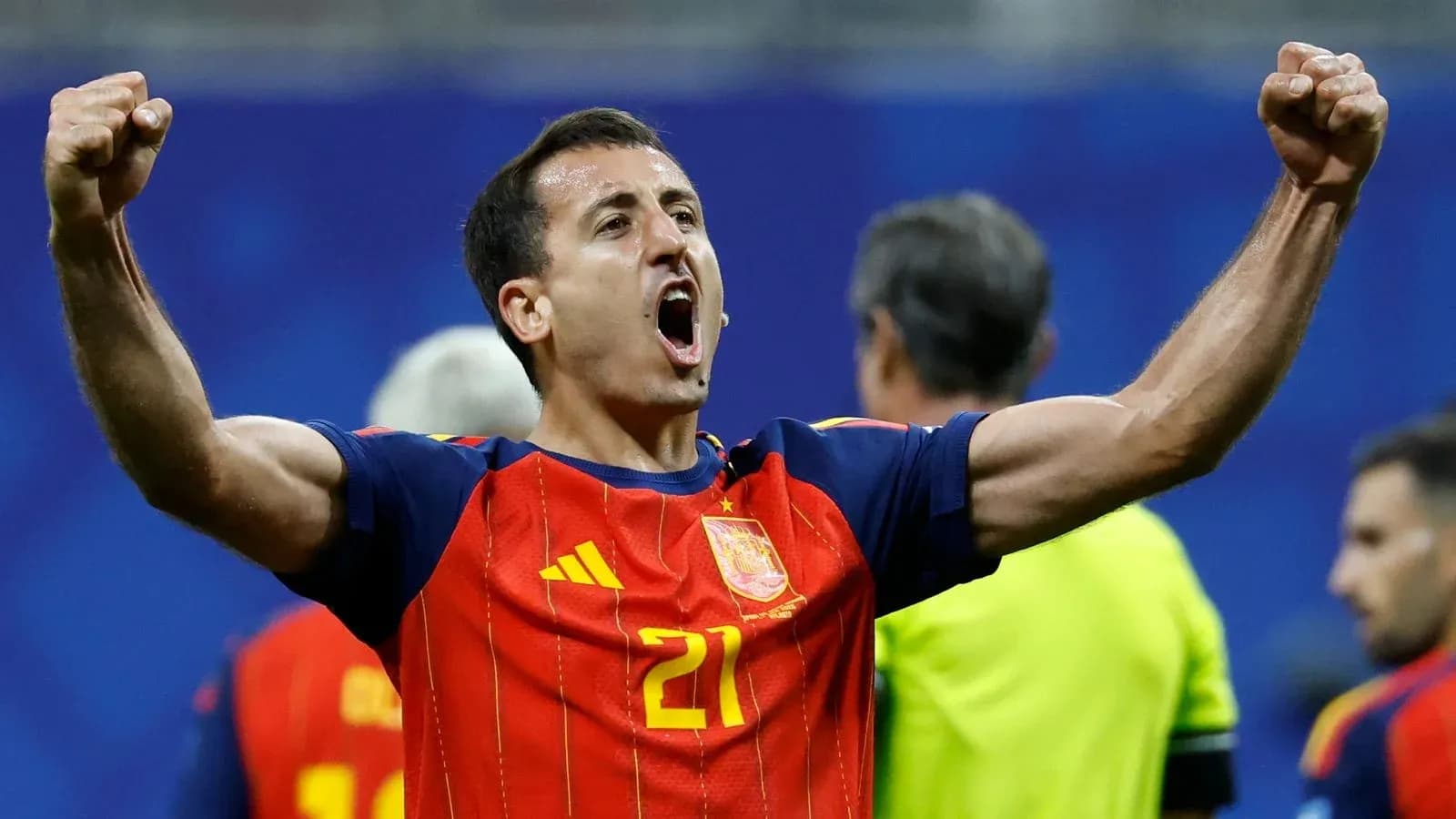
If Yamal lit the fire, Oyarzabal poured petrol on it.
On 21 minutes, chaos at the back post. A scramble, a loose ball, and Oyarzabal reacted quicker than anyone to jab it home from close range. Scruffy, yes, but brutally effective. Saudi Arabia, already stretched, suddenly looked broken.
Two minutes later, he struck again. This time the finish matched the move. Spain sliced through the Saudi back line, the ball worked into the box, and Oyarzabal turned it past Al Owais from close range with the composure of a man who has seen this picture a hundred times before.
Three goals in 23 minutes. Spain became the first team since Germany in 2014 to rack up a World Cup treble inside the opening 25. The shock of Cape Verde was being methodically erased.
Oyarzabal almost had his hat-trick before the first drinks break. A dreadful back pass from Al Owais dropped straight to him, and his first-time effort had the goalkeeper beaten but not the frame of the goal, skimming the top of the crossbar. It was a rare escape for Saudi Arabia on a night that offered them almost none.
All this from a forward Luis de la Fuente later revealed had been carrying a “minor issue”. You would not have guessed.
De la Fuente’s cold-blooded call
With the game killed before half-time, De la Fuente showed the kind of pragmatism tournament football demands. On his 65th birthday, he hooked both Yamal and Oyarzabal at the break, protecting legs and egos in one move.
It was a smart, unsentimental decision. Spain’s tempo dipped, naturally, but their control did not. The ball still belonged to them, the chances still flowed, and Saudi Arabia never threatened to turn this into a contest.
The fourth goal summed up the gulf. A corner was flicked on, Marc Cucurella’s effort drew a sharp save from Al Owais, but the rebound cannoned off Hassan Al Tambakti and over the line. An own goal, another one in a tournament increasingly cruel to defenders, and a scoreline that reflected Spain’s dominance if not their full attacking potential.
World Cup 2026 has already produced eight own goals, with Al Tambakti’s touch nudging this edition towards an unwanted record. For Saudi Arabia, it was another painful detail in a night to forget.
Spain thought they had a fifth in stoppage time when Ferran Torres turned in a Fabian Ruiz cross. The celebrations were cut short. A long VAR check ended with the flag winning the argument and the goal ruled out for offside. It barely registered as a setback. The job had been done long before.
From sting to statement
The draw with Cape Verde hurt Spain. The players admitted it. De la Fuente dissected it. They knew they had played within themselves, too safe, too sideways.
Here, the change was immediate. From the first minute they pushed higher, played quicker, hit the box with more bodies. De la Fuente had demanded more verticality, more intensity. He got both.
They suffocated Saudi Arabia, pinning them back, forcing hurried clearances and panicked passes. The press was coordinated, the passing crisp, the movement relentless. Yamal’s early surge set the tone, his dribbles and crosses dragging team-mates up the pitch with him. The rest of the squad followed that lead.
Spain now sit top of Group H, ahead of Uruguay’s late kick-off against Cape Verde, with Saudi Arabia bottom and reeling. The table looks healthier, but the real shift is in mood. This felt like a reset.
De la Fuente called it “an important step for what’s to come.” Uruguay await next, a far sterner test, a team built to punish any lapse in concentration or intensity.
Spain finally look ready for that kind of fight. The question now is simple: was this just a reaction, or the start of something far more serious?