.svg&w=384&q=75 "Pitchgist logo")
Ghana's Tactical Dilemma Against England: Key Decisions for Queiroz
Ghana escaped. Just.
Ranked 73rd in the world and notionally underdogs only on paper, the Black Stars were pushed to the edge by Panama in their World Cup opener, clinging to a 1-0 win that owed as much to grit and late-game tweaks as to any coherent plan. They will not get away with that against England.
Carlos Queiroz knows it. The next game is not just a step up in quality; it is a leap into the deep end against the group’s outstanding favourites, a side that ripped Croatia apart 4-2 in their own opener. Ghana cannot stumble into that contest with the same muddled thinking that nearly cost them against Panama.
This is where the hard decisions begin.
The Jordan Ayew Question
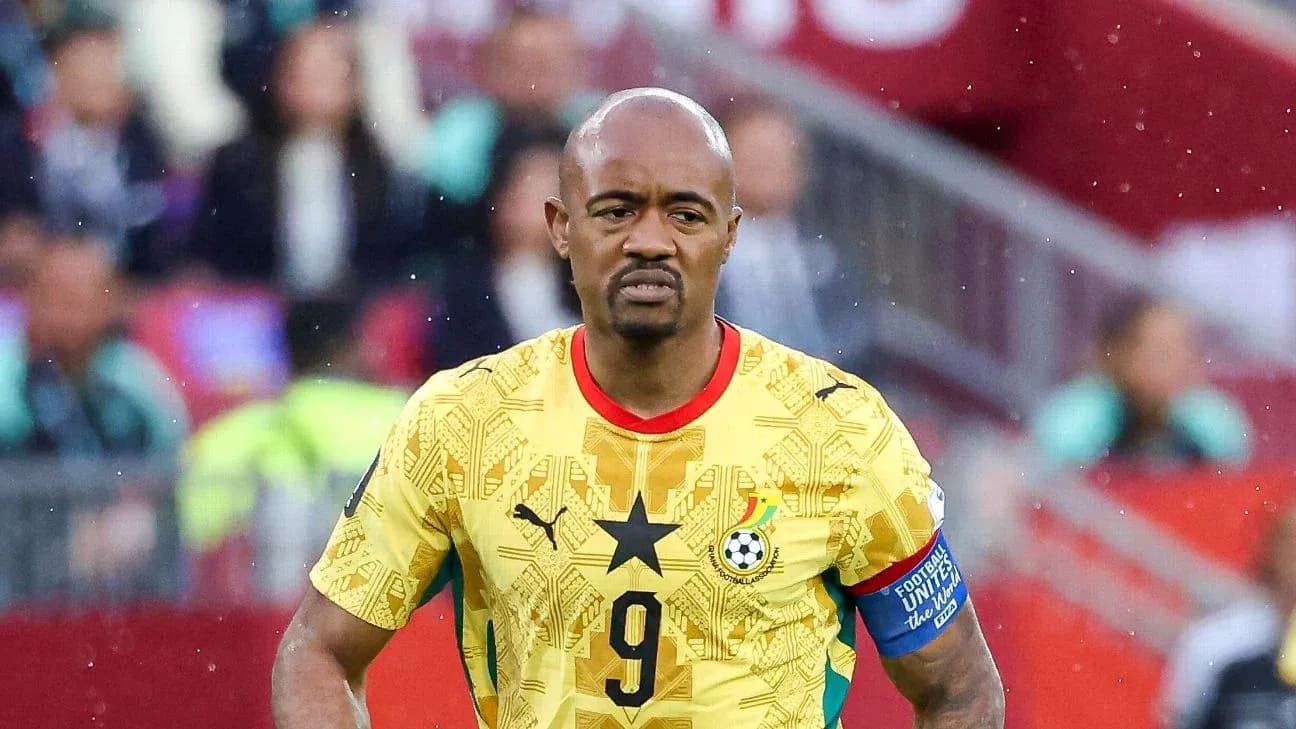
Jordan Ayew embodies Ghana’s dilemma in one player.
He is the captain. The most experienced man in the squad. A centurion in caps, a veteran of three World Cups, the son of Abedi Pele and the carrier of decades of institutional memory. When he led the team out against Panama, he joined an elite group of Ghanaians to appear at three tournaments. His presence in the dressing room is not a luxury; it is a pillar.
On the pitch, against Panama, he was a problem.
Ayew looked a step behind the game, his lack of pace repeatedly exposed. When he did get on the ball, his choices betrayed him. One moment summed it up: he received a pass from Antoine Semenyo with space to drive into, the Manchester City forward bursting ahead, begging for the return. Time, angle, opportunity – all there. Ayew chose to dribble into traffic and surrendered possession.
Panama did not punish that kind of wastefulness. England will.
A static centre forward will be easy meat for a defence drilled at the highest level. That is why calls to drop Ayew for Brandon Thomas-Asante have grown louder. Thomas-Asante, who created Caleb Yirenkyi’s winner, offers speed, aggression and a willingness to run behind. What he lacks is Ayew’s experience and gravitas. He has not yet faced the calibre of opponent England will roll out.
So Queiroz stands at a crossroads. Bench his captain and risk losing a key leader on the grass? Or persist with him up front and risk England picking him off?
There is a third way.
Against Panama, Ghana’s best attacking spells came when Ayew drifted deeper, knitting play rather than trying to race in behind defenders he could not catch. In that pocket between midfield and attack, his reading of the game became an asset instead of a liability.
Queiroz should lean into that. Use Ayew as an advanced midfielder, not as the tip of the spear. Let him sit between the lines, turn, and feed the runners. In that role, his lack of raw pace matters less; his vision and nous matter more.
Picture a front unit with Ayew floating underneath Semenyo and one of Thomas-Asante or Abdul Fatawu. That trio can drag England’s full-backs into awkward positions, attack space with speed and still benefit from Ayew’s brain guiding the moves. His job becomes to control traffic and connect, not to win foot races he cannot win.
Drop him entirely and you lose a general. Push him up top and you blunt your own attack. Reposition him, and you might unlock the best of both worlds.
Partey’s Return and the Midfield Battle
If Ayew is a tactical puzzle, Thomas Partey is the simplest answer on the board.
He has to start.
Elisha Owusu struggled badly against Panama, swamped by their midfield and left exposed by a shape that did him few favours in the first half. He is not alone in that blame, but the contrast with what Partey can bring is stark.
England’s midfield is the engine of their team. Jude Bellingham and Declan Rice set the tempo in the 4-2 demolition of Croatia, dictating where and how the game was played. Give them time and space, and Ghana will spend the evening chasing shadows.
Partey alongside the impressive Yirenkyi changes that equation. With those two sitting in front of the back line, Ghana can finally put a foot on the ball and dictate phases of play instead of simply absorbing them. They can close central lanes, deny Bellingham the freedom to surge through, and force Rice to spend more time defending than orchestrating.
That, in turn, frees Ayew in the advanced role. With Partey and Yirenkyi patrolling behind him, he can concentrate on linking midfield to attack rather than constantly dropping into his own half to help plug holes.
Ghana do not need to dominate possession against England. They do need to control key moments. Partey is the player who allows them to do that.
Where England Can Be Hurt
England’s win over Croatia was emphatic on the scoreboard, but it did not come without warning signs.
They conceded twice and looked shaky whenever Croatia attacked quickly and directly, especially down the flanks. Reece James was criticised for losing his man on one of the goals. On the opposite side, Nico O’Reilly impressed going forward but remains, in the polite phrasing, “a work in progress” defensively.
This is where Ghana must be ruthless.
Semenyo’s direct running and physical strength can isolate those full-backs. Thomas-Asante’s pace can drag centre-backs into areas they do not want to go. Fatawu and Ernest Nuamah can stretch England horizontally, force them to turn, and hit them before their defensive block settles.
Croatia caused problems every time they attacked with speed before England’s shape reset. Ghana have the tools to do the same: pace, power, and enough craft to make the final pass count. The key is conviction. No half-measures, no timid counters that end with a safe pass backwards.
When the chance to break comes, they must go.
No More Slow Starts
The most worrying aspect of the Panama game was not the missed chances. It was the passivity.
For an hour, Ghana played on the back foot. Panama dictated the tempo, enjoyed the better openings and pushed the Black Stars into a reactive, nervy performance. Only when Queiroz reshuffled – moving Semenyo centrally and injecting fresh legs to intensify the press – did Ghana seize control.
They cannot afford to repeat that pattern against Thomas Tuchel’s England.
Croatia showed that England wobble when pressed hard and high early on. Aggression forced mistakes in midfield and defence. It also exposed structural gaps, which Croatia exploited for their two goals before the break.
The flip side? England scored twice in that same first half. Give them the initiative, and they strike quickly and brutally. If Ghana sit deep as they did against Panama, waiting for the game to settle, they may find it is already gone by the time they wake up.
This has to start as a sprint, not a jog. The intensity Ghana displayed after the break against Panama must be the baseline from kickoff against England, not a late adjustment. Turn the match into a contest of will and stamina, a war of attrition where every ball is a duel and every England touch is under pressure.
Make it uncomfortable. Make it ugly if necessary. But do not make it easy.
Survive the Dead Ball
Set pieces could decide this game.
On the opening matchday, no team generated more non-penalty expected goals or more shots on target from set plays than England. Kane’s second goal against Croatia came from a simple, brutal formula: a Rice corner, a lost marker, and a free header.
Ghana cannot switch off like that. Not once.
There is already uncertainty in goal, with Lawrence Ati-Zigi’s fitness in doubt after he was forced off at halftime against Panama following a heavy collision. Whether he recovers or Benjamin Asare steps in, the message in both penalty areas is the same: stay locked in.
First, do not invite danger. Avoid cheap fouls in central areas, the sort that let England load the box and send in Rice or James with quality delivery. This is another reason Partey’s presence is crucial; his reading of the game can plug those central gaps that appeared too often against Panama.
Second, in the box, every runner must be tracked. Every block must be made. England have built a reputation on ruthless set-piece execution at major tournaments. Ghana cannot afford a single lapse.
And if the worst happens and a penalty is conceded? Then it becomes a duel of wits. Kane studies goalkeepers obsessively, shaping his run-up to force them into early movement. Asare and Ati-Zigi must do their homework in return. No guesses, no nerves. Just preparation.
After the narrow escape against Panama, Queiroz summed up the road ahead in stark terms: his team would have to suffer, that results at this World Cup come at a “very expensive” price, and his players are ready to pay it.
Now comes the bill.
Will Ghana simply endure England, or will they impose themselves, tweak the pieces, and turn suffering into a statement on the biggest stage?