.svg&w=384&q=75 "Pitchgist logo")
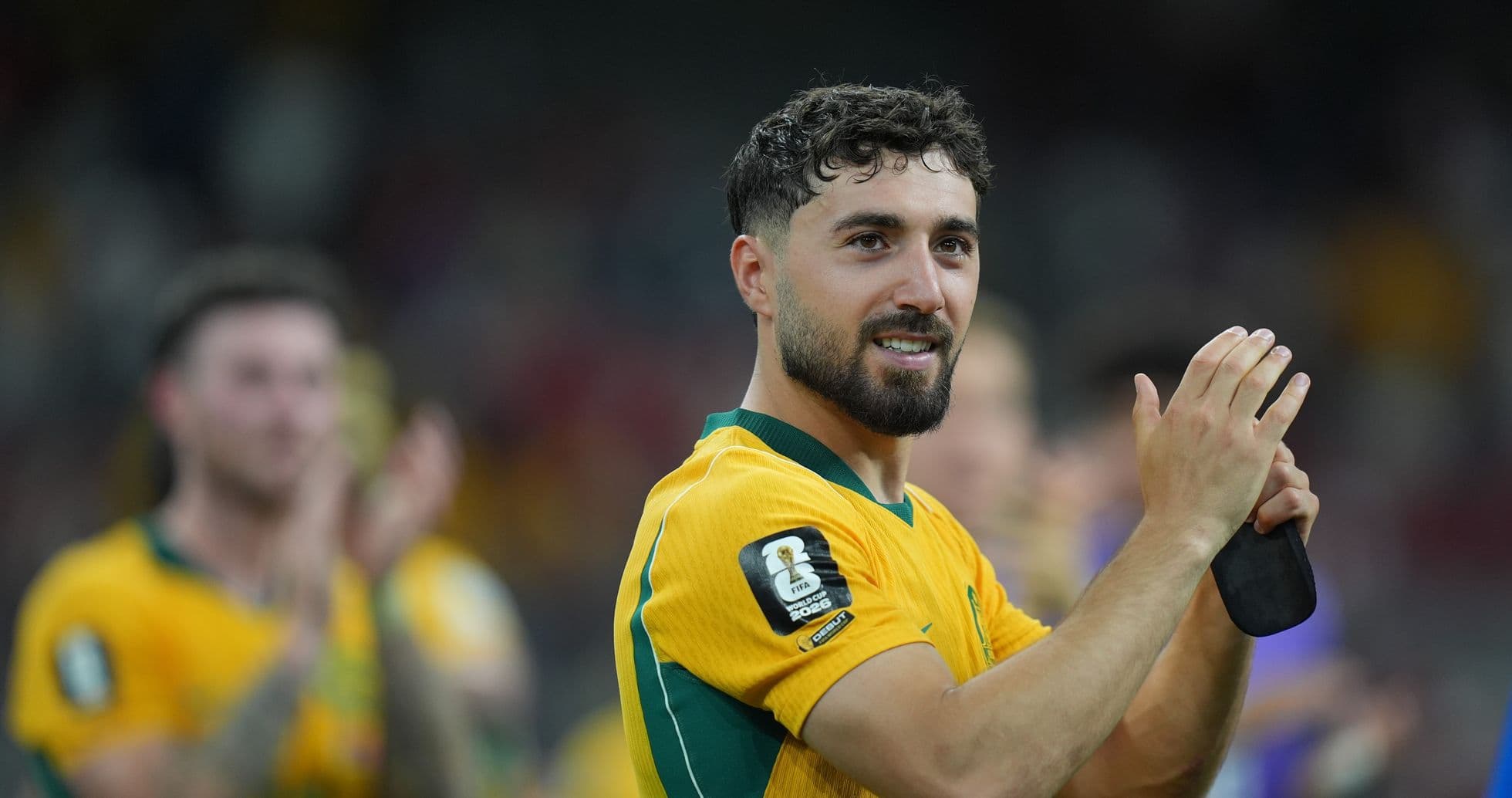
Socceroos Face Defining Night Without Key Players
The World Cup has finally burst into life, and already it’s chewing up plans, reputations and a few egos along the way.
Socceroos lose a key spark – and face a defining night
Australia’s campaign has taken an untimely hit. After starting both games at this World Cup, right wing-back Italiano is set to miss the crucial clash with Paraguay through injury, joining Mat Leckie on the sidelines.
It’s a brutal blow. Thrown in for the injured Lewis Miller, Italiano has grown into Tony Popovic’s first-choice right wing-back, grafting relentlessly to help shut out Turkiye on Matchday 1, then going the full 90 against the USA in game two.
That second outing told a familiar Australian story. The Socceroos sat deep in Seattle, absorbed pressure, and paid for it. Two goals conceded before half-time, the game slipping away. Only when Connor Metcalfe, Nestory Irankunda and Cristian Volpato were unleashed after the break did the match flip, the tempo spike and the USA finally look rattled.
Popovic’s cautious streak is no secret. But former Socceroo Craig Foster wants to see the handbrake off from the start against Paraguay.
“I hope so (that they attack), but they're a little bit more cautious under Tony Popovic, that’s the way that he coaches, that’s the reality,” Foster told 1170 SEN Breakfast. He credited Popovic’s record – automatic qualification, something Australia had not managed for some time – yet pointed straight back to that USA game as a warning. Be too conservative, fall behind, and you’re in a hole you may not climb out of.
Foster’s prescription is clear: aggression, speed, youth.
He wants the “really quick guys” on from the first whistle, arguing that Australia need pace on the end of the few clear chances they’re likely to carve out. Volpato’s brief but electric cameo, he said, “was phenomenal” and should force the coach’s hand. “I’d be surprised if we didn't see him and Irankunda in the first half definitely.”
The message is simple enough. Get ahead of Paraguay, then lean on the defensive organisation that has already made Australia awkward to break down. But to score, you need your best attackers on the pitch. Popovic now has to decide how much risk he can stomach with a place in the knockouts on the line.
Colombia climb, Congo cling on
Elsewhere, the margins are just as unforgiving.
Colombia sit comfortably on top of Group K after right-back Daniel Muñoz produced the decisive moment in the 76th minute, his strike the only goal of the game and enough to move them to six points.
Congo, by contrast, are hanging on by a thread. With just one point to their name, they can still sneak through as a third-placed side, but only if they beat Uzbekistan on Sunday. Anything less, and the equation writes them out of the tournament.
Fire, words and a stalemate in Boston
In Boston, the football barely flickered but the temperature on the touchline did.
A frustrating, sub-par 0-0 draw – heavy challenges, plenty of argy-bargy, and a flashpoint involving Jude Bellingham and Carlos Queiroz. Bellingham escaped a card for a hefty tackle on Jerome Opoku right in front of the dugouts. The benches erupted. The two sides walked off still simmering.
Queiroz later revealed he was angered by something Bellingham had said.
“He had a bad reaction with some bad names,” the coach explained. He said his first intention had been to calm the situation and check on his player’s condition, but acknowledged that in “the middle of the emotional moment” tempers flared. “He swears and that created more tension. It's football, it's nothing special. One word created a bit of fire but we cooled down. Football is not dancing in a saloon with tuxedos. It's not a show.”
Bellingham called it a “silly tackle,” insisting he had gone for the ball and simply followed through. He said he spoke to the opponent afterwards, then watched the opposing bench leap up in unison to demand a yellow card. Spotting Queiroz, he recognised the former Manchester United assistant and stressed there was “nothing but a competitive edge for both of us.”
On the table, the draw matters. It opens the winning account for this World Cup for their group rivals and shuffles the Group L standings. England and Ghana now lead with four points apiece, with England top on goal difference. Croatia sit third on three points, Panama are out and playing only for pride.
Croatia now face Ghana on June 28. Victory sends them through to the Round of 32; a draw keeps them alive as a possible third-placed qualifier. Panama’s meeting with England on the same day will be about pride alone for the Central Americans, but for England it could still shape the path through the knockouts.
England hit a wall of black stars
If the win over Croatia hinted at something bold and expansive from England, Ghana dragged them into a very different contest at Foxborough.
For 95 minutes, Ghana parked the bus. Then parked a second one behind it. England huffed and probed but rarely pierced. The refereeing grated both sides, the game turned increasingly physical, and the spectacle never really arrived.
From the high of that Croatia win, this was a thud back to earth. Great for Ghana, who executed their plan and walked away with a point. Well below par for England, who stay top only on goal difference.
Micah Richards didn’t sugar-coat it. “The frustrating thing was that England weren't brave enough,” he said. He pointed to too many safe passes against a low block and a lack of risk in possession when the game demanded courage and imagination.
Harry Kane explained his quieter night. Man-marked by Thomas Partey for much of the game, he found little room to drop deep and then arrive late in the box. Ghana defended the area superbly. Crosses came in, but England rarely won first contact. The middle of the pitch was so compact that threading passes through felt almost impossible.
Kane argued the game improved as it wore on, with England’s wingers finally getting one-v-one situations and looking dangerous. But Ghana never cracked. “You go through games like that,” he said. “You're playing in the World Cup, you play against a decent side who are compact and make it difficult.”
Wayne Rooney, who knows Queiroz’s work from their Manchester United days, saw a performance straight out of the coach’s playbook. He called it “typical” of a Queiroz side: disciplined, deep, hard to open up. Rooney insisted England still have a strong chance of topping the group and urged calm. The route to goal, he said, lay in crosses – and that’s where England’s best openings did come from.
But on nights like this, patience and possession aren’t enough. You need incision. England never quite found it.
FIFA tweaks the drama from the spot
Change is coming to one of the sport’s most nerve-shredding rituals.
From the Round of 32 onwards, when penalty shoot-outs first appear at this World Cup, FIFA will alter the pre-shootout coin toss. At present, there are two: one to decide which end the kicks are taken into, another to decide who shoots first.
The governing body wants to strip away what it sees as a double advantage. Arsenal’s Champions League final defeat, when they lost both tosses and then kicked second into a stand packed with PSG supporters, remains a cautionary tale.
Under the new system, a single toss will decide everything. The winner chooses either to kick first or to pick the end. The other captain takes whichever option is left. The hope is a fairer balance before the first penalty is even taken.
The jeopardy stays the same: level after 90 minutes, still level after 30 minutes of extra time, and the shootout decides it all.
Ronaldo answers the doubters – again
Cristiano Ronaldo is 41, still carrying the weight of a nation, and still refusing to go quietly.
After a 1-1 draw with DR Congo in Portugal’s opener, questions swirled. Was he still worth his starting place? Was Roberto Martinez too wary, or “too scared,” to leave him out?
Uzbekistan got the answer.
Ronaldo scored twice in a 5-0 demolition that will all but book Portugal’s spot in the knockouts. On a World Cup stage dominated over the last 24 hours by doubles from Lionel Messi, Kylian Mbappé and Erling Haaland, he refused to be left out of the conversation.
“I knew it. God helps those who work hard,” Ronaldo said afterwards, describing a “difficult, dark week” in which it felt like he was “already retired from football.” He spoke of clinging on, trusting hard work more than anything else, and emerging on the other side.
Roy Keane never believed he had gone anywhere. “Cristiano Ronaldo was never gone. He is the man,” the former Manchester United captain insisted. He called the reaction to Ronaldo’s quieter games “doubted genius” and bracketed him with the likes of Tom Brady among the greats of global sport. “The hardest point of the game is putting the ball in the back of the net. And he does.”
On this evidence, he still does it ruthlessly.
Grief in the France camp
France’s preparations have been jolted by something far more important than football.
Didier Deschamps has left the squad after the death of his mother. The French Football Federation confirmed he will miss training sessions and will not be on the bench for the final Group I match against Norway.
“In agreement with Philippe Diallo, president of the French Football Federation, who is currently at the France team’s base camp, Deschamps has entrusted assistant coach Guy Stephan with responsibility for leading the squad until his return,” the FFF said.
France will now have to navigate the group finale without the man who has defined their modern era, while their coach deals with personal loss away from the noise of the tournament.
Frustration, yellow cards and a restless England
Back with England, the mood around their second group game has been raw. For those watching through the night, the picture was grimly familiar: Ghana sitting deep, defending for their lives, and England failing to unlock them.
The tension eventually snapped. Declan Rice collected a yellow card for a challenge that looked like a physical embodiment of the collective irritation: “you lot are doing our heads in.”
The group table offers comfort. The performance does not.
A reality check for the USA
Across the Atlantic, the United States have not been shy about their World Cup ambitions or their trash talk. The bruising, bad-tempered clash with Australia only fuelled the noise.
But one of their own has cut through the hype.
Former goalkeeper Tim Howard, speaking on the Unfiltered Soccer Podcast with Landon Donovan, called it “literally impossible” for the USA to win this World Cup. His argument was stark: to lift the trophy, the US would need to play the greatest game in their history four times in succession, beating four established powerhouses in the Round of 16, quarter-finals, semi-finals and final.
“The US cannot, unequivocally, win the World Cup,” he said. “It is literally impossible for the US to win the World Cup… That’s just the reality.”
The tournament has a habit of shredding certainties. For now, though, it’s already exposed the cautious, emboldened the ruthless, and reminded everyone that at this level, even the brightest hopes can be one bad night, one injury, or one penalty kick away from oblivion.