.svg&w=384&q=75 "Pitchgist logo")
Ruben Amorim Reflects on Manchester United Tenure and Milan Opportunity
Ruben Amorim doesn’t dodge the question. He doesn’t dress it up either.
“I made a lot of mistakes,” he admits, looking back on a Manchester United spell that unravelled quickly and ended brutally in January.
For United, his tenure was a statistical low. In the Premier League he posted the worst win ratio of any manager in the club’s history – 32 per cent – while his side conceded 1.53 goals per game and kept clean sheets in just 15 per cent of matches. The numbers told their own story. The tension behind the scenes did the rest.
The breaking point arrived after a trip to Elland Road. United had faced Leeds, the performance was flat, and Amorim turned his frustration towards the hierarchy. In front of the cameras he questioned the club’s decision-makers and suggested others should concentrate on their own jobs. The board took note. By the start of the new year, he was gone.
Yet the fall did not last long.
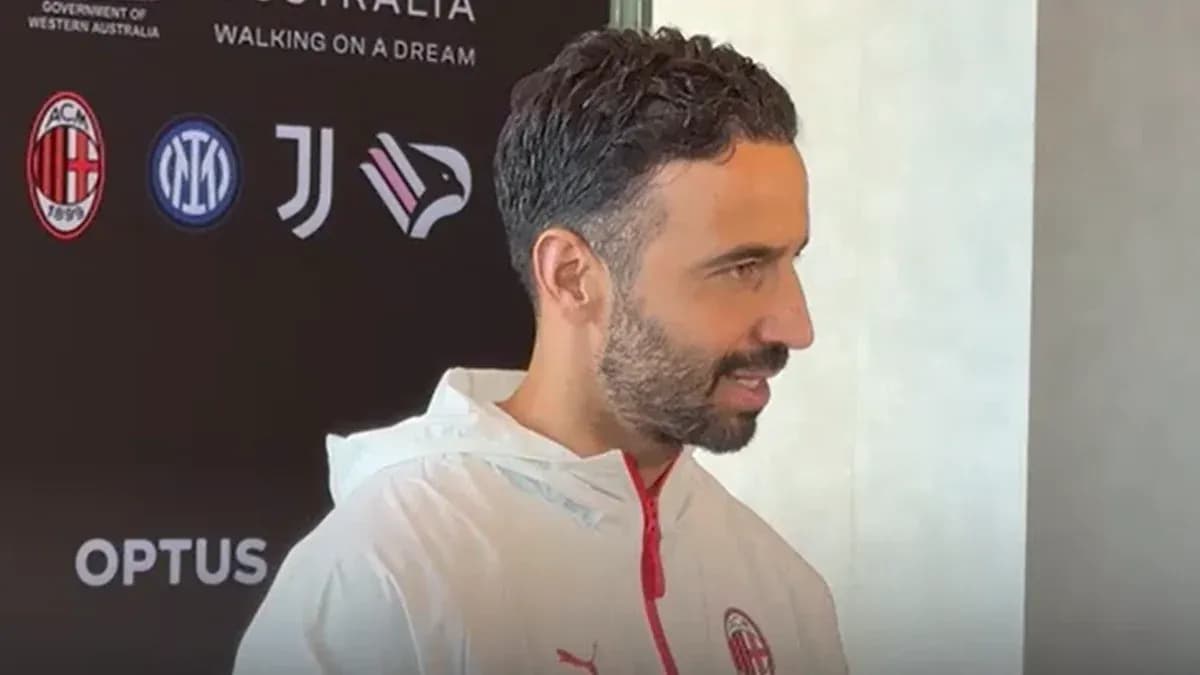
AC Milan moved decisively last month, convinced that the same coach who struggled at Old Trafford could lead a revival at San Siro. On the club’s pre-season tour of Australia, Amorim cut a more reflective figure as he explained why Milan still saw value in a manager carrying such a bruising experience.
“They appointed me because they felt I was the right guy for the way I want to play,” he told Sky Italia. “They want to play the same way, but I think they signed me not just for my success, but also for my experience with a top club like Manchester United and the reflections I shared in our meetings with Mr Cardinale.”
That line matters. Milan didn’t just buy into the trophies on his CV; they bought into the scars.
“They understood that I was prepared for this job, not just because of my past success, but also because of my failures. I think it helped a lot in those meetings.”
Asked directly what went wrong in Manchester, Amorim refused to indulge in a blame game or a nostalgia tour.
“The first thing is that it doesn’t matter anymore. That is the feeling,” he said. “There’s a history, then something happens, the context changes, and you focus on the next challenge.
“I learned a lot. It would be hard to point to one thing, but the important thing that I clearly know is that I made a lot of mistakes. When you do this kind of reflection, and you understand that it was not just their fault, but also my fault, I think you can be a better coach and a better man.”
No excuses. No veiled shots back at United. Just a manager who knows he misjudged key moments at one of the most unforgiving clubs in world football and is trying to turn that into something useful.
From Old Trafford bruises to a boyhood dream
If Manchester was a harsh education, Milan is something closer to home.
“I was really honoured to be the manager of Man United at the time, but now I’m at Milan,” Amorim said. “I spoke with some people at the club, like Massaro and Baresi and we exchanged messages. That is the most important thing. To understand what kind of club I am and what the history of the club is.”
This time, the history is his history too.
“For me, it was easier this time, because I’ve been a Milan fan since I was a boy. I understand the culture of the club and their history.”
He does not want to live off that past, though.
“But that is the past. Our goal is to be the new future. They chose me for a reason, and one of the reasons is that I like to look at teams that are struggling.
“I know it’s tough, but we want to rebuild something. We have many things in a good place. The staff is in a good place; the organisation is fantastic. If this is my final destination, I’ll be pleased because it’s a dream to coach this club.”
It is a very different tone from the one that seeped out at United in his final weeks. There, the relationship with the board deteriorated. Here, he talks about alignment, culture and rebuilding with a kind of calm intensity that suggests he knows how fragile these projects can be.
United’s costly mistake – and Milan’s calculated gamble
United’s decision to sack Amorim did not come cheap. The club faced a compensation bill of £15.9 million to cover his departure and that of his entire backroom team – Carlos Fernandes, Adelio Candido, Emanuel Ferro and Jorge Vital. The figure underlined how big a bet United had made on him in the first place, and how expensive it became to walk away.
That cost eased once Milan stepped in and took him off the market, reducing the financial hit at Old Trafford. The episode still stands as a reminder of the volatility around the club: a coach hired for a vision, discarded after a turbulent run, and quickly repackaged as a valuable asset by another European giant.
For Amorim, the narrative has already moved on. United is now a lesson, not a destination. Milan is the stage he always imagined.
He knows how badly it can go at a club of that size. The question now is whether those “lot of mistakes” at Manchester United become the making of the man in Milan red and black.