.svg&w=384&q=75 "Pitchgist logo")
AS Roma Dominates Fiorentina 4-0: A Tactical Analysis
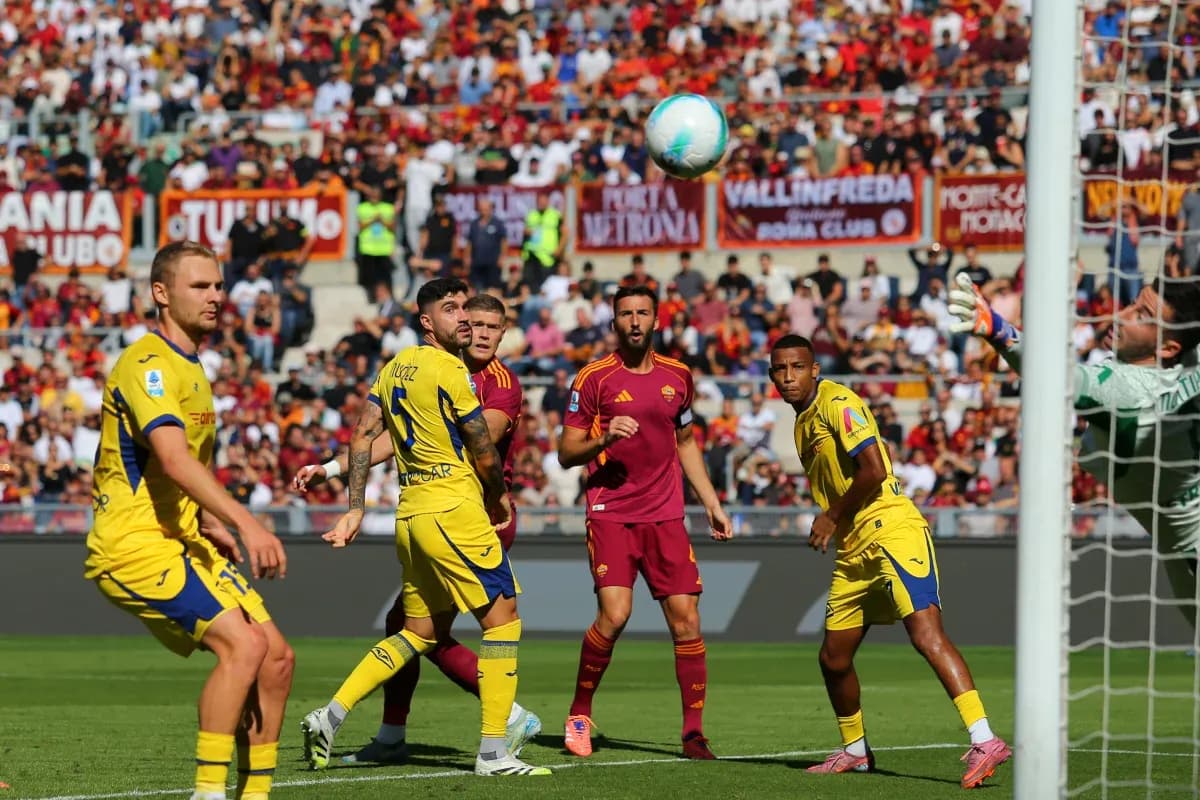
The Olimpico lights had barely cooled when the story of this fixture was already clear: a top‑five side with European ambitions dismantling a team still glancing nervously over its shoulder. AS Roma’s 4‑0 win over Fiorentina, sealed by a 3‑0 half‑time lead, felt less like a one‑off and more like the logical extension of their seasonal DNA.
Following this result, the table snapshot underlines the gap. Roma sit 5th on 64 points with a goal difference of +23, built from 52 goals scored and 29 conceded overall. Fiorentina, 16th with 37 points and a goal difference of -11 (38 for, 49 against overall), remain trapped in that grey zone between safety and danger. Over 35 matches, Roma have crafted a strong identity: 20 wins, only 29 goals conceded and 16 clean sheets in total. Fiorentina, by contrast, have lost 14 of 35 and conceded 49, their defensive frailty repeatedly exposed.
At home, Roma’s numbers foreshadowed this kind of dominance. Heading into this game they averaged 1.7 goals for and just 0.6 against at the Olimpico, with 12 wins from 18 and 10 home clean sheets. Fiorentina arrived on their travels with a more fragile profile: 1.0 away goals scored on average, 1.6 conceded, and only 4 wins from 18. The 4‑0 scoreline sits perfectly in that statistical groove: Roma hitting their attacking ceiling, Fiorentina collapsing toward their defensive floor.
I. The Big Picture – Structure and Intent
Piero Gasperini Gian doubled down on Roma’s season-long blueprint, rolling out the familiar 3‑4‑2‑1. M. Svilar anchored a back three of G. Mancini, E. Ndicka and M. Hermoso. Ahead of them, the wing‑back and double‑pivot line of Z. Celik, N. Pisilli, M. Kone and Wesley Franca provided width and verticality, with M. Soule and B. Cristante operating as dual “tens” behind lone striker D. Malen.
This shape has been Roma’s backbone: they have used 3‑4‑2‑1 in 27 league matches, and it showed in the automatisms. The back three stepped out aggressively, the wing‑backs pushed high, and Soule floated into half‑spaces to knit transitions together.
Paolo Vanoli answered with a 4‑3‑3: D. de Gea behind a back four of Dodo, M. Pongracic, L. Ranieri and R. Gosens; a midfield trio of M. Brescianini, N. Fagioli and C. Ndour; and a front line of J. Harrison, A. Gudmundsson and M. Solomon. It was a structure designed to offer width and passing lanes, but its spacing and defensive distances never truly coped with Roma’s overloads between the lines.
II. Tactical Voids – Absences and Discipline
Both squads walked into this match carrying notable absences. Roma were without A. Dovbyk (groin injury), E. Ferguson (ankle injury), B. Zaragoza (knee injury), L. Pellegrini (thigh injury) and N. El Aynaoui (suspension for yellow cards). On paper, that stripped Gasperini of alternative profiles up front and a key creative midfielder in Pellegrini. In practice, it forced absolute trust in Malen and Soule – and they repaid it.
Fiorentina’s bench was also thinned: L. Balbo (injury), N. Fortini (back injury), M. Kean (calf injury), T. Lamptey (knee injury) and R. Piccoli (muscle injury) all missed out. The absence of Kean in particular removed their top scorer in the league season, an attacker with 8 goals and 2 successful penalties, and one of the few capable of stretching a back three with raw depth runs.
In disciplinary terms, the underlying season profiles hinted at where the game might tilt. Roma’s yellow-card curve spikes between 46‑60', 61‑75' and 76‑90', each window accounting for 23.08% of their cautions. Fiorentina’s late‑game discipline is even more volatile: 25.00% of their yellows and 100.00% of their reds arrive between 76‑90'. In a match where Roma raced into a 3‑0 lead by half‑time, Fiorentina’s tendency to unravel late never even had time to become the main story – but it remains a structural weakness.
III. Key Matchups – Hunter vs Shield, Engine Room
The headline duel was always going to be D. Malen against Fiorentina’s central shield. Malen entered this fixture as one of Serie A’s most efficient forwards: 11 league goals from 15 appearances, with 2 penalties scored and none missed, 40 shots with 24 on target, and a 7.32 average rating. His movement between the lines and into the left channel was a nightmare brief for M. Pongracic and L. Ranieri.
Pongracic, Fiorentina’s statistical rock at the back, came in with 11 yellow cards – the highest in the league – and a profile built on proactive defending: 29 tackles, 23 blocked shots, 34 interceptions and 225 duels contested, winning 110. But that aggression can be a double-edged sword. Up against Malen’s blend of pace and timing, and Soule’s angled passes, he was repeatedly forced to defend running toward his own goal rather than stepping out to engage.
Soule himself defined the “Engine Room” duel. With 5 assists and 43 key passes over the season, he is Roma’s creative metronome in the final third, completing 918 passes at 83% accuracy and attempting 89 dribbles with 32 successes. Operating as one of the two advanced midfielders in the 3‑4‑2‑1, he consistently found pockets behind Brescianini and Fagioli, forcing Fiorentina’s midfield to turn and chase.
On the other side, Fiorentina’s own creative spear, A. Gudmundsson, carried an intriguing profile: 5 goals, 4 assists, 31 key passes and 3 penalties scored without a miss, but also 1 red card in his disciplinary record. His tendency to drift inside from the left and combine with Harrison and Solomon was supposed to test Roma’s wide centre‑backs. Instead, with Roma controlling territory and transitions, Gudmundsson was pushed deeper and wider, turning him into a link player rather than a finisher.
IV. Defensive Structures – Why 4‑0 Felt Inevitable
Roma’s defensive solidity this season has been built on clarity of roles. Overall, they concede just 0.8 goals per match, with that dropping to 0.6 at home. Mancini and Ndicka, backed by Svilar, form a unit comfortable defending both crosses and through‑balls. Mancini’s season numbers – 50 tackles, 13 successful blocked shots, 44 interceptions and 311 duels with 175 won – explain why Gudmundsson and Solomon rarely found clean touches in central zones.
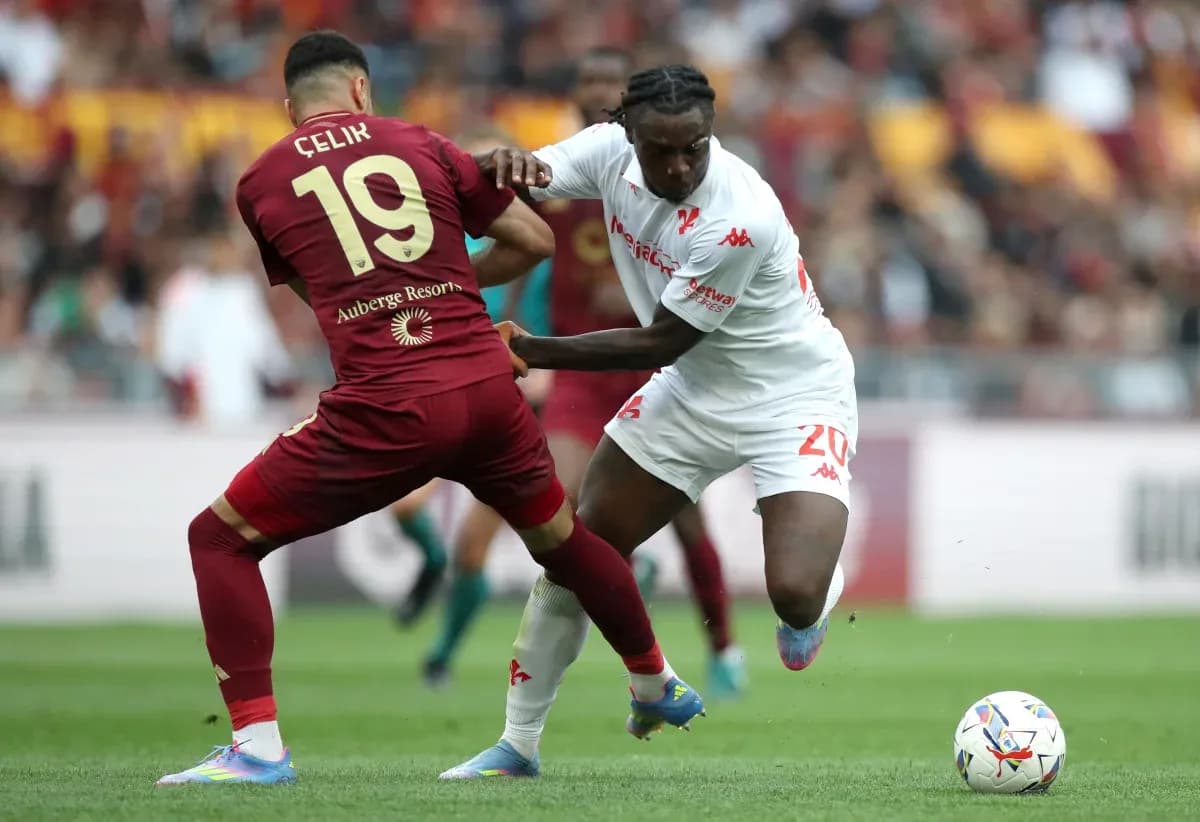
Zeki Celik’s presence at wing‑back added another layer. Over the season he has won 113 of 226 duels, made 57 tackles and 6 blocked shots, and yet also carries a red card in his record – a reminder of his combative edge. In this match, his timing in stepping out to Fiorentina’s wide forwards helped keep Roma’s back three from being dragged too wide.
Fiorentina’s defensive record away – 29 goals conceded in 18 matches, an average of 1.6 – was always likely to be exposed by a Roma side that routinely hits 1.7 at home. Their late‑game card spike between 76‑90', where 25.00% of their yellows and all their reds occur, usually compounds that fragility. Once 3‑0 down by the break, they were chasing shadows, and the fourth goal felt more like a statistical correction than a surprise.
V. Statistical Prognosis – The Logic of the Scoreline
Roma’s season-long Expected Goals profile (not provided numerically but implied by their shot volume and efficiency) aligns with a team that creates consistently high‑quality chances, especially at home. Their 16 clean sheets overall and only 7 matches failing to score underscore a side that very rarely lets a game drift.
Fiorentina, by contrast, have failed to score in 10 league matches overall and have just 8 clean sheets. Their overall goal difference of -11, with 49 conceded, tells the story of a team whose attacking output (1.1 goals per game overall) is too modest to offset their defensive leaks.
Following this result, the 4‑0 feels less like an outlier and more like the purest expression of the underlying numbers: a Roma side that, at the Olimpico, marries a 3‑4‑2‑1 structure to ruthless forward talent and disciplined defending, against a Fiorentina team whose away fragility, missing leading scorer and late‑game volatility left them with too many tactical voids to fill.