.svg&w=384&q=75 "Pitchgist logo")
Qarabag vs CSKA Sofia: Tactical Preview for Europa League Qualifiers
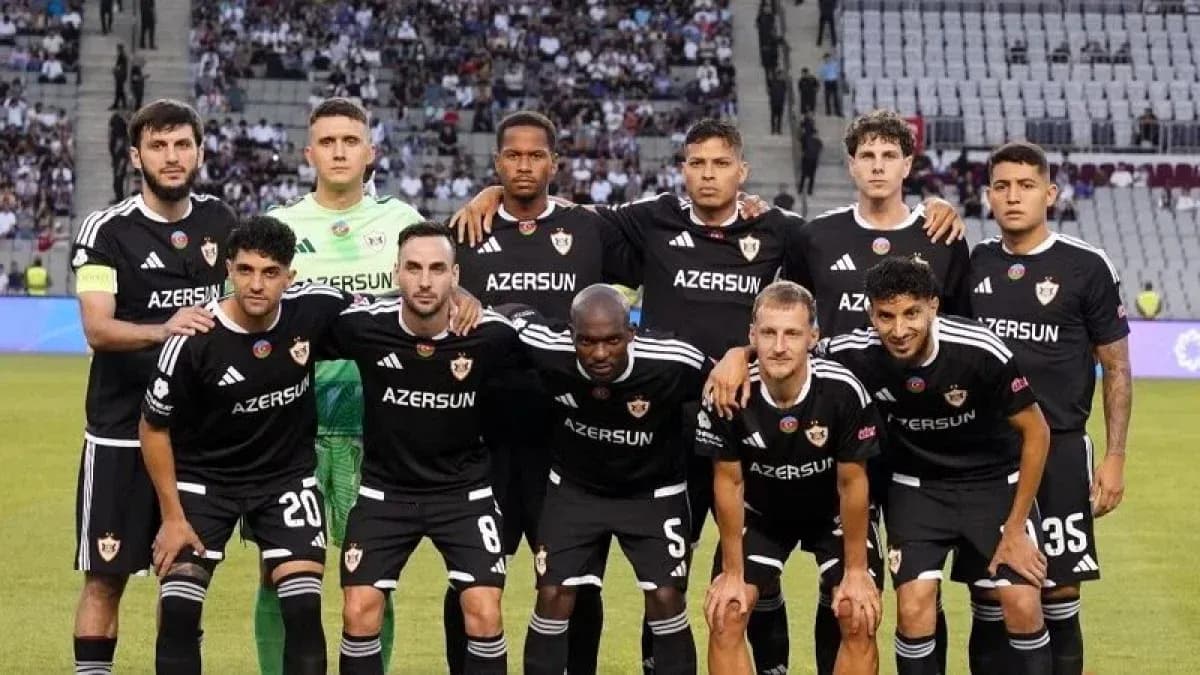
Qarabag host CSKA Sofia at the Tofiq Bahramov Stadium in Baku in the 2nd Qualifying Round of the UEFA Europa League, a pivotal early tie that will shape their European trajectory in 2026: progress here keeps the group stage in realistic reach and sustains both clubs’ financial and sporting ambitions, while elimination would abruptly cap their continental ceiling for the year.
Head-to-Head Tactical Summary
The sides have met twice in club friendlies with Qarabag travelling to face CSKA Sofia on both occasions, plus one cancelled friendly. On 4 July 2023, CSKA Sofia lost 0–1 at home, with Qarabag leading 1–0 at half-time and maintaining that advantage to full time. Earlier, on 7 July 2021 in Fulpmes, CSKA Sofia again hosted and Qarabag won 1–0, a tight game settled without any recorded half-time split. A planned friendly on 27 June 2026, with CSKA Sofia at home and Qarabag away, was cancelled and not played. The small sample leans clearly towards Qarabag: two away wins, both by a single goal, built on defensive control and efficiency in transition.
Global Season Picture
- League Phase Performance: There is no current standings data for the 2026 UEFA Europa League qualifying rounds, so rank, points, and aggregate goals across the round are not yet available. The tie therefore sits in a vacuum of official table context, but functionally it acts as an early knockout gate toward the main phase.
- Season Metrics: In the league phase so far, Qarabag have been perfect across two matches, winning both, scoring 6 goals (3 at home, 3 away) and conceding none. They average 3.0 goals scored per match and have kept 2 clean sheets, with a stable 4-2-3-1 shape used in both games, indicating a balanced attacking structure with strong protection in front of the back line. CSKA Sofia have also started with two wins from two, scoring 5 goals (3 at home, 2 away) and conceding 3, for an average of 2.5 goals scored and 1.5 conceded per match. Their use of both 4-3-1-2 and 3-5-2 suggests tactical flexibility but also a more open game state, reflected in the lack of clean sheets and a higher goals-against figure. Card data is limited, but CSKA Sofia have already shown a tendency to pick up yellow cards in the middle and late phases of matches, which could become a risk factor in a tight qualifying tie.
- Form Trajectory: Qarabag’s form string of “WW” underlines a strong, if brief, upward trajectory: two straight wins, high scoring, and no goals conceded, suggesting early-season sharpness and cohesion. CSKA Sofia mirror that with their own “WW” run, but the underlying profile is different: they are winning, yet doing so in higher-scoring, less controlled contests, which may be harder to sustain away from home in a two-legged European qualifier.
Tactical Efficiency
Across their early Europa League outings, Qarabag’s efficiency has been rooted in defensive solidity and clinical finishing: 6 goals from 2 matches without conceding points to a compact block behind an attacking unit that converts a high share of chances. Their consistent 4-2-3-1 suggests clear automatisms in build-up and pressing triggers, which typically improves both chance creation and shot quality over a small sample. CSKA Sofia’s 5 goals scored and 3 conceded in 2 matches indicate a more expansive, possibly transition-heavy approach, switching between a back four and a back three. That flexibility can unsettle opponents but also risks structural gaps, particularly in wide areas and when the wing-backs or advanced midfielders are caught ahead of the ball. In a qualifying tie where margins are slim, Qarabag’s early pattern of clean sheets and controlled scorelines appears tactically more efficient than CSKA Sofia’s more volatile game model, especially with home advantage in this leg.
The Verdict: Seasonal Impact
This 2nd Qualifying Round meeting is a structural fork in both clubs’ 2026 campaigns. For Qarabag, a strong home result would consolidate their early-season dominance and put them in a commanding position to reach the later qualifying rounds, keeping the door open to Europa League group-stage revenue, coefficient growth, and sustained visibility for their squad. A slip at home, by contrast, would erase the benefits of their flawless start and force them into a high-risk away leg where their defensive perfection will be severely tested. For CSKA Sofia, taking anything positive from Baku—whether a narrow win or a scoring draw—would validate their flexible, attack-minded setup and set up a decisive return leg in Sofia with real leverage; failure to manage the defensive side again could see their European run curtailed before it properly begins. In title terms this is not decisive, but for European relevance and financial stability in 2026, the outcome of this tie will heavily shape the ceiling of both clubs’ seasons.