.svg&w=384&q=75 "Pitchgist logo")
Netherlands and Japan Battle to a 2-2 Draw in World Cup Clash
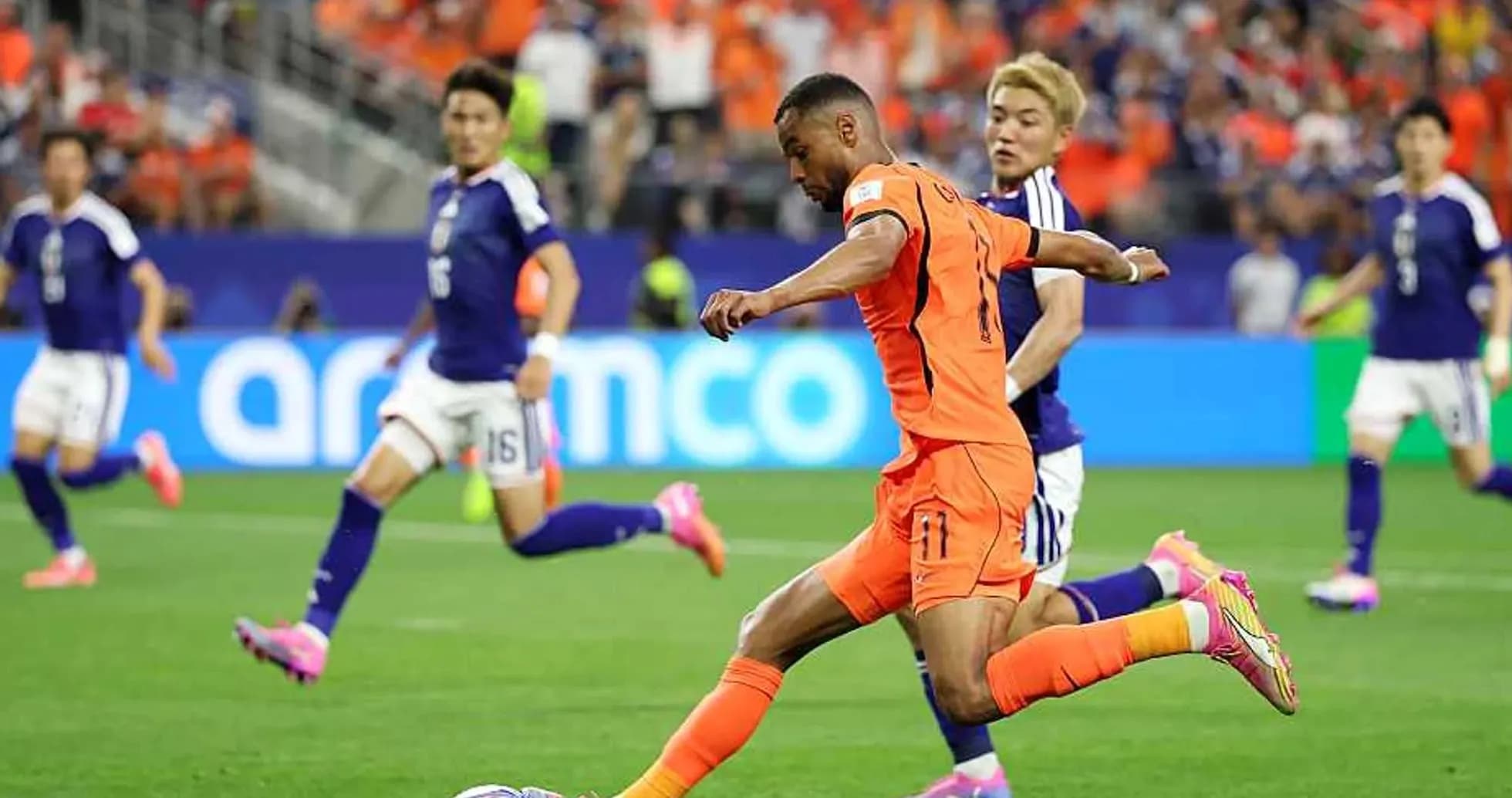
The World Cup’s opening rhythms reached AT&T Stadium with a clash of contrasts: Netherlands in their familiar 4-3-3 structure, Japan in a compact 3-4-2-1. By the final whistle it was 2-2, a draw that leaves Group F finely poised and offers a rich tactical blueprint for what these sides might become over the rest of the group stage.
Heading into this game, both teams were blank slates statistically. Following this result, the picture is sharply defined: Netherlands and Japan each have 1 point, each have scored 2 and conceded 2 overall, with a goal difference of 0. Netherlands sit listed as 1st in one World Cup table snapshot and 3rd in the Group F view, a quirk of overlapping tables, but the underlying truth is simple: this was a shared statement of intent rather than dominance.
I. The Big Picture – Shapes, Space and Tempo
Ronald Koeman’s Netherlands leaned into their traditional identity. The 4-3-3 was cleanly drawn: Bart Verbruggen in goal, Virgil van Dijk and Jan Paul van Hecke as the central pairing, Denzel Dumfries and Micky van de Ven pushing high from full-back. In midfield, Frenkie de Jong orchestrated from the base, flanked by Tijjani Reijnders and Ryan Gravenberch. Up front, Cody Gakpo, Donyell Malen and Crysencio Summerville offered a fluid, interchanging front three.
Hajime Moriyasu’s Japan answered with a 3-4-2-1 that was more aggressive than the numbers suggest. Hiroki Ito, Shogo Taniguchi and Takuya Watanabe formed the back three in front of Zion Suzuki. The wing and half-space lines were crowded: Ritsu Doan, Kento Sano, Daichi Kamada and Koki Nakamura across midfield, with Takefusa Kubo and Daizen Maeda underneath Ayase Ueda. The shape allowed Japan to flood central zones while still threatening wide.
The result was a match where both sides found joy going forward but never fully solved their defensive equations. Netherlands, at home in this fixture, now have 2.0 home goals scored on average and 2.0 home goals conceded. Japan, on their travels, mirror that with 2.0 away goals scored and 2.0 away goals conceded. The symmetry underlines the story: two expansive teams, neither yet capable of closing the door.
II. Tactical Voids and Discipline – Where Control Slipped
There were no listed injuries or absentees, so the tactical voids were structural rather than personnel-driven.
For Netherlands, the main gap appeared between their advancing full-backs and the midfield screen. With Dumfries and van de Ven high, van Dijk and van Hecke were often left to manage wide transitions against Japan’s quick forwards. De Jong’s ability to dictate tempo was evident, but without a dedicated destroyer beside him, second balls around the box remained dangerous.
Japan’s 3-4-2-1 created its own vulnerability. When Kubo and Maeda pressed high, the midfield duo of Kamada and Sano could be stretched laterally, leaving pockets for Gravenberch and Reijnders to receive between the lines. The back three coped admirably in phases, but against a front three as mobile as Gakpo–Malen–Summerville, any hesitation became a shooting lane.
Disciplinary trends tell us where the emotional temperature rose. Netherlands’ yellow cards this tournament have all arrived late: 33.33% between 61-75 minutes, 33.33% between 76-90, and 33.33% in the 91-105 window. That late-game surge of cautions matches the profiles of Memphis Depay and Summerville, both already booked. Japan, by contrast, have yet to pick up a card, suggesting a more controlled aggression – or perhaps a reluctance to break rhythm with tactical fouls.
III. Key Matchups – Hunter vs Shield, Engine Room vs Enforcer
Hunter vs Shield starts with Summerville. With 1 goal from 1 shot on target and an 8.3 rating, he has been Netherlands’ sharpest edge so far. His 7 duels contested and 5 won, plus 1 successful dribble from 1 attempt, show a winger willing to engage defenders repeatedly rather than simply wait for service. Against Japan’s back three, his inside movements from the right asked constant questions of Ito and Taniguchi.
Japan’s defensive “shield” is collective more than individual. While the raw numbers – 2 goals conceded on their travels, 0 clean sheets overall – do not flatter them, the structure is designed to bend rather than break. The back three’s ability to hold their line under waves of Dutch pressure was crucial in preventing the match from tilting into a home rout.
In the Engine Room, Gravenberch and De Jong formed a complementary axis. Gravenberch’s 2 assists in total, 25 passes at 88% accuracy and 3 dribble attempts with 2 successes make him the vertical driver of this side. De Jong, even without headline stats here, is the metronome, offering angles and calming possession under pressure.
Japan’s answer lies in Kamada’s intelligence and Kubo’s creativity. Kubo, already with 1 assist, 16 passes at 75% accuracy and 1 interception, is the conduit between midfield and attack. When he drifted into the half-spaces, he forced van de Ven and Dumfries into awkward decisions: step out and risk the run in behind, or hold and concede territory.
Off the bench, both managers have game-changers. Depay, despite only 20 minutes and a yellow card, completed 7 passes at 100% accuracy and created 1 key pass, hinting at his potential as a late orchestrator. For Japan, Koki Ogawa’s cameo – 1 assist from 1 key pass in just 15 minutes – marks him as a potent Plan B, especially if Ueda’s running softens centre-backs over time.
IV. Statistical Prognosis – Where This Is Heading
With no penalties taken and none missed for either side, there is no set-piece psychological baggage yet. The shared offensive profile – 2.0 goals for and 2.0 against overall for both – points toward high-variance football in the remaining group matches.
In xG terms, even without explicit numbers, the patterns are clear: both teams generate quality chances through structured possession rather than chaos, but both also leave transition windows open. Netherlands’ late-card profile hints at fatigue or desperation in closing phases, while Japan’s clean disciplinary slate suggests they may manage game states with more composure.
If this were a knockout tie, you would back the side that first tightens the back line. As a group-stage narrative, though, it feels like the prelude to more open, entertaining encounters. Netherlands have the higher individual ceiling through Summerville, Gakpo and Depay; Japan have the more cohesive collective press and a bench that can alter the attacking geometry with Ogawa and others.
Following this result, the tactical verdict tilts slightly toward Netherlands in terms of upside, but only if they can add a more robust defensive layer in front of van Dijk. Japan, meanwhile, look built to trouble any opponent who underestimates their capacity to flood the final third in waves. In a group where every margin will matter, this 2-2 at AT&T Stadium feels less like dropped points and more like a warning shot from both camps.