.svg&w=384&q=75 "Pitchgist logo")
Morocco Holds Brazil to a Draw with a Tactical Masterclass
Morocco’s Tactical Trap Shocks Brazil
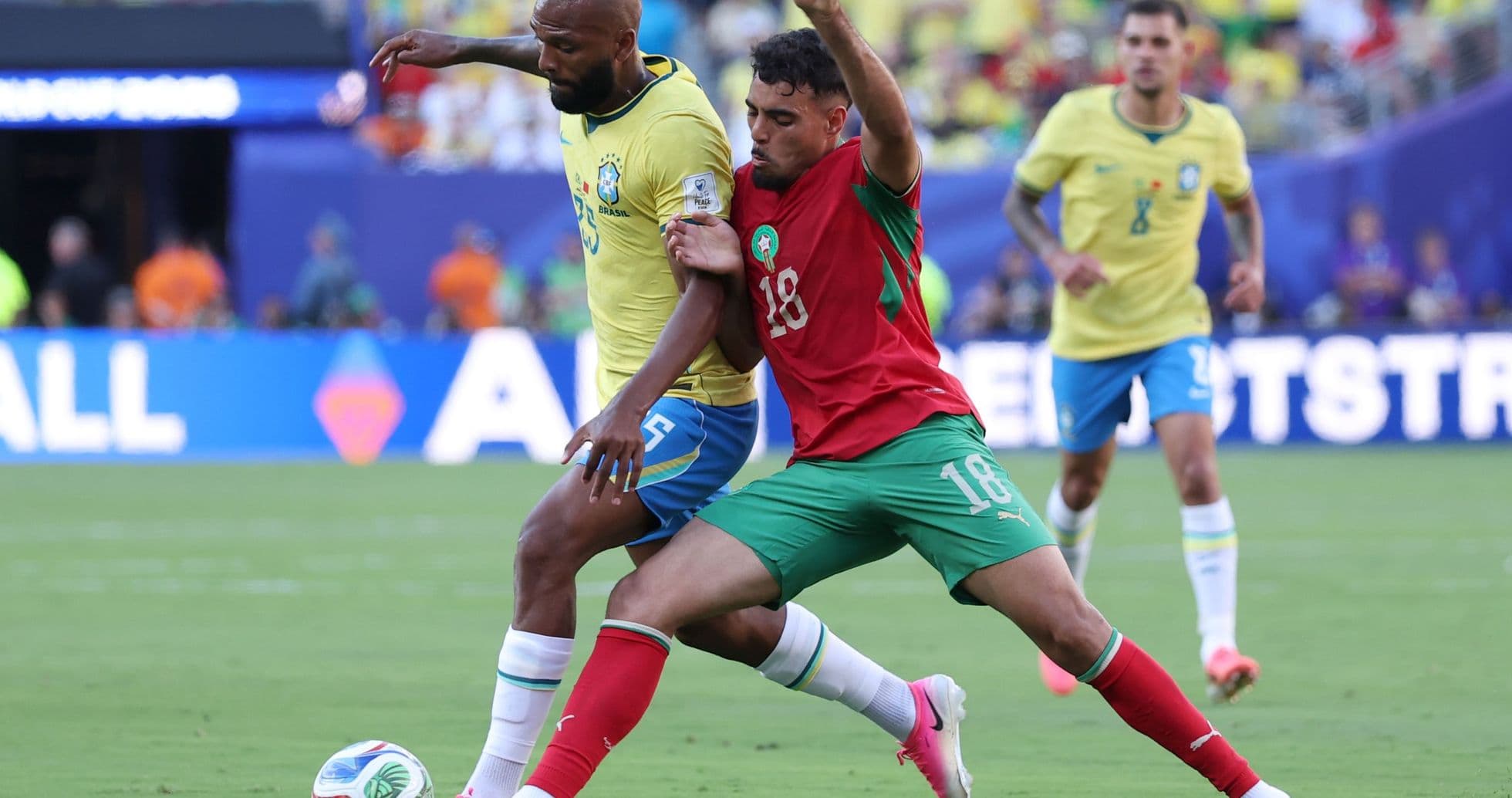
The 1-1 draw between Brazil and Morocco was less about luck and more a display of tactical discipline. Morocco, often seen as underdogs, executed a well-planned strategy that caught Brazil off guard early in the match.
Starting Lineups and Formations
Brazil lined up in a 4-2-3-1 formation: Allison guarded the goal; Ibanez, Marquinhos, Gabriel, and Santos formed the defense; Casemiro and Guimaraes anchored midfield; Paqueta, Raphinha, Vinicius supported Thiago upfront. Meanwhile, Morocco also used a 4-2-3-1 setup with Bono in goal, Mazraoui, Riad, Diop, Hakimi defending, Aynaoui, Bouaddi, and Ounahi in midfield, and El Khannous, Saibari, Diaz leading the attack.
Morocco’s Explosive Start
Despite being favorites on paper, Brazil was stunned by Morocco's aggressive opening. Morocco’s quick transitions and tight mid-block disrupted Brazil’s rhythm. Bouaddi stood out, orchestrating play with energy and precision in midfield.
Rather than press high, Morocco focused on protecting central zones, blocking Brazil’s key passing routes, and pushing play toward the flanks. This smart funneling led to Morocco’s first goal when they intercepted a failed wide play and quickly set Saibari through on goal.
Brazil’s Struggles in Control and Progression
Brazil’s main problem wasn’t possession but moving the ball forward effectively. Their midfield struggled to link up with the attack, creating large gaps. The back three and Ibanez tried to build from the back, but poor spacing and coordination caused frequent turnovers.
Defensively, Brazil was vulnerable. Morocco’s fluid style exploited gaps, leaving Brazil’s midfield chasing shadows. Casemiro seemed physically off, and his substitution for Fabinho at halftime reflected the coach’s recognition of these weaknesses.
Final Third Challenges and Missing Links
Brazil lacked a player capable of connecting midfield to attack smoothly. Vinicius and Raphinha relied heavily on individual skill, but their effectiveness was limited without proper support.
Thiago, as a traditional target man, did not provide the creative link Brazil needed. Many believe Cunha might have offered better balance up front. His absence as a starter surprised some fans who expected a more dynamic striker to lead Brazil’s offense.
What This Match Reveals
Brazil showed flashes of individual brilliance but revealed familiar flaws in structure and build-up play. Their defensive organization faltered after losing possession, an issue that could haunt them against tougher opponents.
Morocco impressed by matching one of the most talented teams through discipline, structure, and sharp counterattacks. Their performance was a clear demonstration of careful planning rather than luck, underscoring their rise as a respected force in international football.