.svg&w=384&q=75 "Pitchgist logo")
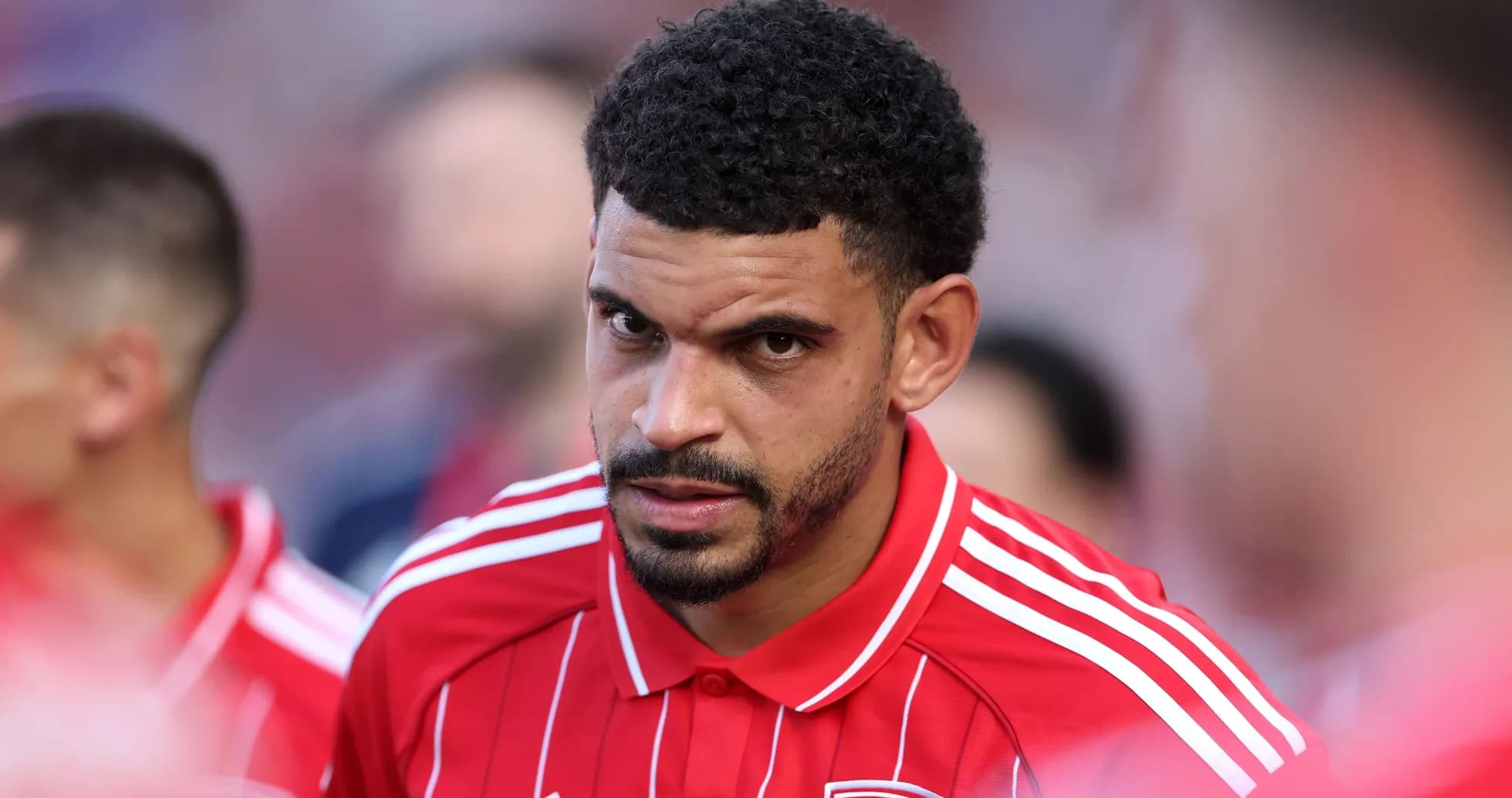
Morgan Gibbs-White's World Cup Snub and Stunning Free-Kick
Morgan Gibbs-White walked off the City Ground pitch with 18 goals to his name this season, a free-kick still swirling in the memory and a World Cup snub burning in the background.
Left out of Thomas Tuchel’s England squad despite a haul of 25 goal contributions across a standout campaign, the Nottingham Forest playmaker delivered his answer the way footballers always hope to: with the ball at his feet and a point to prove.
A free-kick and a statement
Against Bournemouth, with the noise around his omission still fresh, Gibbs-White bent in a stunning free-kick in a 1-1 draw and then made sure nobody missed the message. He turned to the stands, jabbed a finger at the name on his back and flashed his fingers towards the crowd. Not subtle. Not meant to be.
It felt like a player spelling out what his numbers already scream: this season should have ended with a boarding pass, not a phone call.
That call came on Thursday evening. Tuchel, the England manager under intense scrutiny for his selections, rang Gibbs-White personally to explain why he would not be on the plane to the 2026 World Cup. No delegate, no email. Direct from the coach himself.
Gibbs-White later laid out the conversation and his feelings with the same clarity as his set-piece: he believes he has done more than enough, he knows he has fallen on the “wrong side” of an opinion before, and he intends to bounce back. He respected Tuchel for picking up the phone. He even said he agreed with what was said. But there was no mistaking the edge in his verdict on the decision or the determination in his gaze toward the summer.
City Ground fury, England debate
Inside the City Ground, the reaction was far less measured. Forest supporters spent much of the afternoon venting at Tuchel, their chants aimed squarely at the England boss who has chosen system over star power and sparked a national argument in the process.
Gibbs-White’s exclusion sits alongside some heavyweight omissions. Phil Foden, Cole Palmer and other big names will also watch the tournament from afar, all victims of Tuchel’s insistence on a very specific tactical profile and positional balance.
The German has stood his ground. He has stressed that his squad is built around roles, not reputations, around “hunger and excitement” rather than raw statistics. For him, the question is not what a player has done in isolation, but whether he fits the puzzle.
He underlined that point when asked about the likes of Gibbs-White and the other headline absentees. No, they had not done anything wrong, he argued. The issue, he said, was positional: he refused to pack the squad with “five number 10s” and then shunt them out of position. Who would that help, he asked — the player or the team?
It is a clear philosophy. It is also a brutal one for those who fall just outside its lines.
Anderson’s rise, Forest’s dilemma
While Gibbs-White processes the disappointment, another Forest midfielder finds himself at the opposite end of Tuchel’s thinking.
Elliot Anderson has surged into the England frame and is now expected to start the tournament opener against Croatia. Where one Forest creator has been left at home, another is being pushed to the centre of the stage.
That rise has triggered a different kind of tension at the City Ground. Anderson has become a key figure for Tuchel, and that status has sharpened the focus of Manchester City and Manchester United, both circling despite a £100m price tag that would normally scare off all but the boldest bidders.
Forest manager Vítor Pereira knows exactly what he has on his hands. He did not hide his admiration after the season finale, openly saying Anderson “deserves the best clubs in the world” and calling him a talent of the highest order. At the same time, he made it clear: Anderson is a Forest player, and he wants to keep this group together, adding only “two or three players” to balance the squad.
Then came the caveat every coach dreads. The market is the market. He cannot predict it. In the end, he said, “we’ll see.”
So Forest stand at a crossroads. One star left out of a World Cup squad and raging against the verdict with goals and gestures. Another on the brink of a major international tournament and attracting the wealthiest predators in the game.
Tuchel has drawn his lines. Now the summer will show who crosses them — and who is left once again on the wrong side of someone’s opinion.