.svg&w=384&q=75 "Pitchgist logo")
Maresca Returns to Manchester City: A Tough Act to Follow
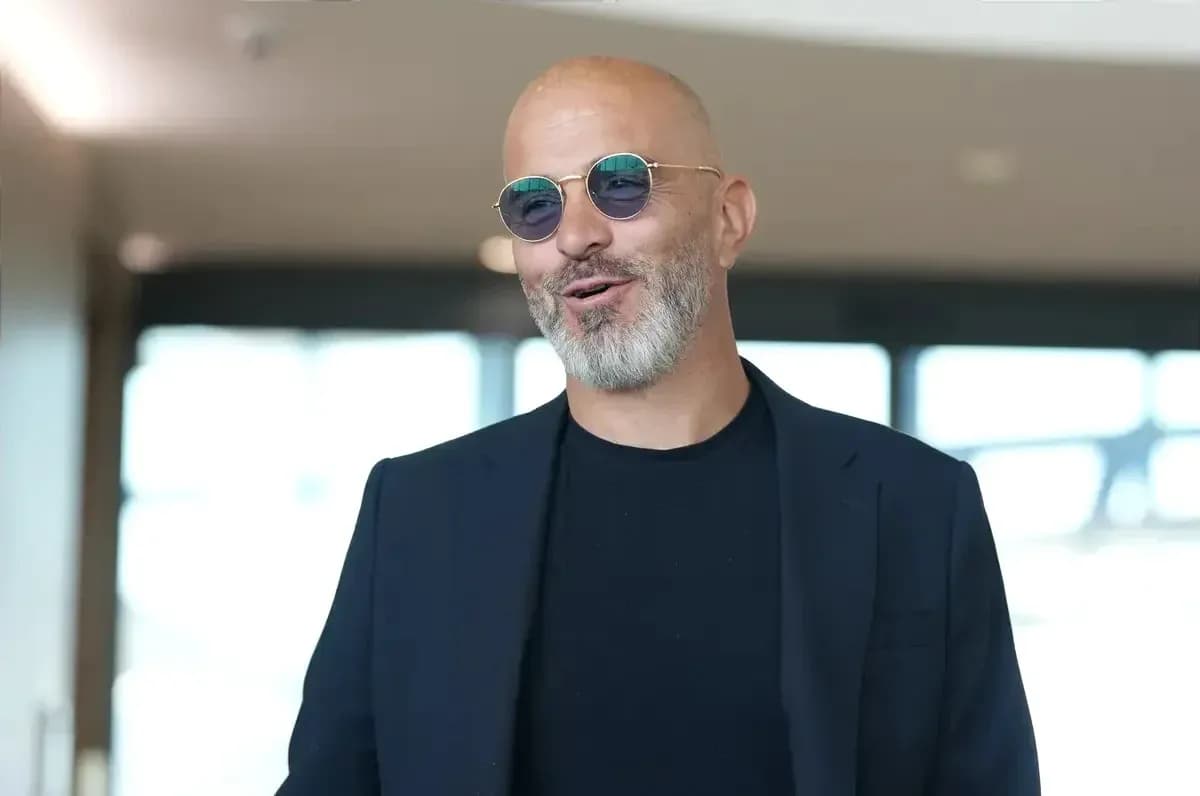
Enzo Maresca sat down at the Etihad Stadium, looked around a place he knows better than most, and summed it up in three words.
“I feel back home.”
Manchester City’s new head coach has worked here before, first with the Elite Development Squad and then as a key part of Pep Guardiola’s staff during the treble-winning 2022-23 season. Now he returns as the man asked to replace the most transformative manager in the club’s history – and, in his eyes, the best in the world.
“I consider Pep the best coach in the world in the last 20, 25 years,” Maresca said in his first press conference as City boss. “First of all, I’d like to say it’s a privilege – the reason why, the club decided to go for me, that means for me it’s a privilege.”
The word kept coming back: privilege. Not burden. Not fear. Privilege.
Stepping into Guardiola’s shadow
Guardiola’s departure left more than a vacancy. It left a legacy that defines an era, and a benchmark that has broken more than one rival club before a ball is kicked.
Maresca did not try to shrink that reality. He leaned straight into it.
“It’s a challenge, it’s nice, a privilege,” he said of succeeding Guardiola. He even reached for the two names that always frame this kind of discussion: Sir Alex Ferguson and Arsène Wenger. Both giants, both followed by clubs that stumbled badly when the long years of continuity finally ended.
“Also, the history of managers with many years in the same club, after always you struggle a little – Sir Alex, Arsene,” he noted, fully aware of the cautionary tales.
The difference, in his mind, is the structure he is walking into.
Three managers in 17 years
Maresca kept circling back to one statistic that tells you how City see themselves and how he sees them.
“This club, this organisation, has had three managers in 17 years. This is not normal. It doesn’t happen often,” he said.
Roberto Mancini, Manuel Pellegrini, Pep Guardiola. Three names, 17 years, a trophy haul that has reshaped English football. To many, that list would be intimidating. To Maresca, it is the foundation under his feet.
“This probably is one of the things that I’m confident we can do a great job,” he said. “Continue to do the job that has been done in the last 14 or 15 years, since Roberto Mancini, Manuel and for 10 years with Pep.”
He is not promising revolution. He is promising continuation with his own imprint, backed by an organisation that has long preached alignment from academy to first team.
A familiar face, a different role
Maresca’s appointment only came after City resolved a compensation dispute with Chelsea, his most recent club after a spell in charge of Leicester City. The path back to Manchester has not been smooth, but it has been deliberate.
Now 46, he has already started pre-season with a trimmed-down group: senior City players not involved in the latter stages of the FIFA World Cup in North America, loan returnees, and academy prospects filling out the early sessions.
It is a familiar environment, if a very different job. This is the club where he learned the rhythms of Guardiola’s training ground, where he helped shape the treble winners, where he first understood what a City team is supposed to look and feel like.
That matters. City’s hierarchy wanted someone who understood the building from the inside, who knew the culture rather than needed it explained in a presentation. Director of football Hugo Viana and the club’s decision-makers identified a coach who not only accepts the standards set before him but believes he can add to them.
Emotion, structure and the weight of the next step
Maresca spoke with the calm of a man who knows the scale of the task and still wants it. The emotional pull of the Etihad is obvious for him, but he kept tying that feeling to the system around him.
He talked about the organisation, the continuity, the fact that City do not change course every two seasons. He framed the club’s stability not as a pressure point but as his main source of confidence.
The Italian’s connection to City is not a slogan. It was forged on training pitches, in dressing rooms, in tactical meetings during the most successful period in the club’s history. That bond will colour every decision he makes now: every training drill, every tweak on a matchday, every answer in front of the cameras.
He knows exactly whose chair he is sitting in. The question is no longer whether he feels at home.
It is what he can build from here in the house that Guardiola left behind.