.svg&w=384&q=75 "Pitchgist logo")
Marcus Rashford: Uncertain Future Amid World Cup Aspirations
Marcus Rashford is heading into the summer as one of the World Cup’s likely starters for England – and as one of Europe’s most uncertain footballers.
On 17 June in Dallas, he is expected to walk out against Croatia as Gareth Southgate’s first-choice forward. Back in Manchester, though, nobody quite knows who he will be playing for once the tournament is over. A homegrown talent, a Champions League-level attacker, and yet a man in limbo.
From Amorim’s exile to a Catalan tease
The turbulence began in December 2024 when Ruben Amorim, then in charge at Manchester United, made a brutal call: Rashford was out of his first‑team plans. No soft landing, no gradual phase-out. Just a clean break that sent him down the loan route.
Aston Villa first. Barcelona next. Two big clubs, two different leagues, the same underlying question: where does Marcus Rashford actually belong?
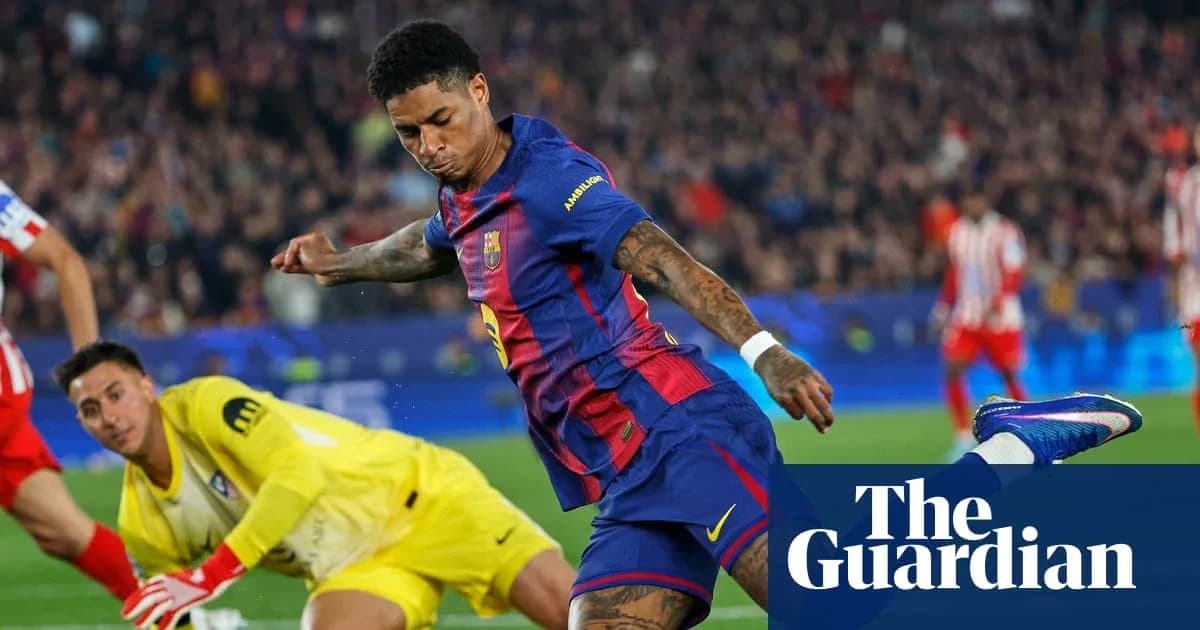
In Catalonia, he looked close to finding an answer. He carved out a place under Hansi Flick last season, contributing to a title defence and delivering a moment that should have cemented his status – that free-kick against Real Madrid, the one that swung the clásico and helped Barcelona clinch La Liga earlier this month. It felt like a statement. It felt permanent.
Rashford clearly hoped it would be. His preference is no secret: he wants to stay at Barcelona. “I am not a magician but if I was, I would stay,” he said after scoring against Real on 10 May. “We will see.” That was the line of a player who has made up his mind but knows the decision is not his to take.
The problem sits in Barcelona’s boardroom. Their intentions are cloudy. Anthony Gordon’s £69m arrival from Newcastle last week only muddies the water, another left-sided attacker thrown into an already crowded area. If they move for Rashford again, the indication is it would be on another loan, not the permanent deal he craves.
United are not playing that game. They want a clean break: a permanent transfer and a £26m fee for an academy product whose contract runs until May 2028.
The £17.5m question
That relatively low price for a 28-year-old in his peak years is not a bargain so much as a financial equation. The real number is not £26m. It is £35m – the total value of the remaining two years of Rashford’s £17.5m-a-year salary.
United want that wage off their books. That is the driver. Any club taking him on loan will be expected to shoulder all or most of that cost. Any club signing him permanently will be looking at a significant pay packet, likely with a raise baked in. For Barcelona, already straining at the edges of their financial rules, this is a serious obstacle. As it stands, they do not look ready to commit.
So Rashford waits. A marquee name, but one priced as much by his contract as his talent.
No way back at Old Trafford
Could he stay and start again at United under Michael Carrick? On paper, yes. In reality, the door is bolted.
Amorim has gone, Carrick is in, but the power structure above the dugout has not shifted in Rashford’s favour. Sir Jim Ratcliffe, the minority owner who controls football policy, has little appetite to reintegrate him. Nor do Jason Wilcox, the director of football, or Omar Berrada, the chief executive. For them, Rashford is a problem to solve, not a project to rebuild.
Persona non grata. That is the harsh truth for the lad from Wythenshawe at the club he grew up in.
Arsenal, Liverpool, Villa – and the foreign temptations
So where next?
When his loan at Villa ended last summer, Rashford’s brief was clear: a Champions League club, but not in London. Time and circumstance have a way of softening positions, though, and if that stance has shifted, Arsenal suddenly look like a very real option.
Mikel Arteta has built a ruthless Premier League champion and will see the value in upgrading where he can. On the left, Rashford offers something different – and arguably something more – than Leandro Trossard and Gabriel Martinelli. He also brings the ability to play as a No 9, adding another angle to a front line that already includes Kai Havertz and Viktor Gyökeres. For a manager who thrives on tactical flexibility, that is a tempting package.
The same logic applies at Liverpool. Cody Gakpo is the only established senior option on the left and his output last season was, at best, mixed. If Liverpool decide they need a sharper edge on that flank, Rashford fits the profile. The question is emotional, not tactical: would his disillusionment with United cut deep enough for him to cross the divide and pull on a Liverpool shirt?
Villa sit in a different category – familiar, but no less attractive. Rashford shone under Unai Emery, especially in the Champions League, and there is a clear memory of how well that partnership worked. A return to the Midlands would not carry the glamour of Barcelona or the political charge of Liverpool, but it would offer stability, trust and a system that already suits him.
Then there is the rest of Europe. Paris Saint-Germain have admired Rashford for some time, yet the landscape has shifted. With Khvicha Kvaratskhelia installed on the left, their need in that area is far less urgent. At Bayern Munich, Luis Díaz holds the same spot. At Real Madrid, Vinícius Júnior is immovable. The elite left-wing roles are largely taken.
A market frozen by risk
The transfer window opens on 15 June. Clarity is supposed to follow. In Rashford’s case, it may come only in fragments.
His situation is tangled: a high wage, a modest fee, a club eager to sell but determined to control the destination, a player who still wants a say in where he goes. United can block moves they do not like. Rashford can refuse ones he does not want. Between those two hard lines sits a group of suitors weighing up whether they can afford a player who just helped Barcelona retain La Liga but did so with numbers that do not scream superstar.
Eight goals and nine assists in La Liga last season. Respectable, but not explosive. Enough to intrigue, not enough to remove doubt. That output helps explain Barcelona’s caution and the hesitation elsewhere.
And yet, the picture can flip quickly in tournament football.
If Rashford catches fire in the United States, if he lights up England’s World Cup campaign with the kind of performances that once made him the face of United’s future, that £26m fee and hefty salary might suddenly look less like a burden and more like a bargain. The enigma would not disappear. It would just become a lot more expensive to ignore.