.svg&w=384&q=75 "Pitchgist logo")
Marcus Rashford's Manchester United Future: From Exit to Opportunity
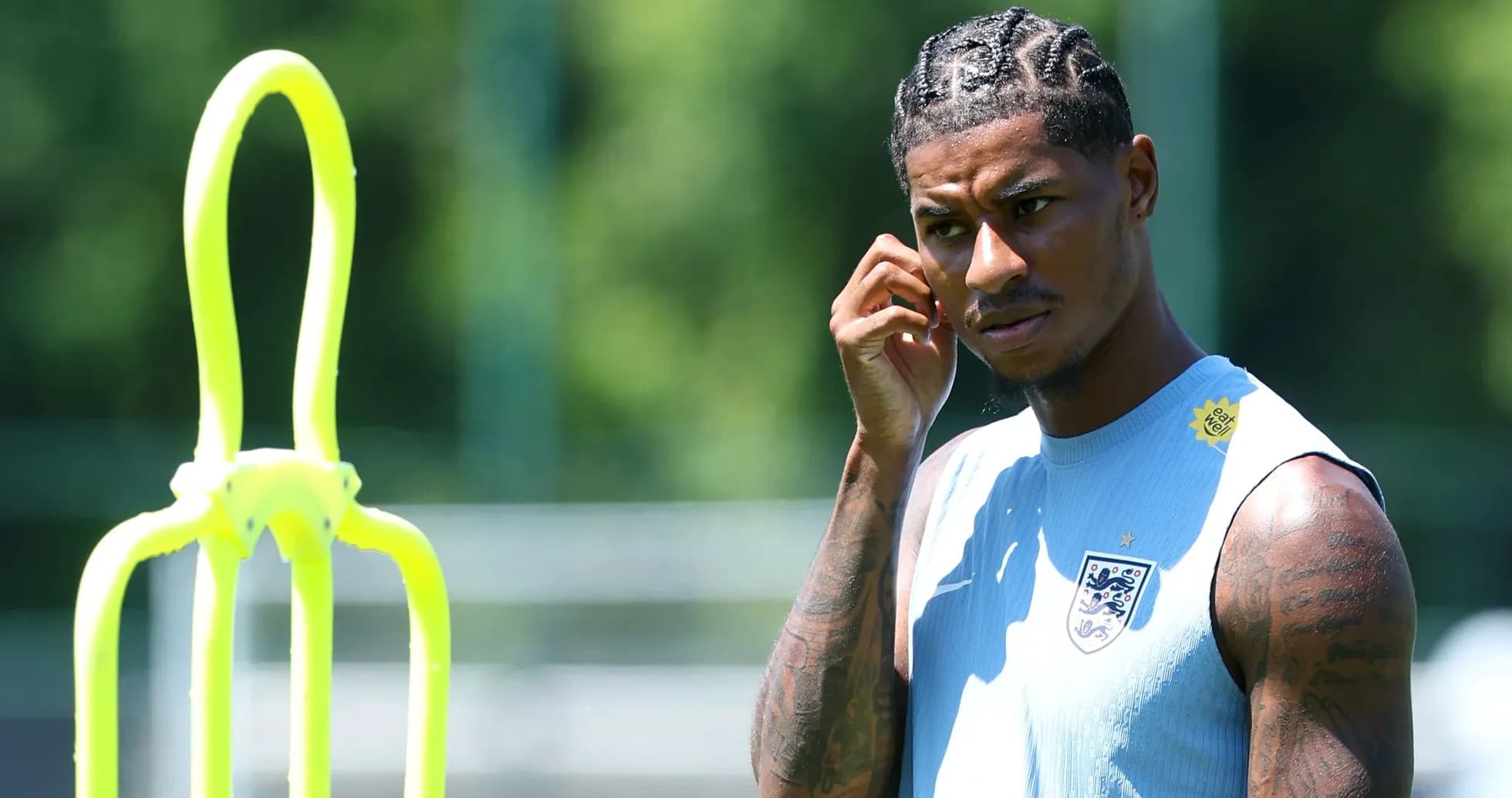
Marcus Rashford’s Manchester United future, once framed as a slow walk towards the exit, has taken on a very different tone.
According to David Ornstein in his One To Watch column for The Athletic, United’s recent cost-cutting has eased the financial strain that previously pushed the club towards a sale. With the books in better shape, the conversation around Rashford is no longer about offloading an asset. It is about whether they can unlock him again.
From Inevitable Split to Open Door
Not long ago, each transfer window seemed to move Rashford closer to a permanent break. The logic felt brutal but clear: big wages, inconsistent form, and a market that might still yield a decent fee.
That script has changed.
Ornstein reports that United now see a “mutually beneficial” path in exploring his reintegration rather than forcing a departure. The club’s technical staff, and Rashford himself, are described as open to the idea. Nothing is signed off, nothing guaranteed, but the door is no longer half-closed. It is ajar.
A key factor is timing. Rashford is on course to rejoin the first-team group in pre-season training next month and, as things stand, will be available for Michael Carrick to use. For a manager reshaping a squad and a style, having a player of his profile back in the mix is significant.
The caveat hangs over it all: the situation is “changeable”. United are keeping their options live. So is Rashford.
A Market That Doesn’t Quite Fit
If this were a straightforward transfer story, he might already be gone. It is not.
A permanent move has proved awkward to construct. His contract runs until June 2028, which hands United leverage and gives Rashford security. His wages narrow the field of realistic buyers. His own stance narrows it further.
Rashford has no desire to join another Premier League club. That shuts down the most obvious domestic routes. Overseas, the interest is there but not at the level that would turn his head. The clubs circling do not carry the kind of elite status that would make walking away from United feel like a step up.
Ornstein underlines the impasse. United want to avoid sending him out on a third loan. Barcelona, a previous option, have no intention of taking him permanently. The player remains tied down until 2028, unwilling to move elsewhere in the league, and not currently targeted by suitors of the calibre required to tempt him out.
So the market stalls. When the exit door jams, the training-ground door starts to look more attractive.
Carrick’s Calculation
All of this drops onto Carrick’s desk at a pivotal moment.
United open their 2026-27 Premier League campaign away at Hull City on August 22. By then, the squad should already feel different. The arrival of Ederson from Atalanta is set to bolster the group, and more signings are expected in the coming weeks. New faces bring energy, but they also bring uncertainty over roles, hierarchies, and minutes.
Into that shifting landscape walks Rashford, if all goes to plan. For him, the pre-season window is not just a warm-up; it is a trial. A chance to prove he still belongs at the heart of United’s plans, not on the periphery of them.
Carrick will need to judge whether he can rebuild Rashford’s confidence and output inside his evolving system, or whether this is simply a temporary alignment of convenience before the market reopens in a stronger position for all sides.
There is one more variable. Rashford’s return date could slip, depending on how far England go at the World Cup. A deep run delays his involvement, compresses his preparation, and complicates Carrick’s early-season planning.
United, though, finally have what they lacked in previous windows: room to think. No fire sale. No forced calls. Just a high-stakes decision on a homegrown forward whose story at the club, against most expectations, might not be finished yet.