.svg&w=384&q=75 "Pitchgist logo")
Lionel Messi's Injury Concerns Ahead of 2026 World Cup
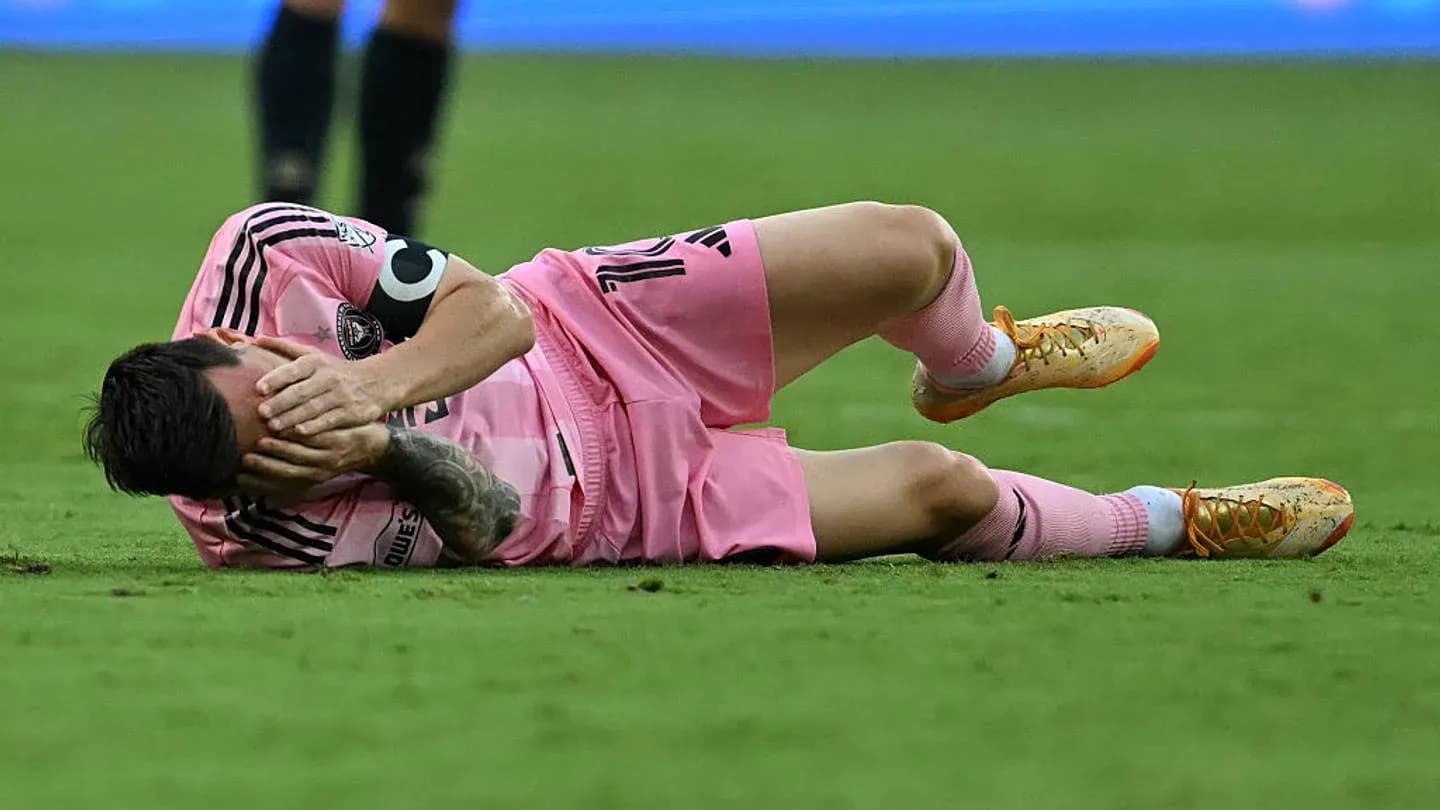
Lionel Messi limped out of an MLS goal-fest on Monday night, and a country held its breath.
With Inter Miami locked at 4–4 against Philadelphia Union, the 79th minute brought the moment nobody in Argentina wanted to see: Messi signaling to come off, hand to his left leg, the joy of a wild game instantly replaced by a familiar anxiety.
Soon after, Miami’s medical staff offered the first, cautious diagnosis: “muscle fatigue in the left hamstring.” On paper, that sounds relatively benign. In reality, with the 2026 World Cup looming and Messi still the heartbeat of the world champions, any mention of his hamstring is enough to send alarm bells ringing from Buenos Aires to New York.
Scaloni watches, waits, and calculates
Lionel Scaloni and his staff were not in Miami. They were at Argentina’s training ground, watching on television like millions of others. The reaction was instant.
“We realized he asked to be substituted, that he wasn’t well,” the 2022 World Cup-winning coach told DSports, outlining the staff’s concern the moment Messi walked off.
The initial feedback reaching the national team camp has been cautiously optimistic. “The first reports are not that bad,” Scaloni said, while quickly adding the caveat that more detailed tests still have to be carried out. Argentina’s manager knows better than anyone that at this stage of Messi’s career, every physical issue has to be managed with care, not emotion.
“We would have liked him to arrive [in camp] without any kind of problems, but that is not the case with him and with most of the players who have had problems,” Scaloni admitted. “They are not fully recovered. Our goal is to try to recover them and have them arrive in the best possible condition.”
That is the balance he now has to strike: respect the reality of a 37-year-old body, while still leaning on a player who remains central to Argentina’s plans of defending their crown.
Still the axis of a world champion
Messi will be 38 during the 2026 World Cup. For most players, that age comes with a testimonial, not another tilt at history. For Messi, it comes with expectation.
Argentina are chasing something no men’s team has achieved in more than six decades: back-to-back World Cup titles. Even with a new generation emerging, Messi still shapes the way they play, the way opponents prepare, the way tournaments bend around his presence.
Scaloni has yet to name his squad, but there is no real debate about Messi’s place. Even if he were to miss early matches or be eased in gently, his inclusion is effectively guaranteed—earned over 21 years of service and justified by the impact he can still have when the knockout rounds tighten and space disappears.
The concern now is not whether he goes. It is how he arrives.
Records within reach, if the body allows
Beyond Argentina’s collective ambition, there is a personal frontier waiting for Messi in 2026.
This will be his sixth World Cup, a landmark that will see him stand alongside Cristiano Ronaldo in the men’s game. Both debuted on the biggest stage in 2006—Ronaldo at 21, Messi still a teenager. Two decades later, they are still there, still defining eras, still stretching the limits of longevity at the top.
Messi already owns the men’s record for World Cup appearances, with his 26th coming in the 2022 final against France. The overall World Cup benchmark, though, belongs to USWNT icon Kristine Lilly, who played 30 matches across five tournaments between 1991 and 2007.
That number is now in Messi’s sights. Four more games in 2026 would allow him to match Lilly. Five would push him clear, out on his own, at the summit of World Cup appearances across both the men’s and women’s tournaments.
Argentina could play up to eight matches if they reach the final or the third-place playoff. The route is there. The math works. The only question is whether his body will cooperate.
For now, the world waits on a hamstring scan from Miami. The margins for history, and for Argentina’s title defense, may come down to what those images reveal.