.svg&w=384&q=75 "Pitchgist logo")
Genoa vs AC Milan: Tactical Insights from Serie A Clash
The afternoon at Stadio Luigi Ferraris closed on a familiar note for both sides: Genoa brave but punished, AC Milan ruthless enough to turn a tight game into a 2–1 away win. Following this result, the table tells a clear story. Genoa sit 14th with 41 points, their goal difference at -9 after scoring 41 and conceding 50 overall. Milan, meanwhile, consolidate 3rd place on 70 points, with a goal difference of 19 from 52 goals for and 33 against in total.
I. The Big Picture – contrasting seasonal DNA
This fixture, part of the Serie A Regular Season – 37, distilled the identities the numbers had been sketching all year. Heading into this game, Genoa were a team built on effort and narrow margins. Overall they had won 10 of 37, drawn 11 and lost 16, with a modest attacking return of 41 goals at an overall average of 1.1 goals per game, and 1.2 at home. Defensively, they were conceding 1.4 per match overall, 1.4 at home, and had kept 9 clean sheets in total. It is the profile of a side that rarely collapses but rarely overwhelms.
Milan arrived in Genoa as a fully formed contender. Overall they had 20 wins from 37 league matches, with only 7 defeats, and a scoring rate of 1.4 goals per game in total. On their travels they had been particularly efficient: 11 away wins from 19, averaging 1.5 away goals while conceding only 0.7. With 15 clean sheets overall, this was a side comfortable playing high up the table and high up the pitch.
The formations on the day underlined those trajectories. Daniele De Rossi’s choice of a 4‑3‑2‑1 for Genoa was a subtle shift from their more common back-three structures, one that tried to marry compactness with an extra creative presence between the lines. Massimiliano Allegri stayed true to Milan’s season-long blueprint: a 3‑5‑2 that morphs on the ball, wing-backs high and central midfielders rotating into the half-spaces.
II. Tactical Voids – absences and discipline
The list of absentees quietly shaped the tactical map. Genoa were without M. Cornet, Junior Messias, B. Norton-Cuffy, J. Onana and L. Ostigard, a cluster of players who collectively strip De Rossi of both depth and verticality. Without Cornet and Junior Messias, there was less natural 1v1 threat from wide zones; without Norton-Cuffy and Ostigard, the defensive line lost some athletic recovery and aerial presence.
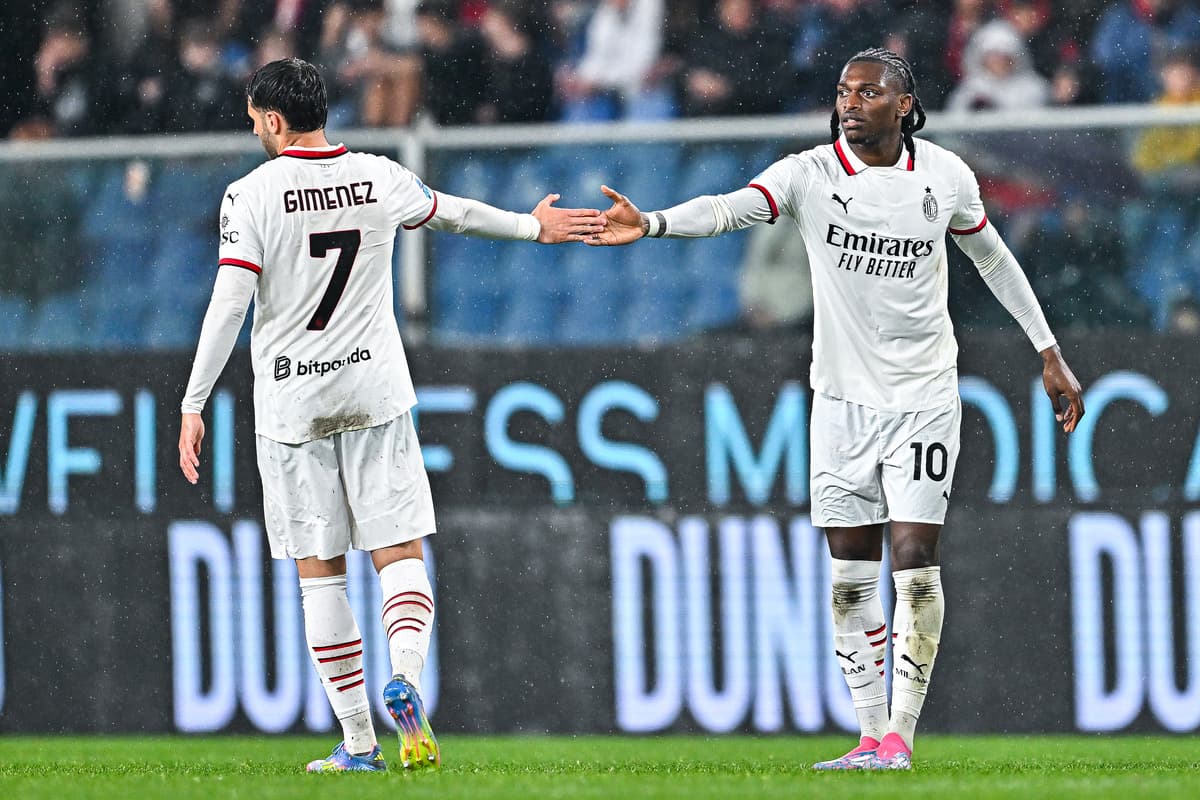
For Milan, the bans to P. Estupiñán, R. Leao and A. Saelemaekers forced Allegri into a more interior, combination-heavy attacking plan. The absence of Leao in particular removed Milan’s most explosive runner, replacing raw chaos with more structured movement from S. Gimenez and C. Nkunku ahead of a five-man midfield.
Disciplinary patterns over the season hinted at the emotional undercurrent. Genoa’s yellow-card distribution shows a clear surge between 61–75 minutes, when 25.40% of their cautions arrive, often as fatigue and frustration converge. Milan, by contrast, peak even later: 25.81% of their yellows come between 76–90 minutes, a sign of a side willing to foul to protect leads or disrupt counters in the dying stages. The red-card data for both teams is spread across early, mid and added time periods, suggesting that when these sides lose control, it can happen in any phase.
III. Key Matchups – Hunter vs Shield, Engine Room
With no explicit xG numbers available, the “Hunter vs Shield” duel is best read through structural lenses. Genoa’s lone striker, L. Colombo, stood at the tip of a narrow Christmas-tree shape, flanked and fed by Vitinha and T. Baldanzi. His job was to occupy the central trio of F. Tomori, M. Gabbia and S. Pavlovic, force them backwards and open lanes for late runners. Genoa’s season-long scoring average of 1.2 at home suggested that if Colombo could turn half-chances into shots, a goal was likely.
The Shield, for Milan, was more than just the back three. Their away record – only 14 goals conceded in 19 away matches – reflects a collective structure. The wing-backs, Z. Athekame and D. Bartesaghi, closed Genoa’s wide midfielders early, while Y. Fofana and A. Jashari in the middle screened passes into Colombo’s feet. Milan’s ability to defend with numbers behind the ball, then spring into transition, has been central to that 0.7 away goals-against figure.
In the “Engine Room”, Genoa’s R. Malinovskyi and M. Frendrup were tasked with bending the game to their tempo. Malinovskyi, who has combined 6 goals and 3 assists this season and collected 10 yellow cards, is the emotional and creative metronome. His range of passing and set-piece threat offered Genoa a route to bypass Milan’s first line of pressure. Frendrup, alongside Amorim, had to shuttle relentlessly, closing A. Rabiot’s progressive runs and Fofana’s surges.
On the other side, Rabiot’s left-footed authority, combined with Jashari’s balance and Fofana’s energy, gave Milan a central trio capable of both controlling possession and collapsing onto second balls. Their job was to suffocate Malinovskyi’s time on the ball and force Genoa’s build-up into the wider, less dangerous lanes.
One intriguing subplot sat on the Genoa bench: Aarón Martín, one of Serie A’s leading assist providers with 5 this season. His 60 key passes and willingness to overlap make him a natural weapon when chasing games. De Rossi’s decision on when Aarón Martín replaced a starter would always be a turning point; his presence tends to tilt Genoa’s left flank into a more aggressive, crossing-heavy channel.
For Milan, the bench contained a different type of threat. C. Pulisic, with 8 goals and 4 assists in the league and a missed penalty on his seasonal record, offers late-game incision between the lines. N. Fullkrug provides penalty-box presence if Milan need to turn territory into volume shooting. L. Modric and R. Loftus-Cheek add alternative textures in midfield: one as a tempo controller, the other as a vertical carrier.
IV. Statistical Prognosis – why Milan edged it
Following this result, the numbers feel almost inevitable. A Genoa side that had failed to score in 14 matches overall still found a way to breach Milan once, honouring their home average of 1.2 goals. But they also conceded twice, in line with a defence that allows 1.4 goals per game overall and had kept only 4 clean sheets at home. Milan’s away profile – 1.5 goals scored and 0.7 conceded on their travels – translated almost directly into the 2–1 scoreline: not quite a shutout, but enough attacking clarity to override any defensive wobble.
The late-game card trends suggested a fractious finish, and the tactical voids on both sides nudged the contest toward structure over chaos. Without Leao’s raw acceleration and Genoa’s missing wide threats, the game became a test of systems. Milan’s 3‑5‑2, honed over 33 league outings, simply had more rehearsed mechanisms than Genoa’s one-off 4‑3‑2‑1.
In narrative terms, this was a meeting between a side trying to stabilise and a side polishing their Champions League credentials. The data, the lineups and the final 2–1 score all point in the same direction: Genoa can compete, but Milan, in this phase of the season, know how to win.