.svg&w=384&q=75 "Pitchgist logo")
France Dominates Sweden 3-0 in World Cup Round of 32
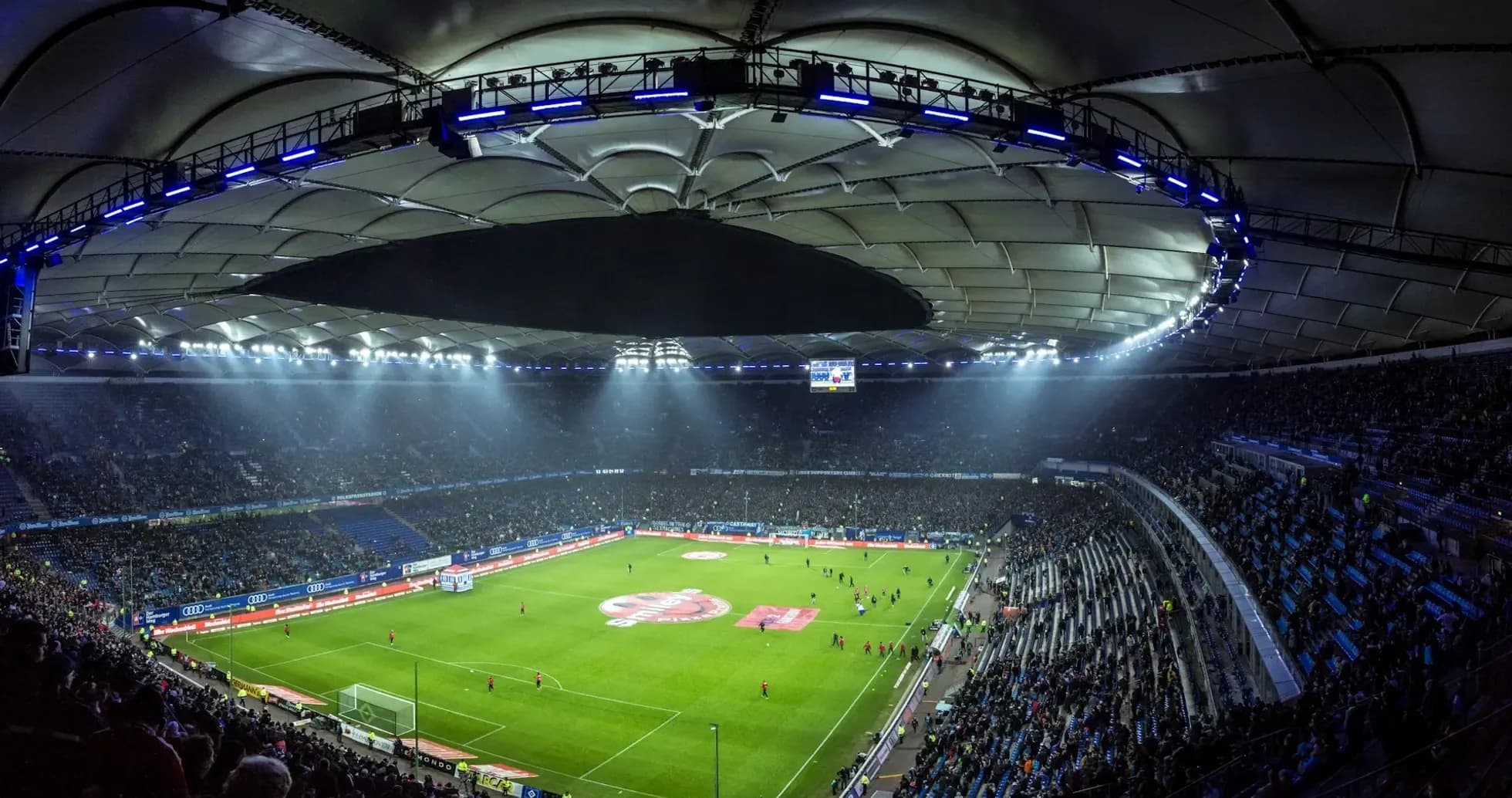
MetLife Stadium in New-York staged a Round of 32 meeting that felt less like a neutral World Cup tie and more like a test of France’s tournament identity. France arrived as Group I winners, ranked 1st in their table with 9 points and a goal difference of 8, having taken maximum points from 3 group matches. Sweden came in as a Round of 32 qualifier with 4 points and a neutral goal difference of 0 from their group campaign, an underdog with enough attacking talent to unsettle anyone but carrying structural scars.
Final Score: France 3 - 0 Sweden
By full time, the scoreline – France 3, Sweden 0 – mirrored the broader seasonal trends. Heading into this game, France had played 4 matches overall in this World Cup, winning all 4. They had scored 13 goals in total and conceded just 2, with an overall average of 3.3 goals for and 0.5 against per match. On their travels they had been even more explosive, averaging 4.0 goals for and 1.0 against, but their home numbers were almost as ruthless: 3.0 goals scored at home on average, 0.3 conceded. Sweden’s profile was the opposite kind of volatile. Across their 4 matches overall they had just 1 win, 1 draw and 2 defeats, scoring 7 and conceding 10, an overall average of 1.8 goals for and 2.5 against. At home they had been a wild ride – 5.0 goals scored and 1.0 conceded on average – but away from home they had managed only 0.7 goals for while shipping 3.0 per match. On neutral ground in New-York, those away tendencies were always likely to matter.
France's Tactical Setup
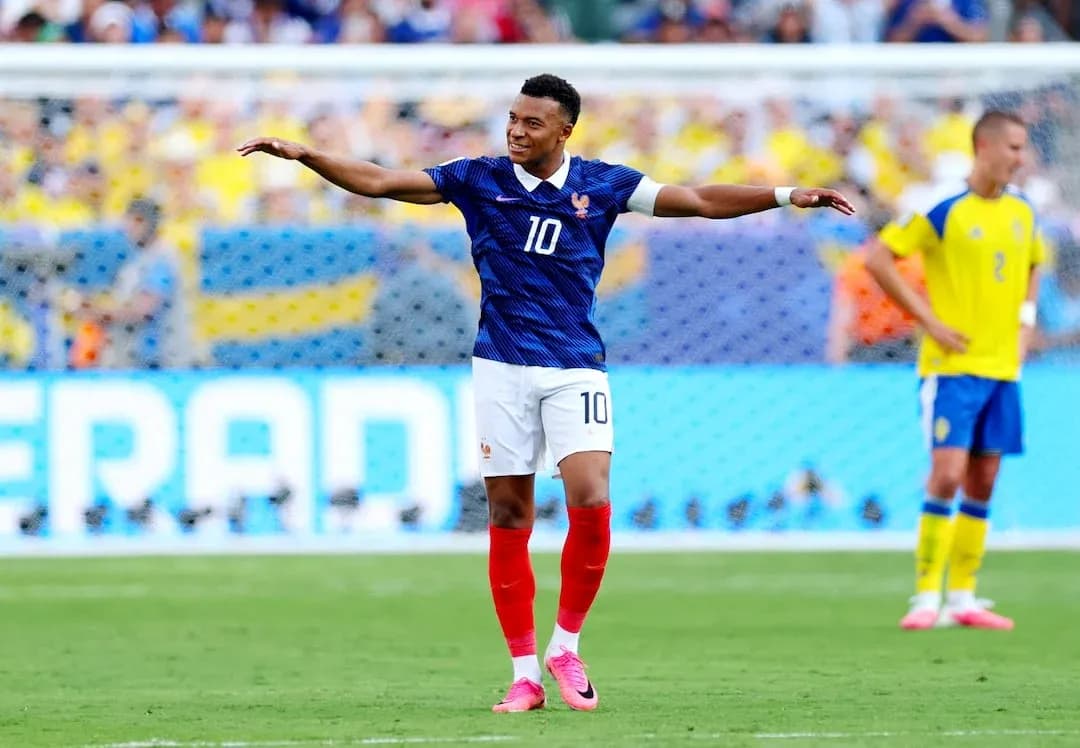
Didier Deschamps leaned into continuity and control with his trusted 4-2-3-1, a shape that has underpinned all 4 of France’s World Cup outings so far. Mike Maignan started behind a back four of Jules Kounde, Dayot Upamecano, William Saliba and Lucas Digne. In front, Aurelien Tchouameni and Adrien Rabiot formed the double pivot, with a fluid band of three – Ousmane Dembele on the right, Michael Olise central and Bradley Barcola from the left – supplying Kylian Mbappe as the lone forward.
The tactical picture was clear: the double pivot to suffocate transitions, full-backs providing controlled width, and an attacking quartet built to stretch and isolate defenders. Mbappe entered as the World Cup’s leading scorer, with 6 goals and 2 assists from 4 appearances, taking 19 shots with 13 on target and operating at an 8.65 average rating. Dembele added a second spearhead: 4 goals and 2 assists from 4 games, 7 shots (5 on target) and 9 key passes. Olise, meanwhile, was the competition’s top creator, with 5 assists, 9 key passes and 87% pass accuracy from his 211 passes. Structurally, France’s attack was not just prolific but multidimensional.
Sweden's Tactical Approach
Graham Potter’s Sweden, by contrast, chose a more orthodox 4-4-2, shifting away from the back-three variants that had appeared in their tournament so far. Jesper Widell Zetterstrom started in goal, protected by a back four of Daniel Svensson, Gustaf Lagerbielke, Victor Lindelof and Gabriel Gudmundsson. The midfield line of Anthony Elanga, Lucas Bergvall, Yasin Ayari and Elliot Stroud sat behind a front pairing of Viktor Gyökeres and Alexander Isak.
The Swedish plan was transparent: use Gyökeres and Isak as dual threats in transition and in the channels, with Elanga’s pace offering a third runner. Isak came into the tie as one of the World Cup’s leading providers, with 3 assists and 1 goal from 4 appearances, 7 shots (6 on target) and 7 key passes. Gyökeres had 1 goal and 2 assists, 9 shots (6 on target) and 9 key passes, while winning 16 of his 40 duels – a physical reference point to pin France’s centre-backs. Yet the numbers behind them were alarming: on their travels Sweden had conceded 9 goals in 3 games, with their biggest away defeat a 5-1 scoreline. They had yet to keep a clean sheet in any venue, and had failed to score once away.
Disciplinary Context
In this light, the “Hunter vs Shield” duel was brutally tilted. France’s overall attacking output – 13 goals in 4 matches – ran directly into a Swedish defence that was conceding an overall average of 2.5 goals per game and 3.0 on their travels. Mbappe and Dembele, both without a single yellow or red card in the tournament, could attack with impunity, knowing France’s disciplinary profile was clean and controlled. Sweden, by contrast, carried a subtle disciplinary risk: Lucas Bergvall, one of their central midfielders, had already collected a yellow card in the tournament, with 7 fouls committed in 4 appearances. Overall, Sweden’s yellow cards had been concentrated late, with 40.00% of their cautions arriving between 76 and 90 minutes. In a match where they were likely to be chasing, that late-game spike threatened to become a tactical handicap.
Midfield Battle
The engine room battle crystallised that contrast. Tchouameni and Rabiot, backed by Saliba and Upamecano, were tasked with denying Isak the spaces where his 77% pass accuracy and 7 key passes could hurt. On the other side, Bergvall’s job was to disrupt Olise’s rhythm and prevent the French playmaker from threading passes between the lines. Bergvall’s 3 tackles and 2 interceptions in the tournament showed he can read danger, but his disciplinary record – 1 yellow, 7 fouls committed – hinted that he might struggle to stay on the right side of the referee if France established territorial dominance.
Defensive Statistics
France’s defensive structure had another statistical edge. Heading into this game they had kept 2 clean sheets overall, both at home, and conceded only 2 goals in 4 matches. Their biggest defensive concession in any single game was just 1 goal. Sweden, by contrast, had never managed to shut out an opponent and had already experienced a heavy away defeat. Even their best attacking display – a 5-1 home win – came with a goal conceded.
From a statistical prognosis perspective, the World Cup numbers pointed in one direction. France’s overall form of WWWW, a 4-match winning streak, an overall scoring average of 3.3 and an overall concession rate of 0.5 created a profile of a side that not only overwhelms but controls. Sweden’s WLDL form, their lack of clean sheets, and their vulnerability away from home – 0.7 goals scored against 3.0 conceded – suggested that even if Gyökeres and Isak combined well, the defensive platform beneath them was unlikely to withstand ninety minutes of French pressure.
At MetLife Stadium, those trends played out in real time. France’s 4-2-3-1 again provided balance between control and incision, with Mbappe, Dembele and Olise embodying the “Hunter” role against a Swedish back line that, over the tournament, had too often been left exposed. Sweden’s 4-4-2 carried threat in transition but lacked the collective defensive solidity to bend without breaking.
In the end, a 3-0 victory for France was not just a scoreline but a confirmation of their seasonal DNA: a side that arrives with the numbers of a champion and plays like it, and an opponent whose bravery in attack could not compensate for structural fragility at the back.