.svg&w=384&q=75 "Pitchgist logo")
Belgium vs Senegal: A Tactical Battle in World Cup Extra Time
Belgium’s 3-2 extra-time win over Senegal at Lumen Field in this World Cup Round of 32 tie unfolded as a classic of structural adjustment and late-game control rather than pure domination. Across 120 minutes, Belgium shaded possession 52–48 and matched Senegal’s 19 shots, but the story was how Rudi Garcia’s side progressively wrestled the match away from a Senegal team whose aggressive 4-3-3 and high-intensity transitions generated the higher xG (3.54 to Belgium’s 1.8) yet could not close it out.
First Half
Senegal’s 4-3-3 started with a clear vertical intent. With Habib Diarra and Iliman Ndiaye flanking Idrissa Gana Gueye and Pape Gueye in the central zones, they looked to spring Ismaïla Sarr and Sadio Mané early and often. The wide forwards stayed high, pinning Belgium’s full-backs Maxim De Cuyper and Timothy Castagne, while the Senegal back four held a relatively high line. This produced a direct route to goal: 10 of their 19 shots came inside the box, and they consistently found space between Belgium’s centre-backs Brandon Mechele and Arthur Theate when possession was turned over.
Belgium’s 4-2-3-1, by contrast, was initially too static. Hans Vanaken and Youri Tielemans formed the double pivot, with Kevin De Bruyne as the nominal 10 behind Charles De Ketelaere. Wide, Jérémy Doku and Leandro Trossard were asked to hold width, but the distances between lines were large, leaving De Bruyne often isolated between Senegal’s compact midfield three. Belgium circulated the ball well – 699 passes, 602 accurate at 86% – but much of it was in front of Senegal’s block, generating volume (19 shots, 11 inside the box) without early incision.
Senegal’s early advantage reflected their superior pressing triggers. They allowed Belgium to build to halfway, then jumped aggressively on the first backward pass, with Diarra and Ndiaye stepping onto Belgium’s full-backs and Sarr splitting the centre-backs. That pressure contributed to turnovers that fed their transition game and the opening goal by Habib Diarra, emblematic of Senegal’s ability to attack quickly into the half-spaces before Belgium’s midfield could reset.
Second Half
At 0-2 down after Ismaïla Sarr’s second-half strike, Garcia’s in-game management reshaped the contest. The first key change came at half-time: Romelu Lukaku (IN) came on for Charles De Ketelaere (OUT) at 46'. This shifted Belgium’s attacking reference point. With a true penalty-box striker, De Bruyne could drop slightly deeper to dictate, while Trossard and Doku attacked the half-spaces more aggressively off Lukaku’s central gravity. Senegal’s centre-backs, who had previously been comfortable stepping out, were now pinned, reducing their ability to follow De Bruyne into midfield.
The double substitution on 56' – Nicolas Raskin (IN) for Kevin De Bruyne (OUT) and Dodi Lukebakio (IN) for Jérémy Doku (OUT) – looked bold, but it recalibrated the midfield. Raskin added energy and ball-winning alongside Tielemans, allowing Belgium to compress the pitch and sustain pressure. Lukebakio provided more direct running and vertical threat than Doku had managed against a physically strong Senegal back line. Belgium’s foul count (22 to Senegal’s 12) underlined how aggressively they counter-pressed after losing the ball, accepting tactical fouls to prevent Senegal’s counters from fully developing.
On the left, the 78' change of Thomas Meunier (IN) for Maxim De Cuyper (OUT) added an experienced crosser and late-arriving runner. That decision paid off directly: Meunier’s advanced positioning and delivery provided the assist for Lukaku’s 86' goal, a classic pattern of wide overload and box occupation. By then, Belgium were operating in a de facto 4-2-4 in possession, with Lukaku and Trossard central and Lukebakio plus the full-backs providing width.
Substitutions and Tactical Shifts
Senegal’s bench moves from 66' onwards – Lamine Camara (IN) for Pape Gueye (OUT), Pape Matar Sarr (IN) for Habib Diarra (OUT), Ibrahim Mbaye (IN) for Iliman Ndiaye (OUT), El Hadji Malick Diouf (IN) for Ismail Jakobs (OUT), Nicolas Jackson (IN) for Sadio Mané (OUT), and Bara Sapoko Ndiaye (IN) for Idrissa Gana Gueye (OUT) – gradually shifted them from proactive to reactive. Each change added legs but also chipped away at their on-ball quality and pressing cohesion. As the original midfield triangle was broken up, their ability to spring clean transitions diminished. Belgium’s pass volume and accuracy grew more dominant as Senegal dropped deeper and struggled to string passes together under pressure.
Defensive Overview
Defensively, both back lines were stretched. Belgium blocked 5 shots to Senegal’s 3, indicating a heavier burden of emergency defending around their own box. Thibaut Courtois (Belgium) made 3 saves, but the xG against (3.54) and negative goals prevented figure underline that Senegal consistently generated high-quality chances and that Belgium’s defensive structure was porous, particularly in transition and on early crosses. At the other end, Mory Diaw (Senegal) also recorded 3 saves, but Senegal’s goals prevented value of -0.61 mirrors Belgium’s, suggesting that neither goalkeeper overperformed their shot-stopping; both defences left them exposed to clear looks.
The disciplinary profile further reveals the tactical tone. Brandon Mechele’s 64' yellow card for “Foul” captured Belgium’s increasing willingness to break play cynically to avoid open-field situations. Lamine Camara’s 67' yellow card for “Foul” reflected Senegal’s attempts to halt Belgium’s growing momentum between the lines. With only one yellow each and no reds, the game stayed intense but largely controlled, allowing both teams to maintain their tactical structures without numerical imbalance.
Extra Time
Extra time became a question of energy management and territory. Belgium’s 699 passes to Senegal’s 639, and the slightly higher possession, translated into more sustained occupation of Senegal’s half as legs tired. The introduction of Amadou Onana (IN) for Leandro Trossard (OUT) at 109' gave Belgium fresh physicality in midfield to protect transitions and attack second balls. By then, Senegal’s reshaped midfield lacked the original press coordination, and Belgium could recycle attacks, probing for the decisive moment.
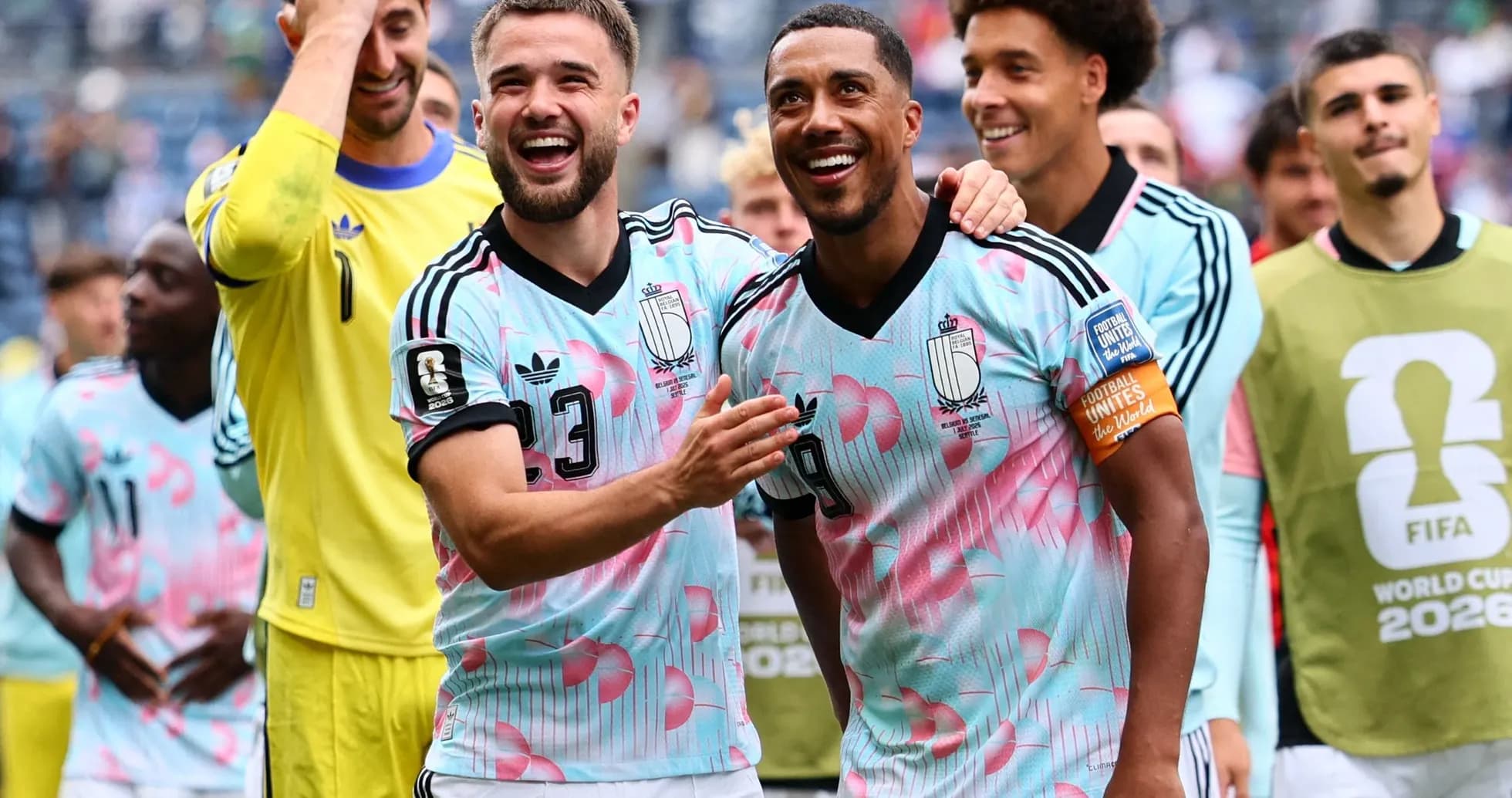
That moment arrived deep into added time of extra time, when sustained Belgian pressure culminated in a penalty converted by Youri Tielemans at 120+5', later confirmed by VAR. Tactically, it was the logical endpoint of Belgium’s territorial dominance and structural tweaks: more central presence in the box, fresher legs in midfield, and full-backs high enough to pin Senegal’s wide players. Despite Senegal’s higher xG and dangerous transition play, Belgium’s superior game management, bench impact, and late-phase control turned a precarious 0-2 deficit into a 3-2 extra-time passage to the next round.