.svg&w=384&q=75 "Pitchgist logo")
Fifa Bans Reusable Water Bottles Ahead of World Cup
Seven days before the World Cup kicks off on 11 June, Fifa has torn up one of its key stadium policies and banned fans from bringing reusable water bottles into venues, citing safety concerns over missiles being thrown from the stands.
The move wipes out a previously published code of conduct that had explicitly allowed empty, transparent plastic bottles of up to one litre to be taken through the turnstiles. That line has now gone. In its place: an outright prohibition on bottles, cups, jars and cans.
Rising heat, rising anger
Scientists have already warned that Fifa’s heat safety plans for this tournament are “inadequate”, with temperatures at 14 of the 16 host venues expected to climb beyond levels considered dangerous. Many of those stadiums are open air. Shade will be scarce. Hydration will not be optional.
Against that climate reality, the bottle ban lands like a slap in the face for travelling supporters.
Fifa insists the decision is about security, not sales. The governing body says the change will “lower the risk of injury caused by fans throwing missiles” and framed the move as part of a wider duty of care.
“Fifa is committed to protecting the health and safety of all players, referees, fans, volunteers, and staff,” read a statement from football’s world governing body.
Water for sale – but at what cost?
Inside the stadiums, fans will have to buy water on site. Fifa has pledged not to hike prices above the usual rates charged at each venue.
“Fifa works closely with each host city committee and local authorities on heat mitigation factors for fans travelling to the stadium, which can include resources such as misting stations, fans, hydration stations, cooling tents and more around the stadium footprint,” the statement continued.
It also stressed that “inside the stadium footprint, pricing for water bottles for the Fifa World Cup 2026 will remain consistent with other events held at each stadium.”
So the promise is clear: water will be there, and it will not be marked up just because it is the World Cup. Whether that reassures fans already counting the cost of the trip is another matter.
A tournament already testing patience
This World Cup is being built on premium pricing. Supporters have complained of “extortionate” ticket costs and soaring train fares around matchdays. The bottle ban slots neatly into a narrative many fans feel they already know: access shrinking, prices rising, choices disappearing.
The memory of Qatar lingers too. Fans were not allowed to take bottles into stadiums at the last World Cup either, a precedent that did little to calm tempers in the desert heat.
This time, many had believed they were getting something different. The original stadium code appeared to recognise both safety and common sense, allowing empty, clear bottles that could be refilled at fountains. Supporters’ groups had been told as much.
Fan groups hit out at ‘strange, late change’
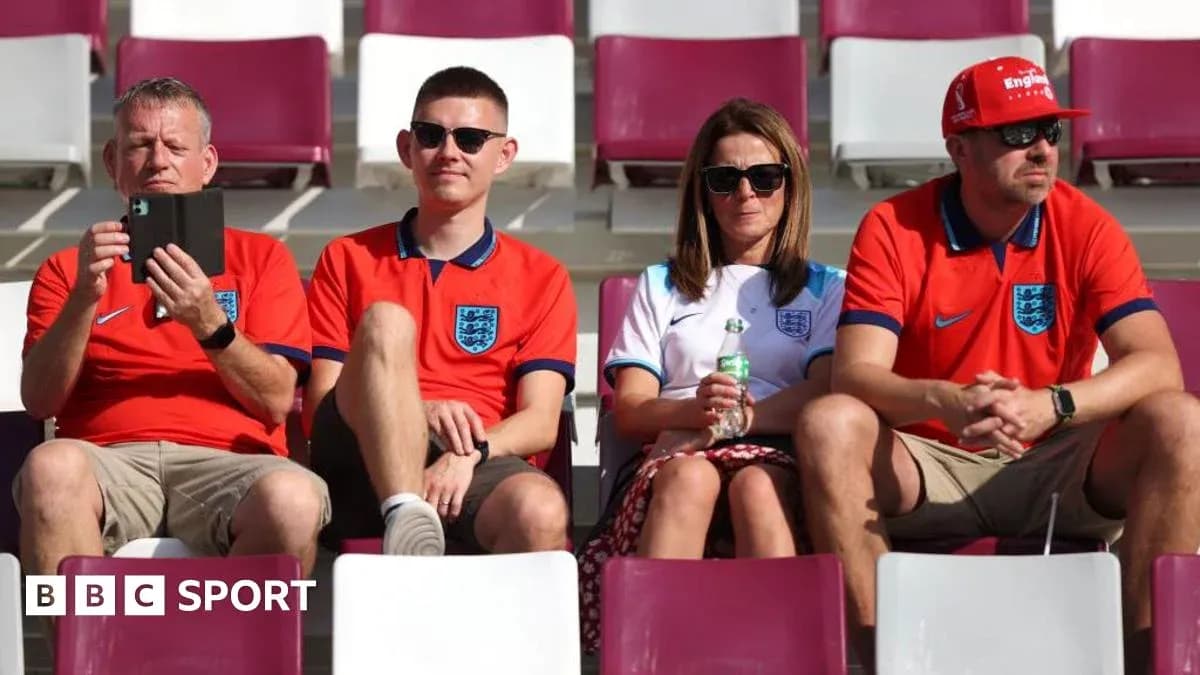
The Free Lions England fans’ group captured the mood, describing the reversal as a “strange, late change”.
“In all of our discussions, free water availability in stadiums was a key one and we were assured by Fifa that this would be the case and that fans will have the ability to bring their own water bottle,” the group said in a statement on X.
“Naturally, the immediate thought from supporters is this is just the latest money-grab. For how hot the stadiums will be, many in open air, just let fans bring a bottle if they want to.
“We hope the water fountains in stadiums will still be free, hopefully you aren't charged in the queue!”
That last line may be delivered with a touch of gallows humour, but the concern is real. Without personal bottles, the entire burden shifts to stadium infrastructure: how many fountains, how many hydration points, how long the queues, how fast they move in the heat of the day.
Safety vs. trust
On paper, Fifa can point to a familiar argument. Any hard object in a packed stadium can become a weapon. Ban the object, reduce the risk. The logic is simple.
The problem lies in trust. Fans had been given one set of rules, planned around them, and then watched those rules vanish a week before the opening game. When the same supporters are already paying top-end prices just to be there, patience thins quickly.
The governing body says it will protect both safety and health. Supporters will now discover, in real time and in rising temperatures, whether the stadiums are ready to deliver on that promise without the simplest tool of all: a bottle they can call their own.