.svg&w=384&q=75 "Pitchgist logo")
Enzo Maresca Takes on Manchester City Challenge After Guardiola
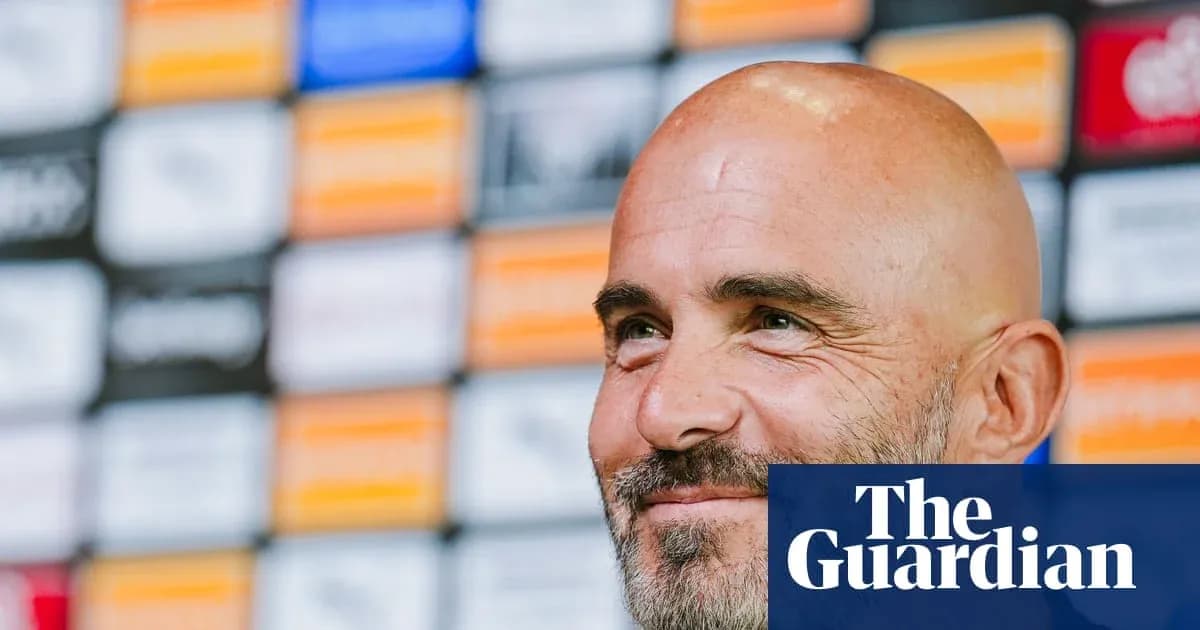
Enzo Maresca walked into Manchester City looking like a man back from holiday rather than one stepping into the most daunting job in English football. Relaxed, tanned, smiling. Then his first words cut through the room.
“Before we start, I would like to send a message and a big hug to Kevin Keegan’s family for this moment,” he said, paying tribute to the former City manager after his death on Monday.
A soft opening. A hard reality.
Because behind him, looming as large as the giant “Welcome back Enzo” billboard, was the shadow of Pep Guardiola. Ten years. Twenty trophies. A generational figure whose name now sits alongside Sir Alex Ferguson and Arsène Wenger in the modern canon. Maresca knows it. He didn’t duck it.
“The history of the manager with many years in the same club always struggled a little bit. After Sir Alex, after Arsène,” he said. He didn’t need to add the obvious third name. “But also, it’s a challenge to try to do the right things immediately for this organisation, for the fans, for everyone.”
Living with ghosts
Maresca sat where Guardiola sat for a decade, the same dais, the same cameras, the same expectations. When he referenced Ferguson and Wenger unprompted, it felt deliberate. Name the ghosts. Then try to live with them.
He returns to Manchester not as an unknown. City know him, and he knows them. He led the club’s elite development squad in 2020-21, then worked as Guardiola’s assistant during the 2022-23 treble season. The hierarchy have seen him up close, in the training ground corridors and in the intensity of a title run-in.
He also knows how quickly affection can evaporate in this sport. The warmth of a welcome banner means little if the league table turns cold. So he leaned on something else: the patience and structure that have defined City’s modern era.
“This club has had three managers in 17 years,” he pointed out. “This is not normal, so this is one of the things that I’m confident we can do a great job and continue to do the job that has been done in the last years. Roberto [Mancini] was here, then Manuel [Pellegrini] and then Pep – for 10 years.”
Three very different men, one relentless direction of travel. Mancini was combustible and confrontational, his tenure ending in angst and a sacking in May 2013. Pellegrini was calm, almost understated. Guardiola was the visionary who turned a winning club into a machine that bent the sport to his ideas.
Khaldoon al-Mubarak and Ferran Soriano have lived through all of that. Their decision to hand the keys to Maresca tells you they believe he is more than a clever tactician. They see someone with Guardiola’s football education and Pellegrini’s equable temperament, someone they trust to manage both a dressing room and an era.
Chelsea scars, City faith
The path here was not smooth. Maresca’s time at Chelsea ended abruptly on New Year’s Day, with his departure accompanied by an apology from him and a £17m compensation cheque from City to prise him away from west London.
When his conduct at Chelsea was raised, the shutters came down.
“I feel quite lucky in terms of my former clubs – Leicester, Chelsea – I think we did a great job,” he said. “In both clubs, the identity of the team was clear, the success of the team was clear, and I feel very lucky to be part of these clubs. But now we are here today. That is the most important thing, just about City. And nothing to add.”
The record speaks loudly enough. He took Leicester back to the Premier League as Championship champions. At Chelsea, he dragged a fractured squad to fourth in the Premier League and delivered a European trophy in the Conference League. Then came the crowning night: a 3-0 dismantling of Paris Saint-Germain in the Fifa Club World Cup final last summer.
That performance, ruthless and controlled on a global stage, felt like a job interview in real time. City were watching. They remembered.
Now he talks openly about “titles” at a club where anything less is failure.
Building around a fragile cornerstone
To chase those trophies, Maresca has been handed serious tools. Elliot Anderson has arrived from Nottingham Forest for £116m to reinforce midfield, a huge fee for a player tasked with patrolling the most scrutinised area of this team. City are also working on a deal for Lille’s Ayyoub Bouaddi, who impressed for Morocco at the World Cup and would add yet more energy and technical security in the centre.
There is an ongoing interest in Malo Gusto, one of Maresca’s right-backs at Chelsea, a player he knows and trusts. If Omar Marmoush departs, City will move into the market for a similar, pace-heavy forward to stretch games and maintain the squad’s balance in attack.
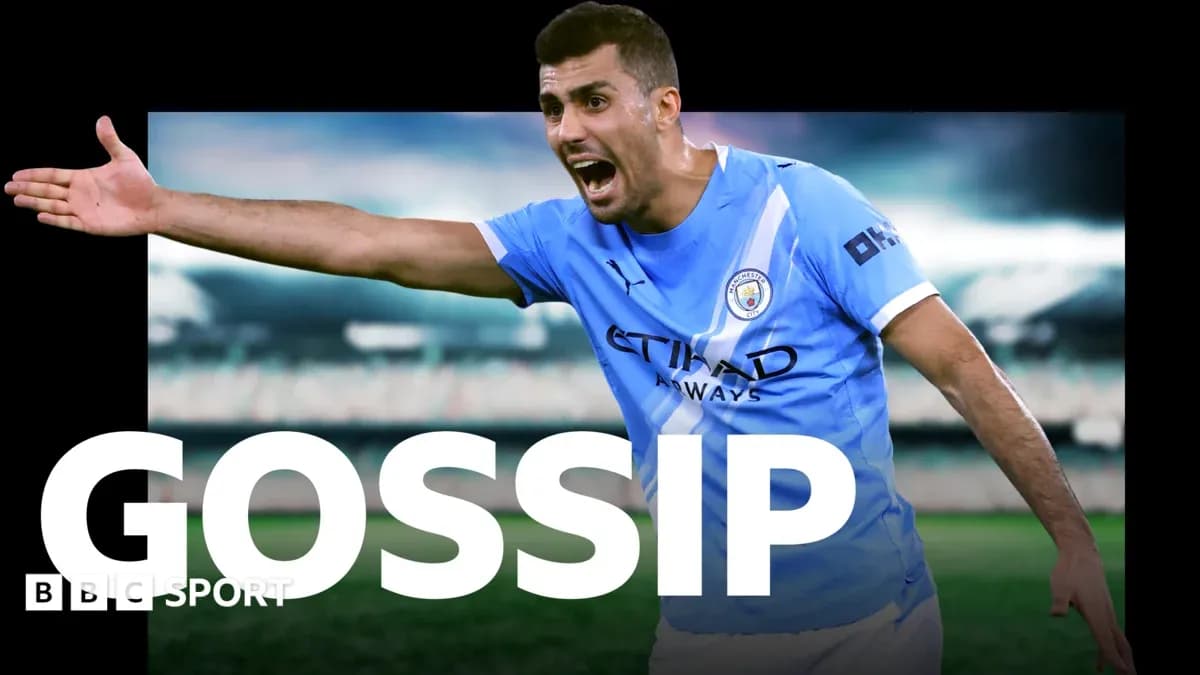
One name, though, dominates his thoughts: Rodri.
The midfielder has just lifted the World Cup with Spain and collected the Golden Ball as the tournament’s outstanding player. His grip on the tempo of matches, especially in the frenzy of the Premier League, is almost without equal. Lose him, and the entire structure of City’s football shudders.
Rodri will undergo surgery on a back problem on Monday. The word from inside the club is that the issue is not too serious, but it will keep him out of the opening league fixture at home to Bournemouth. That is a short-term inconvenience.
The long-term question is far more unsettling. The 30-year-old has a year left on his contract and has so far declined to sign the new deal City have placed in front of him. Real Madrid are circling in the background, aware of both his contractual position and his importance.
The date that matters is 1 September, when the transfer window shuts. If Rodri is still in sky blue then, Maresca’s first season looks very different to the scenario in which his midfield cornerstone is prised away.
Asia, youngsters and a ticking clock
Before any of that, there is work to do. On Tuesday, Maresca and his squad fly to Asia for a pre-season tour that will test ideas as much as legs. Inter await in Hong Kong. K-League All Stars and Atlético Madrid lie in wait in Seoul.
For now, the sessions are heavy on youth.
“I’m working at the moment with many young players,” he said. “That is always good because they are full of energy and some of them are very good. The last group of players are going to join three or four days before the Community Shield and we will have all the squad.”
Those “A-listers” returning from World Cup duty include Josko Gvardiol, Mateo Kovacic and Abdukodir Khusanov, all set to drip-feed back into training as the tour unfolds. The timeline is tight. After the Asian swing comes the Community Shield against Arsenal in Cardiff on Sunday 16 August. That is when the noise around Guardiola’s absence will grow louder, when every pass and press will be measured against what came before.
That is when the attempt to succeed a legend stops being theoretical and becomes brutally real.
A manager in his own image
Maresca knows he cannot simply be a Guardiola tribute act. He has borrowed from his old mentor, of course – positional play, control through possession, the obsession with structure – but he also spoke about the need to move with the sport, not just with his past.
“You need to adapt, evolve,” he said. “Set pieces, man to man – it’s a little bit the direction where football is going. We managers, it’s our duty to find solutions.”
That is the challenge now: to take a team built in one man’s image and bend it, subtly, into his own without breaking what made it great. To live with the comparisons but not be crushed by them. To find solutions faster than the questions pile up.
Soon enough, the hugs and tributes will fade. The banners will come down. The fixture list will bite.
Then we will find out whether Enzo Maresca is the man who keeps City at the summit – or the first reminder of just how hard it is to follow a genius.