.svg&w=384&q=75 "Pitchgist logo")
Manchester United Dominates Rosenborg with 5-0 Victory in Trondheim
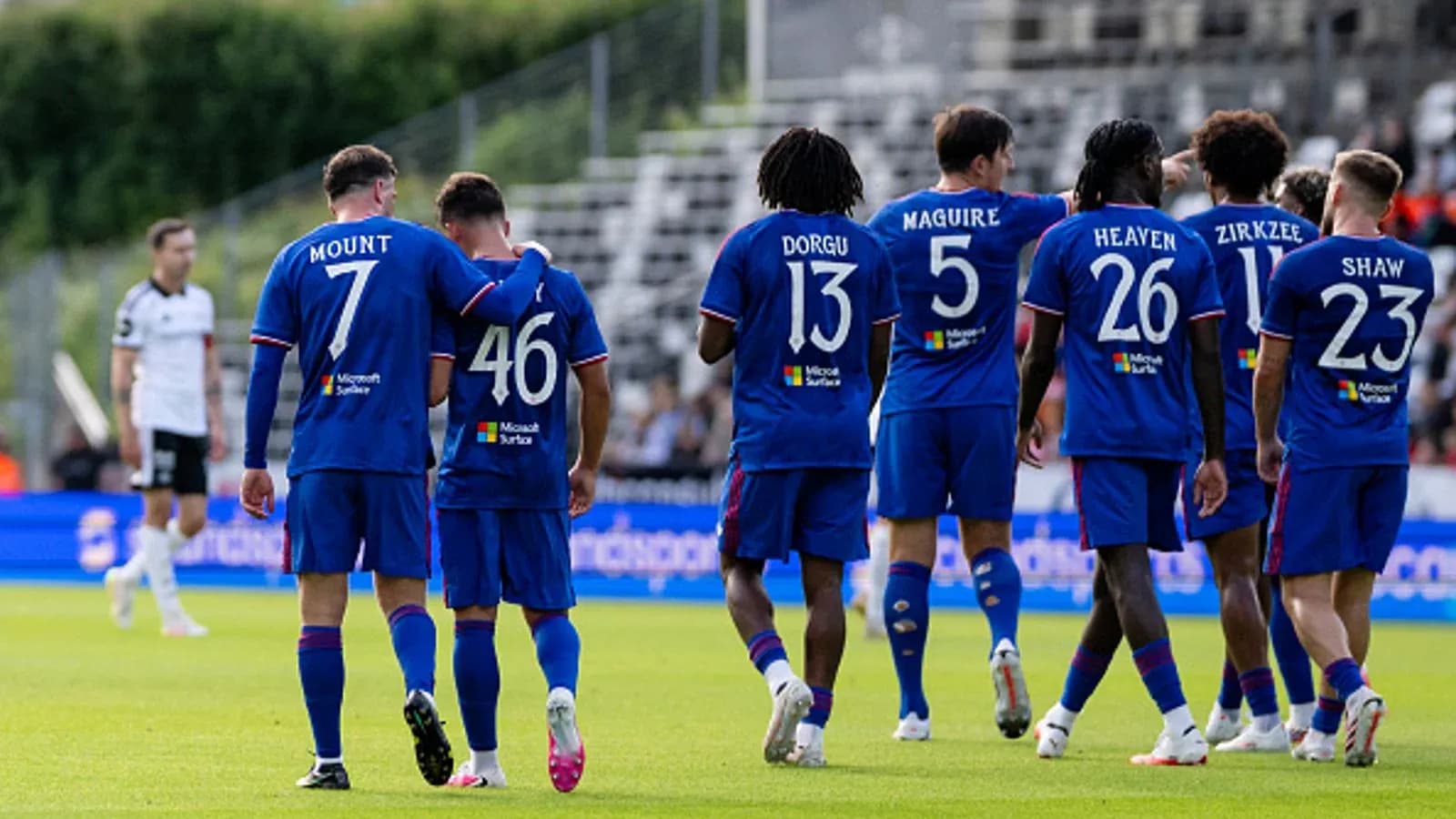
Manchester United arrived in Norway needing a response. They left with a 5-0 win over Rosenborg, their first victory of pre-season, and something more valuable than the scoreline: a glimpse of what Michael Carrick’s United might actually look like.
Six days on from the defeat to Wrexham, this was sharper, cleaner, and far more controlled. The result will be dismissed by some – Rosenborg are mid-season but nowhere near Premier League level – yet the way United dismantled them, and the players who did the damage, told a more interesting story.
Carrick-ball, version two
Carrick’s early success at Old Trafford was built on chaos. United became a transition machine, springing forward through the pace of Bryan Mbeumo and Patrick Dorgu and the craft of Bruno Fernandes and Matheus Cunha.
The numbers backed it up. From that first 2-0 win over Manchester City to the end of the season, United ranked third in fast breaks per game (1.53), joint first for goals from fast breaks per 90 (0.24) and second for expected goals from those situations (0.23). They thrived when the game opened up.
On the ball, they were far less convincing. Thirteenth in overall possession, 11th in average possession duration. The familiar post-Sir Alex Ferguson problem: plenty of threat when there is grass to run into, far less when opponents sit deep and ask United to do the thinking.
Rosenborg, 13 games into their domestic campaign, should have been able to impose themselves physically and territorially. United, still building fitness, might have been expected to lean on the same old weapon: soak, spring, counter.
They did not. A United side without Fernandes or Cunha looked comfortable dictating play. They moved the ball with patience, pulled Rosenborg apart, and did it with a focal point who kept everything glued together.
Joshua Zirkzee was central to that shift. He made the ball stick, linked play, and gave United a platform high up the pitch. This was not a team waiting to pounce on mistakes; this was a team building attacks, then deciding when to accelerate. The second and fourth goals still came from transitions – that edge will remain – but there was a clear tweak in emphasis.
This felt like Carrick using pre-season to stretch his team’s identity. Less one-trick, more rounded. It also cast the signing of Youri Tielemans in a slightly different light. If United are going to spend more time with the ball, a controller of his profile suddenly makes perfect sense.
Zirkzee dazzles – but what does it change?
On the night, Zirkzee was the unofficial player of the match. He has not always enjoyed that kind of billing at Old Trafford.
Since arriving in 2024, he has been stuck between roles. Not quite a classic No 9, not strong enough a case to dislodge Fernandes as a No 10. The talent has always flickered – that velvet first touch, that Berbatov-like ability to slow a moment down – but consistency has not.
In Trondheim, he found his stage. He operated as a sponge for possession, sharp on the half-turn, bringing runners into the game. In 60 minutes he assisted the opener and scored the second, and he did it with the kind of authority that has too often been missing.
The goal was outrageous. A give-and-go with substitute Harry Amass, then a burst of footwork that left two defenders wrong-footed. The goalkeeper stepped up, and Zirkzee sold him the same trick, rolling the ball into an empty net. One move, three victims, and a reminder of why people keep waiting for him to click.
That moment will fuel debate. Some supporters will leave this game convinced he deserves a bigger role next season. The reality is less romantic.
The pace of the game suited him. Rosenborg gave him time and space that he will not see in the Premier League. The performance did not answer the main question around him: can he operate with the speed and intensity of English football every week?
Benjamin Sesko still looks the more natural fit to lead the line. If anything, what Zirkzee did here might be a preview of how Carrick intends to use Sesko when he is back – as a technical reference point who can both link play and finish moves, not just a runner in behind.
Zirkzee reminded everyone he is a luxury worth having. Whether he becomes a cornerstone is another matter entirely.
Carrington’s kids step into the light
For all the tactical intrigue, this night in Trondheim will live longest in the memories of United’s youngsters.
Shea Lacey started as the No 10 and grew into the contest. The 19-year-old has already teased his ability in the first team – he almost scored a spectacular goal in a 2-2 draw with Burnley – but this was a more central role, more responsibility. He looked like he belonged.
His finish for the opener was calm, the decision-making mature, and he found pockets of space with the assurance of someone who has been doing this for years. United fans voted him player of the match. The noise around him has died down over the last year, the “next big thing” tag slipping onto others, but there is clearly a footballer here who could carve out a serious first-team future.
Amass, on at half-time, made his own case. The full-back’s progress stalled last season after an eye-catching start on loan at Sheffield Wednesday, injuries cutting his momentum. Here, he looked like he had never been away.
His goal came from clever movement into the box, the kind of instinct that separates attacking full-backs from merely energetic ones. He also defended solidly on the left and used the ball with intelligence. United still want another left-back, yet this was a reminder that Luke Shaw’s long-term deputy might already be in the building.
Jacob Devaney and Ethan Williams both found the net, the kind of moments that stick with a player for life. Whatever happens to their careers from here, they can point back to Trondheim and say: I scored for Manchester United.
The quiet star among them, though, was Jaydan Kamason. The 19-year-old right-back did not get everything right – his positioning off the ball wavered at times – but with the ball at his feet he was electric. Two assists, both from sharp, low crosses, showcased his vision and composure in the final third. His footwork belonged to a winger, not a defender.
Carrick’s trust in him was telling. Kamason played more minutes than most of the other academy faces. That does not guarantee anything in August, but it does say something about how the staff see his ceiling.
The missing wonderkid
One name dominated the build-up and then barely featured at all.
JJ Gabriel, 15 years old and already the subject of breathless academy chatter, travelled with the squad and immediately became the curiosity of the trip. Supporters wanted a glimpse, just a cameo, something to attach to the hype.
They did not get it. Gabriel stayed on the bench, fluorescent bib on, waiting for a call that never came.
Does that mean expectations should be dialled down? Not necessarily. Carrick had already hinted before the game that Gabriel would get minutes across the friendlies rather than in one specific outing. Protecting a teenager from being launched too quickly, in a game that was already turning into an exhibition, is hardly a red flag.
United’s night in Trondheim was about more than one prodigy anyway. It was about a manager starting to reshape his team’s identity, a misfit forward reminding everyone of his talent, and a cluster of Carrington graduates proving the pathway still works.
Pre-season can flatter to deceive. The real tests wait in England. But if this was a first sketch of Carrick’s United in permanent form, it was an encouraging one – and it raises a simple question for the months ahead: can they carry this control and courage into the games that truly count?