.svg&w=384&q=75 "Pitchgist logo")
England's World Cup Squad: Tuchel's Key Selections and Surprising Cuts
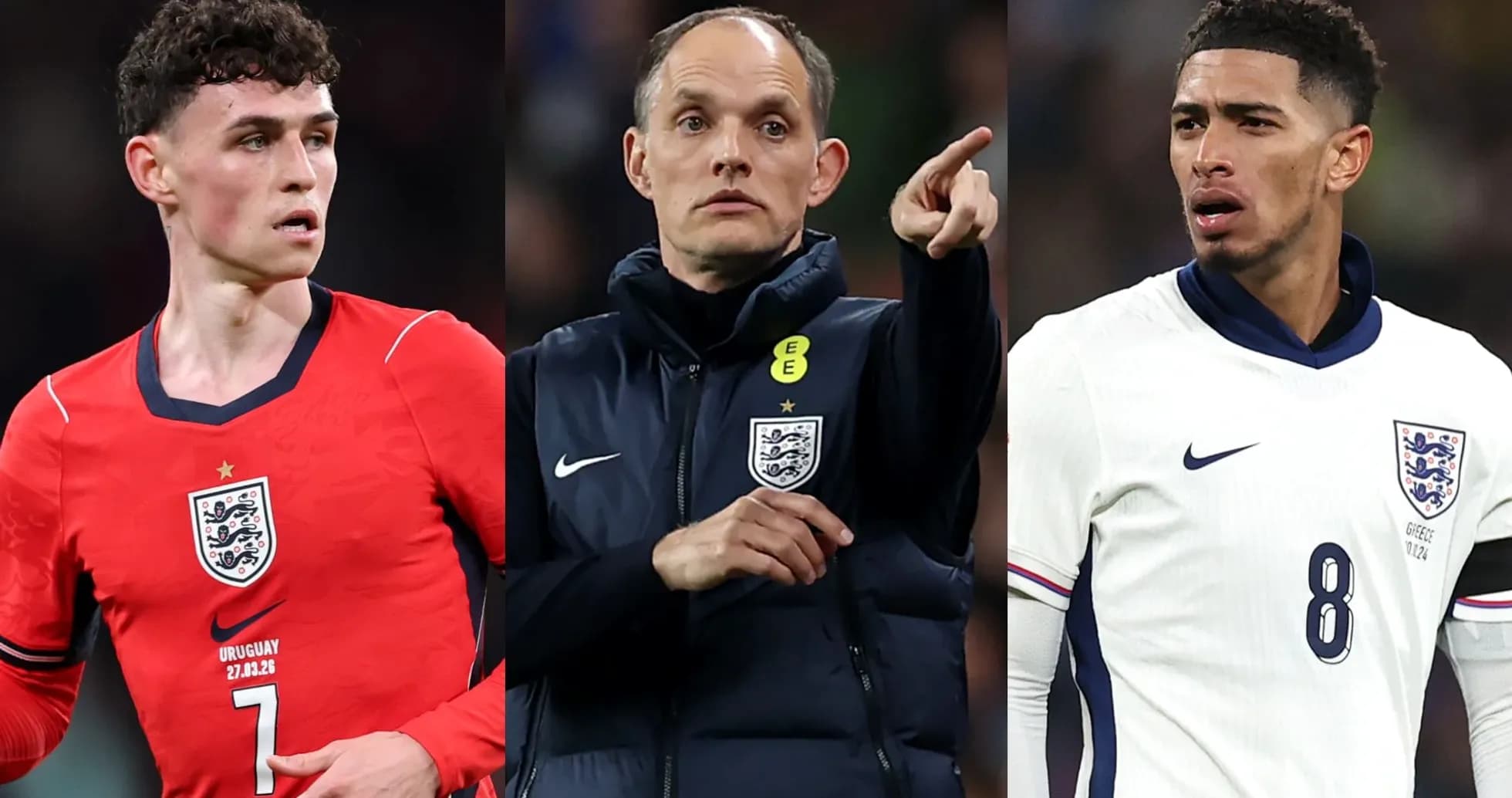
Thomas Tuchel has made his cuts. From a bloated preliminary list of 55 names to a hardened World Cup squad, England’s head coach has put his faith in a star-laden group he believes can finally end decades of frustration.
It is a squad built on big-club pedigree and heavy medal collections. It is also one shaped by some ruthless decisions.
Bellingham at the heart of it
The fiercest arguments centred on England’s creative core. Tuchel, though, has a clear focal point. Jude Bellingham, the Real Madrid “Galactico” and Champions League talisman, is set to own the No.10 role, the axis around which this side will turn in North America.
Behind him, the options are rich but clearly tiered. Eberechi Eze arrives buoyed by a Premier League title with Arsenal, his swagger and close control giving Tuchel a different flavour between the lines. Morgan Rogers, outstanding for Aston Villa, offers another route: direct, busy, constantly looking to pierce the back line.
The message is obvious. England intend to play on the front foot, with their most gifted technician in the most decisive zone of the pitch.
Kane leads, others chase
Up front, there was never any debate. Harry Kane, record-breaking captain and enduring reference point, will lead the line and chase more history on American soil.
Around him, though, the picture is more fluid. Ivan Toney, rebuilding his career in the Saudi Pro League, has forced his way back into the fold at the right moment after long spells out of Tuchel’s plans. Ollie Watkins, the Villa striker whose late winner against the Netherlands lit up Euro 2024, now has a fresh stage on which to prove that those semi-final heroics were no one-off.
Tuchel has leaned into variety. Kane’s all-round game, Toney’s penalty-box instincts and set-piece threat, Watkins’ relentless running and vertical menace: three very different weapons for the same target.
Midfield balance and a redemption arc
In midfield, experience and resurgence collide. Jordan Henderson, a veteran of so many England campaigns, survives another cull. His presence, leadership and tactical discipline still matter in tournament football.
Alongside him stands one of the most compelling stories in the squad. Kobbie Mainoo, revitalised at Manchester United under Michael Carrick, has timed his run to perfection. From the fringes to the World Cup in a matter of months, his calm on the ball and press-resistance have dragged him up a crowded depth chart.
On the flanks, Noni Madueke is the eyebrow-raiser. Not a guaranteed starter at Arsenal, he nonetheless makes the cut, a nod to his one-on-one ability and unpredictability. Marcus Rashford, on loan at Barcelona, and Newcastle’s Anthony Gordon bring a different edge: power, pace, and the tactical flexibility to drift inside and even operate through the middle when required.
Defence: faith, risk and big omissions
There are no fireworks in goal, where the selections follow the expected script. The intrigue lies in front of them.
John Stones, on the brink of free agency at Manchester City and coming off an injury-disrupted season, still commands enough trust to travel. Tuchel is gambling that tournament rhythm can be found quickly by a defender whose composure and passing remain elite when fully fit.
At right-back, Chelsea captain Reece James has cemented himself as the first name in that role, his blend of defensive steel and attacking quality making him the go-to option. On the opposite side, Nico O’Reilly and Djed Spence will scrap for the starting berth, a straight duel that could define England’s balance in the group stage.
The cost of those choices is severe. Harry Maguire, a mainstay of England’s recent tournament runs, has publicly voiced his disappointment at being left out. Real Madrid’s Trent Alexander-Arnold, whose hybrid full-back-midfielder role has long divided opinion, also misses the cut, as does Newcastle’s Lewis Hall. An ill-timed injury has left Arsenal’s versatile Ben White in the same unhappy category: close, but not quite.
Big names left behind
Some of the most striking headlines come from those not boarding the plane.
Phil Foden’s struggles for form at Manchester City have finally caught up with him. The same is true for Chelsea’s talisman Cole Palmer, England Men’s Player of the Year in 2024 but now paying the price for a brutal run of 14 games without a goal for club and country. Both stay home.
Morgan Gibbs-White, fresh from a career-best 17-goal season at Nottingham Forest, has once again failed to convince Tuchel that he can translate domestic output onto the international stage.
Deeper in midfield, Crystal Palace’s Adam Wharton and Everton’s James Garner have slipped off the bottom of the pecking order. Their solid club campaigns were not enough to crack one of the most congested areas in the national setup.
Jarrod Bowen’s tireless work for a struggling West Ham side has also gone unrewarded, denying him another major-tournament chapter.
Up front, the cuts are just as brutal. Danny Welbeck and Dominic Calvert-Lewin, who combined for 27 Premier League goals for Brighton and Leeds in 2025-26, both miss out. So does Newcastle winger Harvey Barnes, whose decision not to pledge for Scotland now looks even more painful as another England tournament passes him by.
Countdown to America
There is little time for reflection. England have two friendlies to sharpen edges and settle arguments before the World Cup begins.
New Zealand await on June 6, a first test of combinations and chemistry under American skies. Four days later, Costa Rica provide a different challenge on June 10. Expect heavy rotation, minutes spread widely, and Tuchel probing for late answers on fitness, partnerships and game-changing substitutes.
Then the real thing hits.
England open their campaign against Croatia at AT&T Stadium in Arlington, Texas on June 17, a meeting heavy with tournament history and emotional baggage. Six days later they move to Gillette Stadium, home of the New England Patriots, to face a dangerous Ghana side on June 23. The Group L journey closes at MetLife Stadium on June 27 against Panama – in the very arena that will host the final.
Tuchel has made his calls. The names are inked in. The question now is simple: has he chosen a group that can still be there when MetLife stages its last dance?