.svg&w=384&q=75 "Pitchgist logo")
Dynamo Kyiv vs PAOK: A Tactical Analysis of the 2-3 Defeat
Dynamo Kyiv’s 2-3 home defeat to PAOK at Valeriy Lobanovskyi in the UEFA Europa League 2nd Qualifying Round unfolded as a clash between structured possession and ruthless transition efficiency. Dynamo controlled 58% of the ball and built through a 4-3-3, but PAOK’s 4-2-3-1 repeatedly punished their defensive spacing, generating more total shots (14 to 10) and more efforts on goal (7 to 5). The match became a study in how pressing triggers, midfield balance and wide occupation can override nominal territorial dominance.
The tone was set early by Dynamo’s left-sided build. With V. Dubinchak stepping high from left-back and M. Shaparenko operating as the advanced left-sided midfielder, Dynamo tried to create triangles with E. Guerrero drifting inside from the left of the front three. The opening goal at 4' from V. Brazhko, assisted by Guerrero, reflected this structure: Dynamo progressed through central and left half-spaces, used the extra midfielder between the lines, and arrived with a late runner from midfield to finish. The pattern underscored a clear plan: overload one side to free a central midfielder to attack the box.
Yet PAOK’s 4-2-3-1, with B. Santamaria and C. Zafeiris as the double pivot and G. Konstantelias as a roaming No.10, quickly exposed Dynamo’s rest-defence. Whenever Dynamo’s full-backs advanced simultaneously, PAOK’s first line of pressure allowed the centre-backs to have the ball but jumped aggressively on passes into V. Brazhko or O. Pikhalyonok. Turnovers in those zones immediately released Konstantelias and the wide players into space. PAOK’s equaliser at 13', scored by Konstantelias from an A. Zivkovic assist, typified this: a rapid vertical attack exploiting the gaps left by Dynamo’s high full-backs and stretched midfield.
As the first half developed, PAOK’s attacking structure became clearer. Zivkovic on the right and T. Ali starting on the left held wide positions, pinning Dynamo’s full-backs and forcing the home centre-backs to defend large channels. Zafeiris frequently stepped beyond Santamaria to form a double No.10 shape with Konstantelias, overloading the space in front of Dynamo’s back four. The 38' goal from Zafeiris, with no assist, emerged from this layered occupation: PAOK created a second wave at the edge of the box, capitalising on Dynamo’s midfield line being dragged too deep by the initial attack.
Dynamo’s 4-3-3 in possession often morphed into a 2-3-5, with both full-backs high and all three midfielders trying to support between the lines. While this contributed to their shot volume inside the box (7 efforts), it left R. Neshcheret’s defensive screen thin whenever possession was lost. PAOK’s 11 shots inside the box compared to Dynamo’s 7 underline how much more effectively the visitors reached prime finishing zones, despite having less of the ball.
After half-time, the structural issues intensified. The yellow card for Matvii Ponomarenko at 46' signalled Dynamo’s growing desperation in transition. Just five minutes later, at 51', Santamaria’s goal, assisted by Taison, extended PAOK’s lead to 1-3 and showcased the visitors’ control of central corridors. Taison, who had replaced T. Ali at 14', brought extra ball-carrying and decision-making in transition, linking midfield and attack and repeatedly dragging Dynamo’s pivot out of position.
Igor Kostyuk’s response was aggressive. On 55', a double substitution reshaped the midfield and attacking lines: J. Lonwijk (IN) came on for O. Pikhalyonok (OUT), and B. Redushko (IN) came on for N. Voloshyn (OUT). This injected more vertical running and directness from midfield. Later, at 68', A. Yarmolenko (IN) came on for E. Guerrero (OUT), and V. Buyalskyy (IN) came on for M. Shaparenko (OUT), effectively turning Dynamo into a more fluid 4-2-3-1/4-2-4 hybrid with Yarmolenko and Redushko attacking the half-spaces behind Ponomarenko.
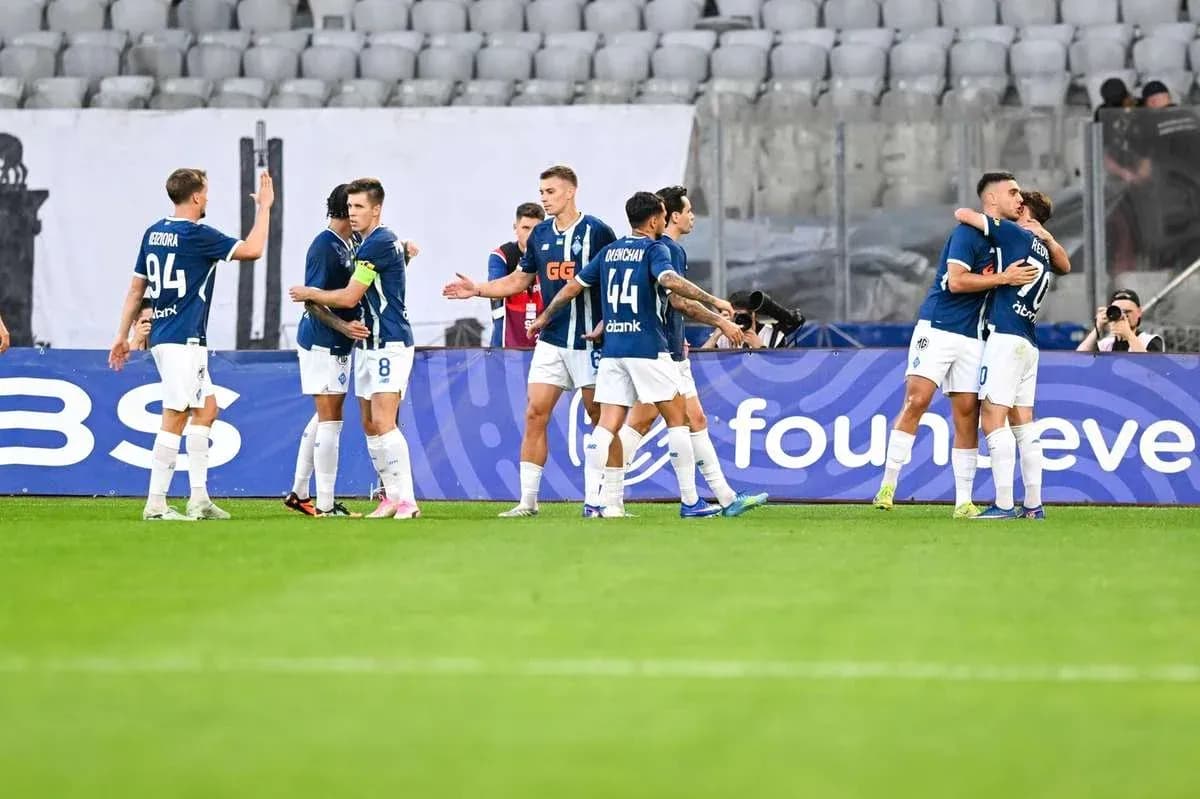
The impact was immediate. At 78', Lonwijk’s goal, assisted by Yarmolenko, reduced the deficit to 2-3. The move encapsulated the new dynamic: Yarmolenko drifting into central pockets to receive, then releasing a late-arriving midfielder breaking beyond the front line. Dynamo’s possession superiority, combined with fresher legs in the attacking midfield band, began to pin PAOK deeper, even though the visitors still threatened sporadically on the counter.
Alessio Lisci’s game management from the PAOK bench was equally decisive. On 77', A. Jeremejeff (IN) came on for A. Mythou (OUT), and M. Camara (IN) came on for Zafeiris (OUT), subtly rebalancing the side towards greater physical presence up front and fresh energy in midfield. At 83', A. Elustondo (IN) came on for P. Hatzidiakos (OUT) and D. Chatsidis (IN) replaced Zivkovic (OUT), signalling a clear shift to protect the lead: more defensive solidity at centre-back and a more industrious wide player to help the full-back. The late yellow card for Alexander Jeremejeff at 88' reflected PAOK’s willingness to use tactical fouls and game management to disrupt Dynamo’s rhythm.
Discipline played a quiet but telling role. Dynamo received 1 yellow card (Ponomarenko at 46'), while PAOK collected 3 (Pantelis Hatzidiakos at 57', Giannis Konstantelias at 63', and Alexander Jeremejeff at 88'), total 4. The distribution mirrors the game narrative: PAOK increasingly resorted to halting Dynamo’s late surges, especially after the score moved to 2-3, whereas Dynamo’s main disciplinary issue came early in the second half as they struggled to cope with transitions.
In goal, R. Neshcheret (Dynamo Kyiv) faced a demanding shot profile. Dynamo’s statistics show 4 goalkeeper saves against 7 PAOK shots on goal, indicating that the chances conceded were both frequent and high-quality, particularly from inside the box. At the other end, J. Pavlenka (PAOK) made 3 saves from 5 Dynamo shots on goal, reflecting a more controlled defensive environment in front of him, with PAOK allowing fewer clear-cut central looks despite conceding 58% possession.
The statistical verdict reinforces the tactical picture. Dynamo’s 524 total passes with 456 accurate highlight a structured possession game, but their 10 total shots and 5 on goal suggest difficulty in converting circulation into repeated high-quality chances. PAOK, with 380 passes and 305 accurate, were more direct and vertical, yet still produced 14 total shots and 7 on goal. The blocked shots count (Dynamo 1, PAOK 2) underlines PAOK’s willingness to defend their box aggressively in the closing stages.
Set-piece and territorial indicators also support PAOK’s efficiency. Dynamo earned 2 corner kicks to PAOK’s 1 and had slightly fewer fouls (10 to 13), but these marginal advantages did not translate into control of the danger zones. Offside calls were balanced (1 each), showing that both back lines held relatively disciplined lines despite the open nature of the game.
Overall, this 2-3 at Valeriy Lobanovskyi reads as a classic case of possession without optimal protection versus compactness and transition sharpness. Dynamo’s 4-3-3 gave them the ball and territory but left them repeatedly exposed between the lines and in the channels. PAOK’s 4-2-3-1, with its elastic front four and well-timed substitutions, maximised each turnover and managed the final phase intelligently to carry a valuable away win from Kyiv.