.svg&w=384&q=75 "Pitchgist logo")
DR Congo's World Cup Plans Disrupted by Ebola Outbreak
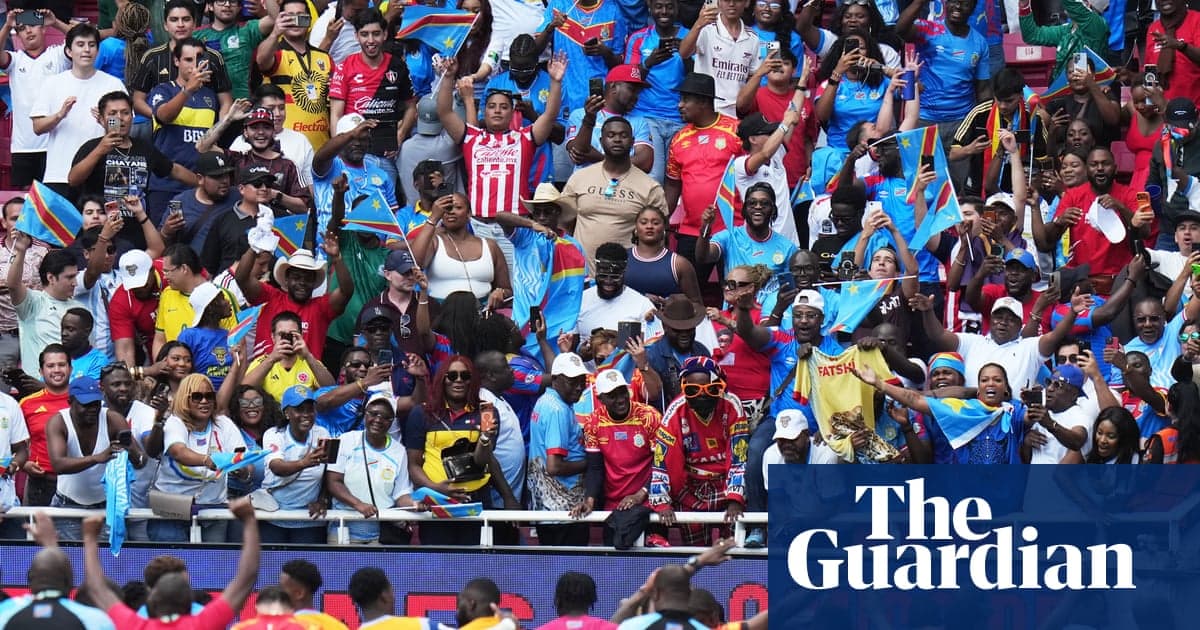
The Democratic Republic of the Congo should have been saying goodbye. Three days in Kinshasa, a capital dressed in the national colours, a final roar from home before the country’s first World Cup finals since 1974.
Instead, the Leopards are leaving quietly.
An Ebola outbreak in the east of the country has forced the federation to cancel both the training camp and the planned farewell ceremony, ripping out the emotional core of their World Cup preparations and replacing it with cold logistics and medical briefings.
Ebola emergency halts homecoming
Health officials in DRC are battling a rare strain of the virus, Bundibugyo Ebola, which is believed to have killed more than 130 people and led to nearly 600 suspected cases. The World Health Organization has labelled it a public health emergency of international concern, a phrase that instantly cuts through sporting plans and sentiment.
Against that backdrop, the national team’s return to Kinshasa was deemed an unnecessary risk. The camp is off. The send-off is gone.
“There were three stages of preparation: in Kinshasa to say goodbye to the public, Belgium and Spain with two friendly matches … and the third stage from 11 June in Houston. Only one stage was cancelled – the one in Kinshasa,” team spokesman Jerry Kalemo said, laying out the revised roadmap.
The symbolism is stark. The country goes to a World Cup for the first time in half a century, but the team cannot safely touch base with the fans who have waited that long.
Europe, then America – football continues
On the pitch, the schedule holds. DR Congo will still face Denmark in Liège on 3 June and Chile in southern Spain on 9 June as part of their warm-up programme. From there, the squad will cross the Atlantic to Houston, where their World Cup campaign opens against Portugal on 17 June.
The majority of Sébastien Desabre’s 26-man squad are based in Europe, many of them in France, and the French coach himself works from outside the country. That geography now offers a layer of protection. Kalemo confirmed that staff members who do live in DRC “are leaving in the next hours”, moving out before travel restrictions tighten further.
Fifa has moved into monitoring mode, issuing a statement that it “is aware of and monitoring the situation regarding an Ebola outbreak and is in close communication with the DRC football association [Fecofa] to ensure that the team are made aware of all medical and security guidance.”
Football carries on, but under a constant medical shadow.
US entry ban and a narrow escape
The World Cup is being staged in the United States, and Washington has responded to the outbreak with hard lines. The Centers for Disease Control and Prevention announced that all foreign nationals who have been in DRC, Uganda or South Sudan within the past three weeks will be barred from entering the country for 30 days.
For a moment, that ruling threatened to blow apart DR Congo’s World Cup dream before a ball had been kicked. Then came the crucial clarification.
A US official confirmed that the national team will not be affected by the CDC ban because they have been training in Europe for several weeks. Players, coaches and officials who have not set foot in the country in the last 21 days will be allowed in.
The margin is thin. Any member of the World Cup delegation who has returned to DRC during that period will face the same quarantine requirements as US citizens coming back from affected countries. They can still go, but only after isolation and clearance. Fans will not enjoy the same leeway; those hoping to travel from DRC to follow the team will be caught by the entry ban.
Inside the US government, the World Cup has its own dedicated machinery. The White House World Cup taskforce, operating under the Department of Homeland Security, said it is “coordinating closely” with multiple agencies on health and security and is “closely monitoring” the outbreak. Football and public health are now tightly interlocked.
Leopards step back onto the biggest stage
All of this swirls around a team carrying a heavy sporting history. DRC, known as Zaïre when they last appeared at a World Cup in 1974, have clawed their way back to the global stage by beating Jamaica in a playoff in Mexico. That victory sealed their place in Group K and unleashed celebrations across a football-obsessed nation.
The assignment is demanding. After Portugal in Houston, the Leopards travel to Guadalajara to face Colombia on 23 June, then finish their group campaign against Uzbekistan in Atlanta on 27 June. Three cities, three styles of opponent, and a generation of players trying to write a new chapter for Congolese football.
Desabre’s squad blends Premier League and European experience with emerging talent. Newcastle forward Yoane Wissa brings cutting edge in attack. Sunderland midfielder Noah Sadiki offers energy and control in the middle of the pitch. West Ham full-back Aaron Wan-Bissaka, a high-profile inclusion, adds defensive steel and one-on-one quality on the flanks.
There has been disruption. Hibernian centre-back Rocky Bushiri, initially named in the squad, has withdrawn with a suspected achilles injury. His place goes to another Scottish Premiership player, Kilmarnock’s Aaron Tshibola, a late change in a defensive unit that will face some of the world’s most dangerous forwards.
Power shift at Fecofa
Away from the touchline, there has been a significant change in the corridors of power. Véron Mosengo-Omba, the former general secretary of the Confederation of African Football, has been elected president of Fecofa, DRC’s football federation.
He ran unopposed and collected 60 of a possible 65 votes, a commanding mandate after stepping down from his Caf role in March following five years in office. A long-time ally of Fifa president Gianni Infantino and a former university friend, Mosengo-Omba followed him from Uefa to Fifa in 2016 before moving to Caf in 2021.
Now he returns home to take charge at a moment of both opportunity and crisis: a World Cup on the horizon, an Ebola outbreak reshaping plans, and a national team forced to chase its greatest adventure without the embrace of Kinshasa.
The Leopards will walk out in Houston carrying a country’s hopes – but also the weight of a farewell that never happened.