.svg&w=384&q=75 "Pitchgist logo")
Arsenal's Ambitious Rebuild: Key Targets and Challenges
Arsenal’s champions’ rebuild is already crackling into life. The Premier League trophy is finally in the cabinet, a Champions League final has come and gone, and Mikel Arteta has no intention of standing still. This summer is about hard choices, heavy fees and a squad sharpened for another tilt at everything.
The World Cup has complicated the market, but it hasn’t slowed Arsenal’s ambition.
Barcola, Diomande and the search for a new cutting edge
Arsenal want a new attacker. That much is clear. The question is whether they land a rising star or a ready-made headline.
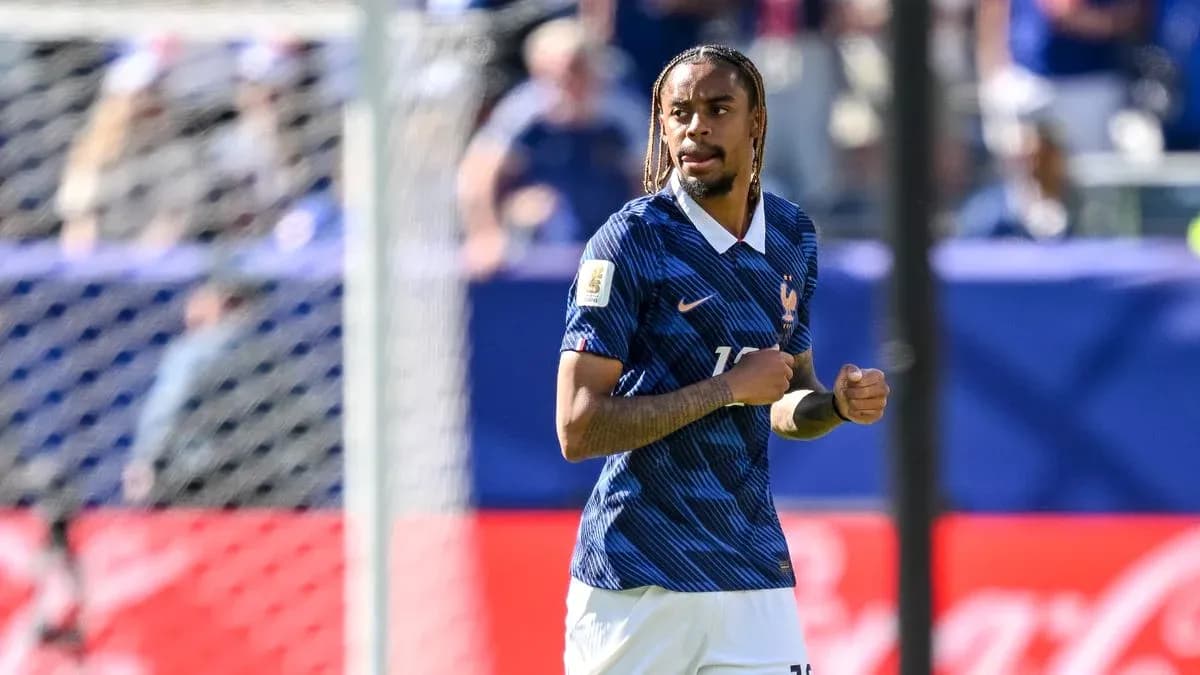
Bradley Barcola is very much in the first category, but he’s announcing himself fast. Two minutes after coming on for France against Senegal at the World Cup, the PSG winger ghosted in behind, took Adrien Rabiot’s clever pass and nonchalantly lifted the ball over Edouard Mendy. A cold finish on the hottest stage.
Barcola scored 13 goals in 49 games last season and is understood to be unhappy with his minutes in Paris. With two years left on his deal and contract talks stalling, Arsenal sense an opportunity. PSG do not want to sell, yet a serious offer – likely in the region of £70million – could force a decision. Liverpool are circling too. This is the kind of deal that tests how far Arsenal are willing to push.
On the other flank of the rumour mill stands Yan Diomande, the World Cup breakout at RB Leipzig. At 19, the Ivory Coast winger already has Europe’s elite lining up. Bookmakers have Liverpool as favourites, with Arsenal close behind as they weigh up long-term successors to Gabriel Martinelli. Any move would be eye-watering – the expectation is around the £100million mark – but that is the going rate now for a winger who looks ready to dominate a decade.
Behind those headline names, Arsenal’s interest in Morgan Rogers and Eli Junior Kroupi underlines a clear pattern: they want dribblers who can break games open. The problem? Aston Villa want £100million for Rogers. Bournemouth value Kroupi north of £86million. Both clubs are under no pressure to sell. For Arsenal, every attacking target this summer comes with a premium price tag and a decision about how much they really need to reshape the frontline.
Midfield: Tonali, Kone and the battle to stay ahead
The heart of Arteta’s project has always been midfield. It is also where this window could get brutal.
Sandro Tonali is back on the agenda. Newcastle United, squeezed by financial rules after missing out on the Champions League, are open to a sale. Reports in Italy suggest they want in excess of €100million (£86m). Manchester City and Tottenham are already in the race; Manchester United have now stepped away, handing Arsenal a clearer run if they choose to take it.
Tottenham boss Roberto De Zerbi is said to view Tonali as his ideal signing. Arsenal, for their part, have admired the Italian since January. The question is whether they commit that level of resource to one midfielder when other areas also need surgery.
So they work in parallel. Manu Kone, fresh from a strong season at Roma, has moved from background name to serious option. The 25-year-old made 37 appearances last term, scoring twice and adding three assists, and is part of France’s World Cup squad. Italian reports claim Arsenal have already agreed personal terms with his camp, with Roma valuing him at around £43million. Kone himself is keeping his focus on the tournament, insisting he will only discuss his future after the World Cup, but the groundwork is clearly being laid.
At the same time, Arsenal have been tracking Lille’s 18-year-old Ayyoub Bouaddi since 2025. Andrea Berta moved early, meeting the player’s representatives at the start of the year, convinced he was dealing with a genuine prodigy. Bouaddi’s World Cup debut for Morocco against Brazil only strengthened that belief. For now, the midfielder is doing what every well-advised youngster does: publicly parking the speculation and insisting his eyes are on the World Cup. The conversations will resume when his tournament ends.
If Tonali represents the blockbuster, Kone the ready-made addition and Bouaddi the long-term bet, Arsenal’s midfield plan is obvious: layer the present and the future together, and make sure last season’s title isn’t a one-off.
Full-back focus: Fresneda back on the radar
Right-back remains another live file on Arteta’s desk. Ivan Fresneda, once a teenager on the verge of a big move, has rebuilt his career at Sporting.
After a stuttering start under Ruben Amorim – just 16 appearances and a shoulder surgery – the 21-year-old has flourished under Rui Borges. Sixty-three games later, his reputation is rebuilt on the fundamentals coaches love: defensive awareness, concentration, positioning. Not the flashiest profile, but exactly the kind of full-back Arteta trusts in big games.
Real Madrid are watching their former youngster. So are Arsenal. Fresneda has only four goals and four assists in his club career, yet that is not why the queue is forming. For a side that wants to squeeze higher and higher up the pitch, having a defender who rarely gets caught behind the play has its own value.
Odegaard, Rice and the World Cup watch
The World Cup has thrown Arsenal’s core straight back into the spotlight.
Martin Odegaard finally walked out at a World Cup with Norway and immediately looked at home. He ran the game against Iraq and, late on, dropped a corner on a sixpence for Leo Ostigard to glance in. One assist, 97.6 per cent passing accuracy – 41 of 42 passes completed – and a reminder that he has more to offer on set pieces than Arsenal often tap into. If Arteta wants another marginal gain, he has just seen it.
William Saliba, meanwhile, started for France in their 3-1 win over Senegal, partnering Dayot Upamecano as Kylian Mbappe did the damage at the other end. For Arsenal, it is confirmation: their defensive cornerstone belongs at the very top level.
Declan Rice brought a different kind of tension. The midfielder starred in England’s 4-2 win over Croatia before feeling discomfort in his lower back and upper hamstring and coming off after 72 minutes. Thomas Tuchel, speaking afterwards, downplayed the issue and stressed the change was precautionary, with Rice himself reassuring him it was “good”. Arsenal will still wait for England’s assessment with a sharp intake of breath. Their entire structure leans on him.
Bukayo Saka is also managing his body through the tournament. The winger has been carrying an Achilles problem since March, one that forced him to miss a month of club action. He has admitted he is “taking the gamble” on his fitness, determined to play through the pain both for Arsenal’s run-in and now for England. Between Arteta’s staff and the national team medics, his minutes are being carefully managed. The stakes, for club and country, are enormous.
Gyokeres, Rashford and a reshaped forward line
Arsenal’s forward department is not just about arrivals. Some of the biggest decisions will be about who leaves.
Viktor Gyokeres, last summer’s £55million signing from Sporting CP, has answered almost every question asked of him. Twenty-one goals in 55 games across all competitions, top scorer in a title-winning season, and the man who dragged Sweden to the World Cup with a hat-trick against Ukraine and the winner versus Poland in the play-offs. He then opened his tournament with a goal and assist in a 5-1 demolition of Tunisia, despite criticism from pundit Martin Aslund over his first touch. Gyokeres’ response was pointed: he highlighted his assist and the chances he created and let the numbers talk.
Even so, his name has cropped up in one of the more complex rumours of the summer. Reports in Spain claim Arsenal have agreed a deal with Atletico Madrid for Julian Alvarez, with Gyokeres heading the other way. Alvarez, who has hit 49 goals in 106 games for Atleti and already had a £130million offer from Real Madrid turned down, would cost Arsenal around £43million plus Gyokeres, according to those claims. There is no suggestion from Arsenal that such a trade is close, but the very fact his name can be floated in that context shows how valuable he has become.
At the other end of the spectrum sits Marcus Rashford. Once heavily linked with a move to north London, the landscape has shifted. Barcelona’s €30million option to buy him has expired, Manchester United are pushing for a permanent sale, and they have blocked any switch to Manchester City or Liverpool via a clause in his contract. Arsenal, though, have cooled their interest. A year ago, Rashford might have been the kind of reclamation project they chased. Now, with the squad balance changing and other targets emerging, they are looking elsewhere.
The knock-on effect is clear: if Arsenal do move for a wide forward like Barcola or Diomande, the futures of Gabriel Martinelli, Leandro Trossard and even Gabriel Jesus come under the microscope. Each is admired. None is untouchable if the right offer lands.
The kids, the loans and the next Hale End wave
Amid the big-money noise, Arsenal are quietly reshaping their youth structure.
They have already agreed a deal for Victor Ozhianvuna, who will arrive in January, and secured Ecuadorian twins Edwin and Holger Quintero to join in August 2027. The next target is Leicester City’s 16-year-old Jeremy Monga. The teenager has been around the Foxes’ first-team squad for two seasons, and Arsenal are in talks over a move expected to cost between £10million and £15million. For a player who has barely begun his senior career, that is a statement of faith.
Hale End remains central to the club’s identity, but even there, hard choices loom. Ethan Nwaneri’s future is a live issue again. The teenager’s loan spell at Marseille started with a goal on debut and then faded badly. Game time dried up. Confidence followed.
Liverpool are now said to be keeping a close eye on him, and former England winger Chris Waddle believes another loan is essential. Speaking about the youngster, Waddle argued that Nwaneri “has to play”, warning that sitting in Arsenal’s reserves would stall his development and suggesting a year at a promoted club or a bottom-half Premier League side might be ideal. A loan with an option to buy is one model he believes would appeal to interested clubs.
Mikel Arteta and Andrea Berta rate Nwaneri highly, but they must decide whether his pathway runs through the Emirates or elsewhere. The message from Waddle is blunt: if he wants to get back to the level he once seemed destined for, he cannot spend another season watching from the bench.
At the top end of the academy, Max Dowman has already made his own noise. His solo goal against Everton – picking the ball up 75 yards from goal, streaking past Vitali Mykolenko, slipping away from Kiernan Dewsbury-Hall and finishing into an empty net – has been voted Arsenal’s Goal of the Season for 2025/26 with 38 per cent of the vote. At 16 years and 73 days, he became both Arsenal’s and the Premier League’s youngest-ever scorer. That kind of moment changes how a club plans.
Exits begin as Kiwior and Hein move on
The clear-out has started.
Jakub Kiwior’s loan at Porto has turned into a permanent transfer, with the Portuguese club paying an initial £14.7million that could rise to £19million. Karl Hein has also left, joining Werder Bremen for around £2.6million after a solid season on loan in the Bundesliga. Eight academy players have been released.
They are not the last. Inside the senior squad, the futures of Fabio Vieira, Reiss Nelson, Ben White, Christian Norgaard, Gabriel Jesus, Martinelli and Trossard are all under discussion. None are being pushed out, but all could go if the right bids arrive. Arsenal know they cannot keep everyone and still evolve.
Arsenal have their title. Now comes the harder part: defending it while trying to conquer Europe, all under the glare of a World Cup that keeps pushing their best players to the limit.
Big fees, bigger calls, and no hiding place. How ruthless are they prepared to be?