.svg&w=384&q=75 "Pitchgist logo")
Andrea Pirlo's Candidacy for Italy Coach Ends Amid Political Controversy
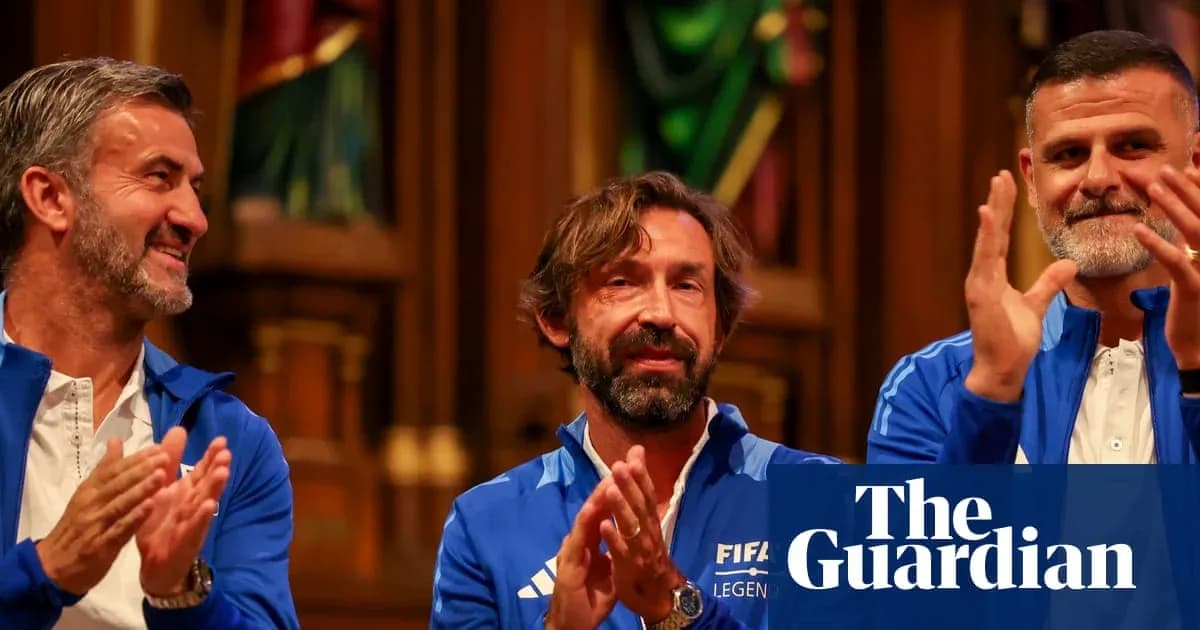
Andrea Pirlo’s candidacy to become Italy head coach is over before it ever truly began, cut down not by tactics or results, but by politics and a sponsorship deal.
The former Azzurri playmaker confirmed on Monday that he is no longer in the running for the national team job, pointing to the storm around his role as an ambassador for Russian betting company Fonbet as the decisive factor.
“I heard last night that I’m no longer the candidate for the Italy national team job,” Pirlo wrote on Instagram, drawing a line under a brief and increasingly fraught courtship with the Italian football federation.
Pirlo has repeatedly stressed that his agreement with Fonbet is tied to his work in the United Arab Emirates and is, in his words, “exclusively for commercial and sports purposes.” He has rejected any political reading of the partnership, insisting that to do so is to assign him beliefs “that I have never expressed and don’t belong to me.”
That distinction has not satisfied a number of Italian politicians. In a country where Russia’s war in Ukraine has redrawn political fault lines, the idea of the national team coach fronting a Russian brand proved combustible.
Pina Picierno, vice-president of the European Parliament, did not mince her words. For her, the debate was never just about a sponsorship logo; it was about what the next coach symbolises after years of sporting failure.
“After yet another defeat and another missed World Cup qualification, Italian football desperately needed a cultural, ethical and managerial revolution. The choice of Andrea Pirlo goes in the exact opposite direction,” she posted on social media, capturing the frustration of those who see the Azzurri’s slump as a deeper malaise.
Ignazio La Russa, president of the Senate and a leading figure in prime minister Giorgia Meloni’s party, voiced his own misgivings. Speaking to Ansa, he half-joked, half-warned: “I am speaking only because you called me: God help us. Of course I am an Italy fan and Pirlo was a great champion, but as a coach, it is a leap in the dark.”
If La Russa hinted at sporting doubts, Carlo Calenda went straight for the political jugular. The Azione party leader drew a hard line over Russia’s international image since the invasion of Ukraine. “Anyone who is or has been promoting Russia after 2022 should not hold national office,” he said, leaving little room for nuance.
Inside the federation, the picture looked different. Newly appointed FIGC technical director Paolo Maldini had thrown his support behind Pirlo, seeing in him a figure who understood the shirt, the pressure, the expectations. The backing of a legend of Maldini’s stature might once have been enough to steady the waters.
Not this time. The controversy around Fonbet, layered on top of Italy’s sporting crisis, proved too volatile. The political noise grew louder than the footballing arguments.
Pirlo, currently coach of Dubai United, had been ready to walk away from his club role to take on the national team. The FIGC had turned to him only after failing to lure their dream appointments: Pep Guardiola and Carlo Ancelotti. Both were approached in the search for a successor to Gennaro Gattuso, who departed by mutual consent in April after Italy failed to qualify for a third straight World Cup.
That sequence alone tells its own story. Three World Cups missed. Two of the game’s most coveted coaches out of reach. A national icon briefly considered, then discarded amid political uproar.
With Pirlo out, the debate loops back to familiar names. Former Italy coaches Roberto Mancini and Antonio Conte are once again being discussed as potential solutions, two men who know both the weight of the role and the ferocity of the scrutiny that comes with it.
Italy’s bench remains empty. The questions around what the Azzurri should represent, on and off the pitch, have never felt heavier.