.svg&w=384&q=75 "Pitchgist logo")
Zinedine Zidane Returns as Head Coach of France
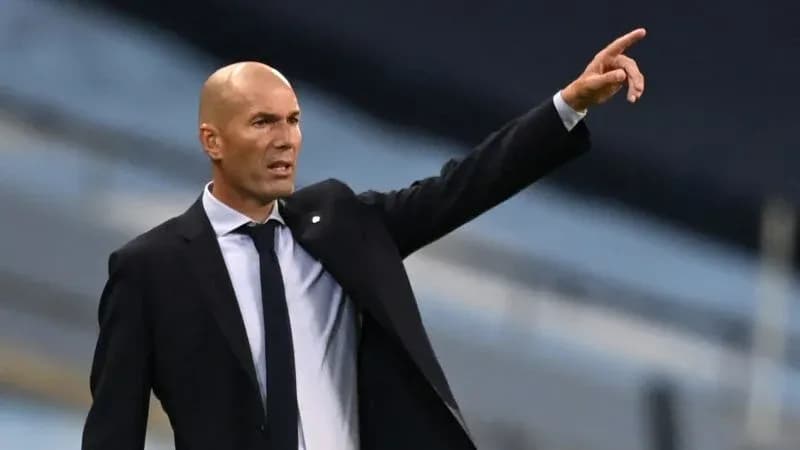
Zinedine Zidane is back where many always believed he belonged – at the helm of France. On Tuesday, the French Football Federation ended years of speculation and confirmed the 54-year-old as the new head coach of Les Bleus on a four-year deal.
Didier Deschamps’ long reign closed after the 2026 World Cup, a tournament that began with expectation and ended with a hollow thud. France arrived in North America among the favourites, but Spain sent them home in the semifinals on their way to the title. England then rubbed salt into the wound by taking third place in the playoff. For a generation used to finals and trophies, it felt like a comedown.
Into that emotional vacuum walks Zidane – national icon, serial winner, and a man who has never hidden his desire for this job.
From legend on the pitch to leader on the touchline
Zidane did not underplay the moment. “I have often said there is nothing greater than the French national team. It is therefore a joy and obviously a great honor to become the coach of France. It is also a responsibility,” he said at his unveiling, before thanking federation president Philippe Diallo, the Executive Committee and the FFF, and saluting Deschamps’ 14 years in charge.
He spoke too of his “teachers” and of “a lot of ambition for the French Team.” No one doubts that. The question is how quickly he can turn that ambition into another star above the crest.
Zidane’s task is stark: lift a bruised powerhouse and restore the edge that made France the benchmark nation of the last decade. The federation is not bringing him home for a gentle transition. The target is obvious – win the World Cup again, as early as 2030.
The return of Zizou
Few appointments in international football carry this much emotional charge. Zidane is not just another former player returning in a tracksuit. He is the man who lit the fuse under French football’s modern era.
In 1998, at the Stade de France, he rose twice to meet corners against Brazil, two thudding headers that changed a country’s footballing identity. His brace in the 3–0 win delivered France’s first World Cup and its first star. Two years later, he drove France to the European Championship title, completing a historic double. No world champion had ever followed up with the Euros immediately after. France did, with Zidane at the heart of it.
Those years turned Les Bleus into a reference point. Yet his international story did not close in triumph. Berlin, 2006, remains a scar and a symbol. In his final game for France, the World Cup final against Italy, Zidane’s last act was a red card for that infamous headbutt on Marco Materazzi. France lost on penalties. The image of the No. 10 walking past the World Cup trophy on his way down the tunnel has never really left the national consciousness.
Eighteen years on, the same figure returns, this time to the bench. Many in France will see this as a chance to rewrite the ending.
Club royalty steps into the international arena
This is Zidane’s first step into international management, but he arrives with a résumé that commands instant respect in any dressing room on the planet.
At Real Madrid, he built a dynasty. Three consecutive Champions League titles – a feat no other coach has matched in the modern era – two La Liga crowns, two Club World Cups. He handled egos, balanced superstars, and kept a notoriously volatile club aligned long enough to dominate Europe.
That experience matters. France’s squad is a galaxy of attacking talent and big personalities. Zidane has lived this before. At Madrid, he found a way to make Cristiano Ronaldo, Karim Benzema, Gareth Bale and a cast of elite players coexist and win. With Les Bleus, the names change, but the challenge is similar.
Kylian Mbappé leads the line as the era-defining star. Around him swirl Ousmane Dembélé, Michael Olise, Désiré Doué, Bradley Barcola and others, all demanding minutes, all convinced they can be decisive. Zidane must turn that abundance into a coherent attacking structure, not just a collection of highlights.
The balance France has been chasing
Since lifting the World Cup in 2018, France have wrestled with one recurring problem: balance. The team has swung between explosive going forward and vulnerable at the back, or compact and controlled but strangely blunt.
Zidane’s blueprint at Madrid offers clues. His sides were not always the most dazzling week to week, but when the stakes rose, they became ruthless and clear-headed. They managed moments, suffocated opponents in key spells, and trusted their stars to deliver in the decisive seconds.
International football, with its short tournaments and knockout jeopardy, suits that profile. His Champions League record is effectively a dress rehearsal for World Cups and Euros: limited time with players, high-pressure ties, no room for prolonged slumps.
Now he must transpose that formula onto a national team that expects to be in every final. The brief is unforgiving: restore defensive rigidity, unleash the attack, and do it quickly.
Chasing Deschamps’ shadow – and his club
There is another layer to this story. Zidane is not just following any coach; he is following a former teammate who has already done what he dreams of doing.
Deschamps captained France to the 1998 World Cup and 2000 Euros, then coached them to the 2018 World Cup and the 2022 final. He belongs to that exclusive group of men who have lifted the World Cup as both player and manager. Zidane, world champion in 1998, now has the chance to join him.
That pursuit will frame his tenure. Every major tournament will be measured against the Deschamps era, every stumble contrasted with the stability that came before. Yet Zidane has never shied away from big shadows. At Madrid, he stepped into a club defined by legends and left as one of its greatest coaches.
Now, with a wounded giant, a restless fanbase, and a squad brimming with talent, he faces the defining test of his managerial career.
The World Cup in 2030 is already looming on the horizon. The question is not whether Zidane can handle the pressure. It is whether, once again, he can bend history France’s way.