.svg&w=384&q=75 "Pitchgist logo")
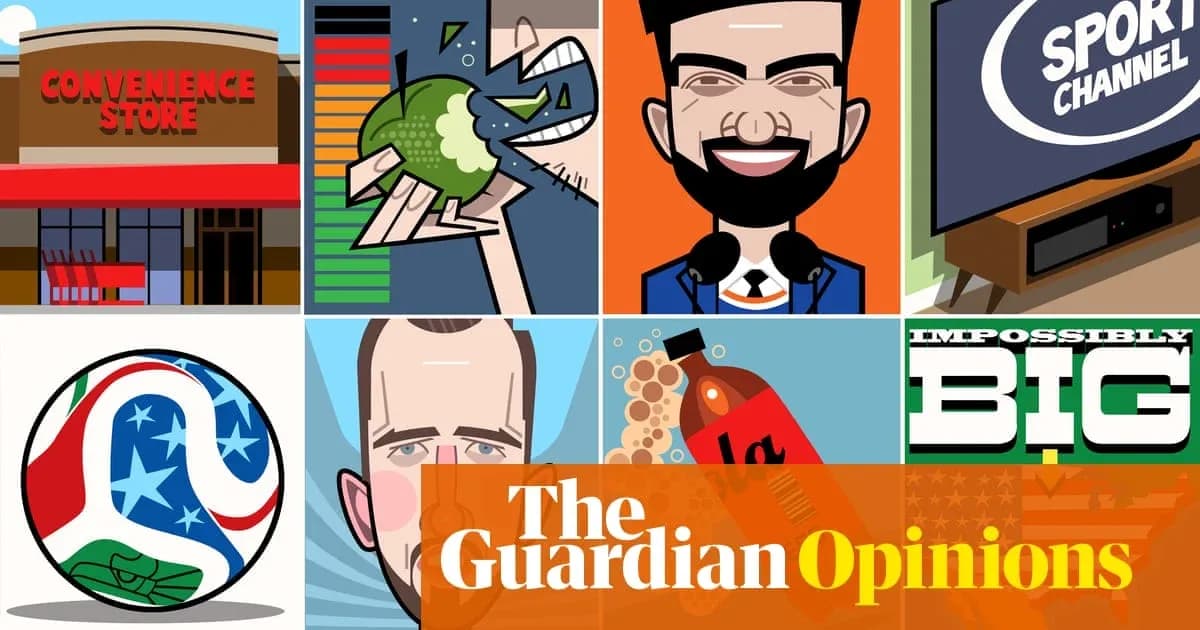
Experiencing the World Cup in Los Angeles: A Journey
Los Angeles is too bright for jet lag and too big for perspective. It swallows you whole. One minute you’re a World Cup correspondent, the next you’re a man in shorts dragging a dead LimeGlide through a hedgerow on a dual carriageway, wondering how a quick roll from West Hollywood to Santa Monica turned into a low-budget survival film.
Twenty years since the last time on the road for a major tournament outside England. Germany 2006 was steins, hangovers and Trinidad and Tobago fans who wanted to dance with anyone who could stand. Back then, the biggest decision was whether to risk Brazil v Australia tickets with a head that couldn’t cope with daylight. Now it’s broadcast schedules, podcast deadlines and whether you can get from the studio to Trader Joe’s and back before the next game kicks off.
The question from home never changes: “Is there World Cup fever over there?”
You’re reminded how detached big events can feel. Like that local TV crew in Cambridge in 1990, wandering around the city centre on the eve of an FA Cup quarter-final with Crystal Palace, asking polite people in sensible coats how they felt about the game. Many didn’t know Cambridge even had a football team.
Or the Ashes in Melbourne. “What’s the atmosphere like down there, Max?” Well, it’s rice on the floor, two under-fives, and you on your hands and knees with a wet wipe while Bazball’s flaws go blissfully unnoticed in the next room. The real work is done by the people who stay home. Partners of players, journalists, officials – all dealing with actual life while the rest of us gad about North America talking about false nines. They’re the ones who deserve the medals.
If an 18‑month‑old called Willie Rushden ever reads this, he should know: now was not the time to get hand, foot and mouth.
The US is impossibly big. Los Angeles just keeps going, a sprawl of freeways, palm trees and endless neighbourhoods that all seem to be 25 minutes away, no matter where you’re starting from. With only an hour between games, the world shrinks to a small triangle: Trader Joe’s, the cafe across the road, and a hotel pool full of influencers with immaculate abs plotting TikTok series and arguing about guest lists for the opening night of Nylon nightclub.
Football is there, though. On screens in West Hollywood bars. US shirts dotted among the crowd. The occasional “Good luck later” tossed towards a Bosnian on his way to somewhere more important. The tournament hums quietly in the background of a city that already has too much to do.
Early on, the noise wasn’t even about football. It was basketball. You drift into being a Knicks or Spurs fan just by osmosis. Spurs seemed a natural choice. So naturally they blew the biggest lead in NBA finals history, or something close enough to sting. It felt right.
Then came Zohran Mamdani. Guardian Football Weekly listener, mayor of New York, and suddenly the best orator in the country. His speech at the Knicks parade cut through the jet lag and the hotel-room fug. Hairs up on the back of your neck as he reeled off the names of basketball players you’d never heard of, and somehow made them sound like revolutionaries.
But the moment the football really arrived was the US win over Paraguay. Not for the tourists in replica shirts, but for the people who’ve carried this sport here for years. Journalists, producers, coaches, fans who’ve watched football sit in the shadow of everything else. Their relief was almost physical. This is a country where a major tournament run can change the sport’s place in the national conversation. A quarter-final isn’t just a result; it’s leverage.
England doesn’t have that burden. If they win the World Cup or go out in the last 32, the Premier League will still fill stadiums and screens. The game’s not going anywhere. For the US and Australia, it’s different. Each big tournament is a referendum on whether football deserves to sit at the same table as the big domestic beasts. That’s a lot of weight for any set of players to carry.
On the other side of the world, Melbourne delivered the most emotional jolt so far. Fed Square heaving, limbs everywhere, and Nestory Irankunda – a refugee – taking a perfect touch and scoring a goal that felt bigger than the game. In a time when populism and nationalism are on the rise, there’s something quietly magnificent about a family fleeing conflict, their son growing up to represent Australia, a nation built on immigration. Much like the US.
Then there was Connor Metcalfe in the mixed zone, watching his goal back and reacting in the most Australian way imaginable. “Far out that was far out, that was ick!” – or something very close. Pure, unfiltered joy. No media training can flatten that.
It’s hard to explain why the Socceroos stir something that their cricketers don’t. Maybe it’s the underdog thing. Maybe it’s the sense that every big moment might drag the sport a little further into the mainstream. Maybe it’s just that football, at its best, feels like a shared language in a way that Test cricket never quite manages in a square full of people in bucket hats.
Distance from England helps. You avoid the pub bores who want to talk about whether Thomas Tuchel sings the national anthem, as if that’s a meaningful metric of anything. King Charles probably isn’t losing sleep over it. Why should anyone else?
What matters is that England are good. And fun. Harry Kane finally has pace around him. Noni Madueke is grinning his way through games. Elliot Anderson is in the right places. Djed Spence looks like he’s been plugged into the mains, suddenly faster than Road Runner. There’s hope, but not the usual, suffocating, terror-based version. Not yet.
The days blur into a routine: games, edits, Fox Sports on the TV, and the ongoing experiment of cohabiting with Barry Glendenning. It’s an odd domestic set-up – two middle-aged men, one remote, and a running joke about whether Zlatan Ibrahimovic will kill Alexi Lalas live on air before Barry finally finishes you off for some minor kitchen infraction.
US coverage has been solid. Plenty of basic “soccer” content, but that’s the job. An England game pulls in people who don’t watch Crystal Palace v Brentford on a Monday night. Not everyone knows their inverted full-back from their elbow. You do start to crack when Christian Pulisic appears in the same Wells Fargo advert during every hydration break, though. There are only so many times you can watch a man smile at a bank.
Living with Barry is, in theory, temporary. In practice, you start to understand why some bands split up on tour. To your knowledge, you’ve barely irritated him at all. Unless you count eating an apple too loudly. Or failing to screw the lid on a bottle of Coke Zero properly. Or offering unsolicited advice on how to chop a chilli. Or asking if he needed the big saucepan. Or putting yoghurt into a bowl. Or doing too much laundry. Or questioning his unapologetic flatulence, from both ends.
Other than that, harmony.
Somehow, this chaos plays well on Instagram, on the pod, on YouTube, or wherever people hoover up their content. It feels like pilot season. Barry has already helped the star of Selling Sunset with her key fob – not a euphemism, sadly – and that alone feels like the sort of subplot American TV executives might commission a series around.
Maybe this is how you crack the States: a World Cup, a podcast, a faulty LimeGlide and a flat shared with a man who can turn a yoghurt bowl into a federal case. If football here keeps growing at the rate its true believers hope, this might be the last time it feels like a niche adventure rather than a fully formed juggernaut.
For now, the games roll on, the city glows, and the World Cup lives in the gaps between Trader Joe’s runs and studio lights. Big things might be coming. The trick is to stay upright long enough to see where this tournament – and this sport, in this country – decides to go next.