.svg&w=384&q=75 "Pitchgist logo")
World Cup 2026: Farewell Tours for Football Legends
The World Cup has always loved a farewell tour. In 2026, it might be overwhelmed by them.
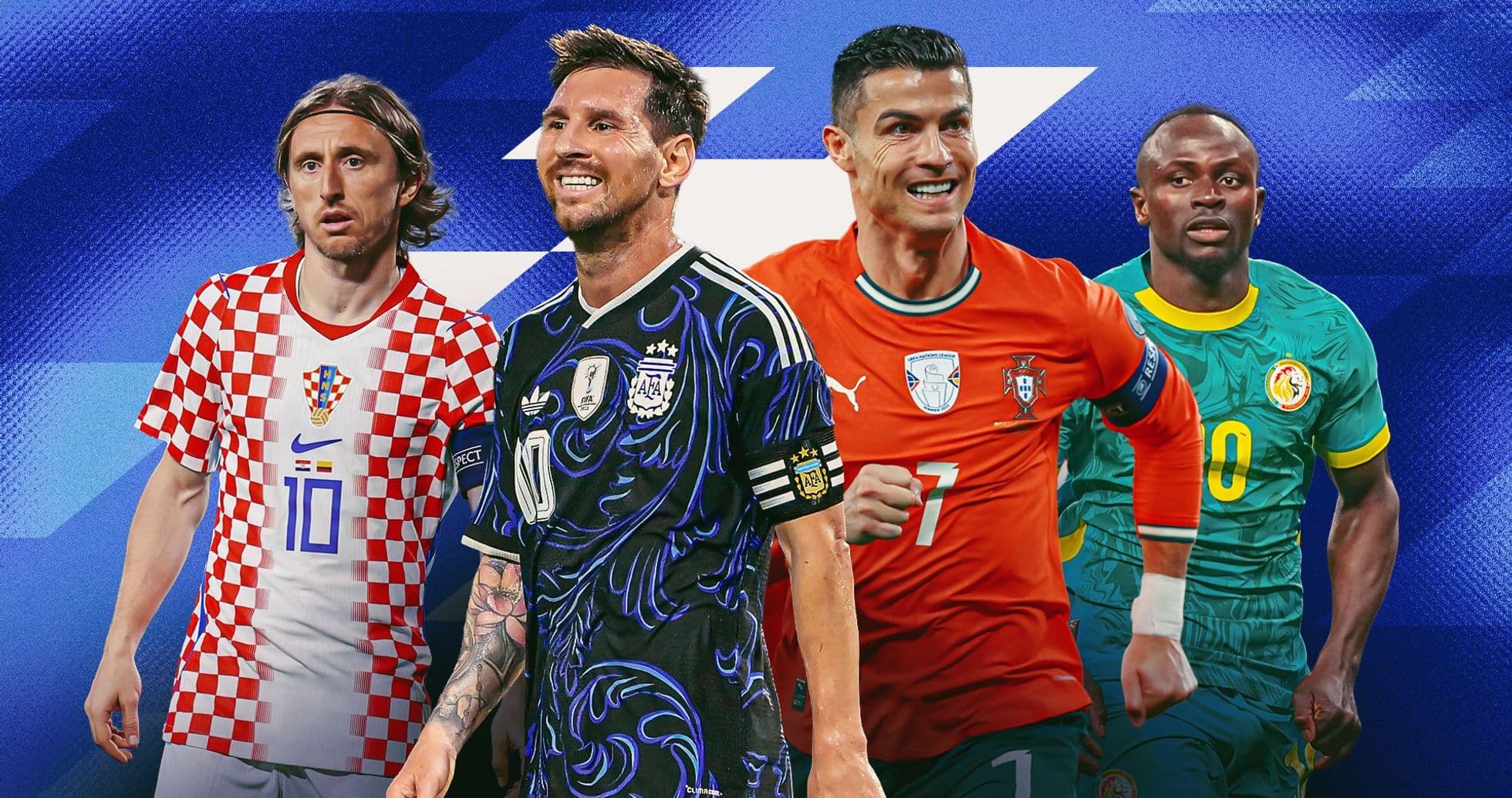
Across North America, the greatest generation of modern footballers will gather for one last swing at immortality, some clinging to the summit, others fighting their own bodies as much as their opponents. The tournament will be a celebration, but also a reckoning: who still has one more defining act left?
Messi and Ronaldo: the sixth act
Lionel Messi will arrive on the brink of 39, already crowned, already complete, yet refusing to step off the stage. He finally seized the trophy that tormented him in 2022, dragging Argentina past France in a final that felt like the closing scene of a footballing epic.
He could have walked away then. Instead, he moved to Inter Miami, traded European intensity for MLS rhythm, and retooled his game to protect a body that has carried the sport’s expectations for two decades. The pace is lighter, the spotlight less blinding, but the talent remains savage. For Argentina, he still unlocks defences with a flick of the foot and a glance few players even see, never mind execute, at his age.
Now comes an expanded World Cup, stretched across a continent, with punishing travel and brutal heat. It looks like a tournament designed to weed out the veterans. Messi has never cared much for scripts written by others.
Cristiano Ronaldo, 41 by the time the trophy is lifted, chases something far more elusive: redemption on this stage. No World Cup title. Not even a knockout goal. For a man who has bent almost every other competition to his will, his record here jars.
Yet he refuses to fade. In Saudi Arabia with Al-Nassr, he continues to score relentlessly, his obsession with goals and conditioning keeping him in a physical shape that defies the birth certificate. Portugal no longer need him in the way they once did – this is a squad rich with Rafael Leao, Pedro Neto, Goncalo Ramos and more – but Roberto Martinez still builds around him. The plan is clear: surround Ronaldo with legs, creativity and energy, and let him chase a final, impossible summit.
Like Messi, he will contest his sixth World Cup. Unlike Messi, this is his last chance to fix the one glaring gap in a glittering career.
Ochoa and Neuer: goalkeepers who refuse to go quietly
If Messi and Ronaldo are the headline acts, Guillermo Ochoa is the cult hero who simply refuses to leave the festival.
The Mexico goalkeeper, now 40, looked done with World Cups. Just one appearance for El Tri since March 2024 and seemingly out of Javier Aguirre’s plans. Then Angel Malagon ruptured his Achilles, and the door creaked open again. Ochoa walked straight through.
Over 150 caps, a career spent bouncing around Spain, Italy, France, Portugal, Belgium and most recently Cyprus with AEL Limassol, and a reputation as a World Cup specialist. Every four years he reappears, gloves on, hair wild, producing performances that lodge themselves in the global memory. He has hinted this will be the last time. For Mexico, co-hosts and serial dreamers, there is comfort in seeing him back between the posts.
Germany have their own throwback in goal. Manuel Neuer, coaxed out of international retirement at 40, will go to a fifth World Cup as Julian Nagelsmann’s undisputed No.1. He had stepped away after Euro 2024 on home soil, a natural closing chapter for a generation that defined German football. But doubts over Marc-Andre ter Stegen’s fitness and Oliver Baumann’s form pushed Nagelsmann towards the bold choice: one more ride with the man who reinvented the position.
Neuer’s season with Bayern Munich showed there is still sharpness, still command, still that sweeping presence outside the box that terrified forwards a decade ago. Germany, bruised by two straight group-stage exits, need stability. They have turned back to the old guard to find it.
Modric and Dzeko: the last stand of the survivors
Luka Modric has lived so many football lives that it feels surreal he is still here, still dictating games, still bending tournaments to his tempo.
At 40, he will be the second-oldest outfield player at the World Cup behind Ronaldo, yet Croatia’s hopes again rest at his feet. He dragged them to the 2018 final, then to third place in 2022, rewriting his country’s footballing history almost single-handedly. After leaving Real Madrid, he joined AC Milan to keep his legs sharp and his minutes managed, saving his best for nights like those to come in North America.
This will be his fifth World Cup. By the time he steps onto the pitch, he and Messi will likely be sitting on 200 caps apiece, a number that once felt impossible for outfield players. Another deep run would be a fitting final flourish for one of the greatest midfielders the game has seen.
Edin Dzeko’s journey has been more fragile, more precarious. Bosnia and Herzegovina have rarely been regulars at major tournaments, their sole previous World Cup appearance coming in 2014. It would have been easy for Dzeko to assume that was it.
Instead, he dragged his country through the UEFA play-offs, toppling Italy to earn one more trip to the biggest stage. At 40, on the verge of 150 caps and already beyond 70 international goals, he remains their spearhead. His January move to Schalke reignited his club career, his goals firing them back to the Bundesliga. For a striker of his quality, the World Cup has always felt like a stage he visited too rarely. Now he gets one last bow.
Asia and Africa’s icons near the end
South Korea’s relationship with Son Heung-min borders on devotion. He is their captain, their star, their symbol. He turns 34 in July, younger than many on this list, but his burden is different. He carries the expectations of a nation that lives every kick of its football team.
Son has already stepped away from Europe to join LAFC in MLS, a move that suggests a soft landing into the latter stages of his career. By the time this World Cup ends, he may decide he has given enough to the national cause. If this is his final tournament, South Korea will want to make it count.
Mohamed Salah stands in a similar space for Egypt, just a few days older than Son and just as central to his country’s identity. He has hauled the Pharaohs forward for years, often with little help. This time, there is at least some support – most notably Manchester City’s Omar Marmoush – but the spotlight still falls squarely on Salah.
His last 12 months at Liverpool have been turbulent, his form dipping from the heights he once made routine. Yet there will be a fierce edge to him in North America. His only previous World Cup, in 2018, came with a damaged shoulder from the Champions League final, a cruel twist that blunted his impact. For a player of his stature, one standout global tournament feels almost a requirement for the legacy he deserves.
A move to Saudi Arabia looks likely after his Anfield exit. That shift usually signals the beginning of the end at the elite level. Expecting him to push on to another World Cup after this one feels optimistic at best.
Sadio Mane, another pillar of African football’s modern era, turns up with his own final mission. At 34, the Senegal captain has already delivered his country a first Africa Cup of Nations title in 2021, scoring the decisive penalty in the shootout. He then led them to back-to-back World Cup qualifications, only to miss the 2022 tournament through injury.
His move to Al-Nassr has dimmed his visibility in Europe, but not his importance at home. Surrounded by emerging talents such as Ismaila Sarr and Illiman Ndiaye, Mane’s leadership and experience could be the difference between a respectable showing and a genuine deep run.
Riyad Mahrez completes a remarkable African trio. At 35, the Algerian winger still glides past defenders with that velvet first touch and hypnotic dribbling. For all his talent and all his success with Leicester City and Manchester City, his World Cup story is almost non-existent: just one appearance, in 2014, before Algeria repeatedly failed to qualify.
North America offers him a rare second chance. Now at Al-Ahli in Saudi Arabia, his club career is winding down. Internationally, this feels like a farewell tour that has been delayed for a decade.
Europe’s fading generals
Kevin De Bruyne should have strolled into this World Cup as the undisputed conductor of Belgium’s last big push. Instead, he arrives under a cloud of uncertainty.
His first season at Napoli has been scarred by injuries, his body sending worrying signals as he nears 35. When fit, he remains arguably the most complete playmaker in the sport, capable of dismantling defences with a single pass or a thunderous strike from distance. Belgium’s so-called ‘Golden Generation’ has already frayed, but De Bruyne still stands at the centre of whatever they have left.
Rudi Garcia’s squad is transitioning, younger faces edging in, older ones slipping away. Yet if De Bruyne can stay on the pitch, Belgium become dangerous again, lurking as a dark horse nobody really wants to face.
Virgil van Dijk, like De Bruyne, will turn 35 during the tournament. Unlike many of his peers, he has arguably grown into his status with age. At Liverpool, he has been the pillar on which an era of success has been built, a defender so dominant that some forwards openly avoided his side of the pitch.
The last season has brought doubts. On Merseyside, whispers have grown that he has lost half a step, that his anticipation is not quite as sharp. For the Netherlands, this World Cup offers him a chance to silence that noise. It will be only his second tournament on this stage, and likely his last.
James Rodriguez, meanwhile, returns to the scene of his greatest triumph. In 2014, he lit up the World Cup with a performance so dazzling it earned him a move to Real Madrid and a permanent place in the competition’s folklore.
Since then, his career has been a patchwork of injuries, short-term contracts and fleeting flashes of the old magic. He has hopped from club to club – most recently Minnesota United in MLS – often using domestic football as a bridge to the international stage, where he still saves his best for Colombia.
He turns 35 in July. This World Cup feels like a bookend, a final chapter in a story that began with that volley against Uruguay and the golden boot that followed.
Neymar’s last roll of the dice
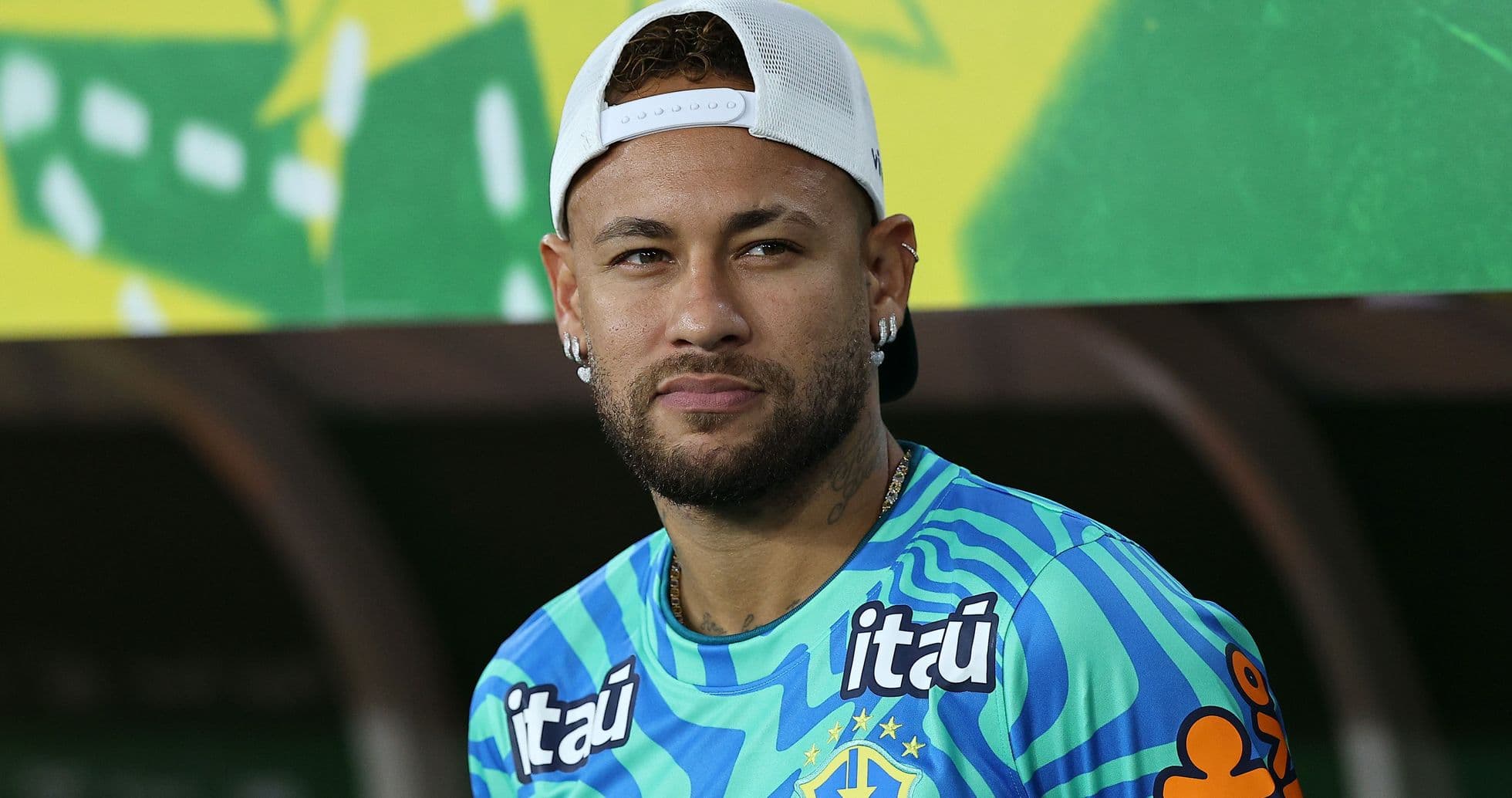
Neymar’s relationship with the World Cup has always been complicated, dramatic, incomplete. Brazil’s all-time leading scorer has never truly owned a tournament in the way his talent promised.
After tearing his ACL in October 2023, and with Carlo Ancelotti consistently overlooking him after taking the Brazil job, his hopes of a final World Cup seemed to evaporate. Then injuries hit Brazil’s forward line, and the door cracked open. Ancelotti handed him a lifeline, naming the Santos forward in his 26-man squad and sparking celebrations across a country still obsessed with its No.10s.
Almost immediately, Neymar suffered yet another injury. His body is sending louder and louder warnings. Nobody seriously believes he can hold together physically for another four-year cycle. This is it: one last chance to chase Brazil’s sixth star, one last attempt to match the mythology that surrounds the shirt he wears.
Kane and England’s looming crossroads
Not every story here is about decline. Harry Kane heads to North America at 32, in the middle of his prime, fresh from a season in which he rattled in over 60 goals for Bayern Munich and reinforced his status as one of Europe’s most ruthless finishers.
He is already England’s all-time leading scorer, the face of a generation that has come agonisingly close without quite breaking through. There is a world in which he plays on to 2030, especially with the lack of obvious heirs ready to take his place. Many England supporters will cling to that possibility.
Yet the calendar offers a natural full stop. England will co-host the European Championship in 2028. A major tournament on home soil, a potential farewell in front of his own fans – it is easy to see that being the moment Kane chooses to step away from international duty.
If that happens, this World Cup becomes his last on the global stage. The same could apply to Jordan Pickford, John Stones and perhaps even Marcus Rashford, all of whom may eye that 2028 tournament as the perfect curtain call.
Across the continent, the pattern repeats: icons approaching the end, bodies creaking, minds still burning. Some arrive already decorated, others desperate to correct the one line missing from their résumé.
The World Cup has always made legends. In 2026, it might be defined by how it says goodbye to them.