.svg&w=384&q=75 "Pitchgist logo")
World Cup 2023: Drama, Icons, and Unforgettable Moments
This was a World Cup that refused to behave. The scores were often ordinary; the stories almost never were. From penalty-shootout shock to late-night chaos in the Azteca, from a 40‑year‑old goalkeeper rewriting his own script to a full-back from Cape Verde detonating the goal of the tournament, this was a month in which football kept stepping sideways into the surreal – and staying there.
Matches that refused to end
On paper, Paraguay 1-1 Germany in the last 32 barely registers among the goalfests. On the pitch, it became something else entirely. Germany do not lose penalty shootouts. That is one of the sport’s great working assumptions. Yet under the floodlights this tie ripped that myth to pieces, the shootout spiralling into the kind of drama that leaves even seasoned reporters staring at their notes, trying to process what they’ve just seen. Germany went out not meekly but in spectacular fashion.
If that was the shock, Algeria 3-3 Austria was the hallucination. Everyone knew the script before kick-off: a gentle, mutually beneficial draw, a classic biscotto to ease both sides through. For long stretches of the second half, it looked exactly that – a game drifting, almost politely, towards its preordained conclusion. Then stoppage time arrived and the match caught fire. Defensive structures vanished, common sense went with them and the whole thing turned into a fever dream. Better games existed; none were stranger.
Some nights, though, were about place as much as plot. Mexico 2-3 England at the Azteca carried a sense of occasion that began with the draw and never really eased off. A thunderstorm delayed kick-off, the air grew heavy, and when the game finally started Thomas Tuchel’s side were dragged into a contest that felt like drinking cortisol straight from the bottle. Mexico produced the best first half they could muster, England clung on, and somehow the visitors walked out with a 3-2 win that will live far longer than their eventual exit. It was, as one observer put it, pure cinema.
Not that England’s chaos ended there. France 4-6 England bordered on slapstick, a scoreline that looked like a misprint and played out like a highlights reel that never stopped. In Seattle, Egypt 1-1 Iran delivered its own, quieter torment. Iran thought they had stolen it in stoppage time, saw a winner ruled out, then rattled the woodwork twice in the dying seconds. They left unbeaten, exhausted, and eliminated, their path blocked as much by circumstance as by opponents.
Argentina, the defending champions, seemed determined to flirt with disaster. Against Egypt in the last 16, they trailed by two and were mentally halfway to the airport. Then Lionel Messi took over. In the closing stages he dragged them back into the game, orchestrating a comeback that turned a looming humiliation into a 3-2 win in normal time. The referee’s decisions drew their own scrutiny, but the drama was undeniable.
Cape Verde, improbably, kept appearing at the heart of the tournament’s best stories. Their 2-2 draw with Uruguay in Miami showcased a side whose attitude and discipline were a joy to watch, a debutant playing with the composure of an old hand. Later, Argentina 3-2 Cape Verde delivered another minor classic, Sidny Lopes Cabral bending an equaliser into the top corner in extra time that left one of the world’s great goalkeepers grasping at air. For sheer improbable wonder, that contest rivalled anything the month produced.
And still the narrative returned to England. Their 1-2 defeat by Argentina carried a grim familiarity, the kind of heavyweight meeting that feels inevitable at some stage of a tournament. Predictable in pairing, unpredictable in detail. For some, it was that game – rather than the wild swings elsewhere – that lingered most.
Rodri, Vozinha and the cast of a twisted epic
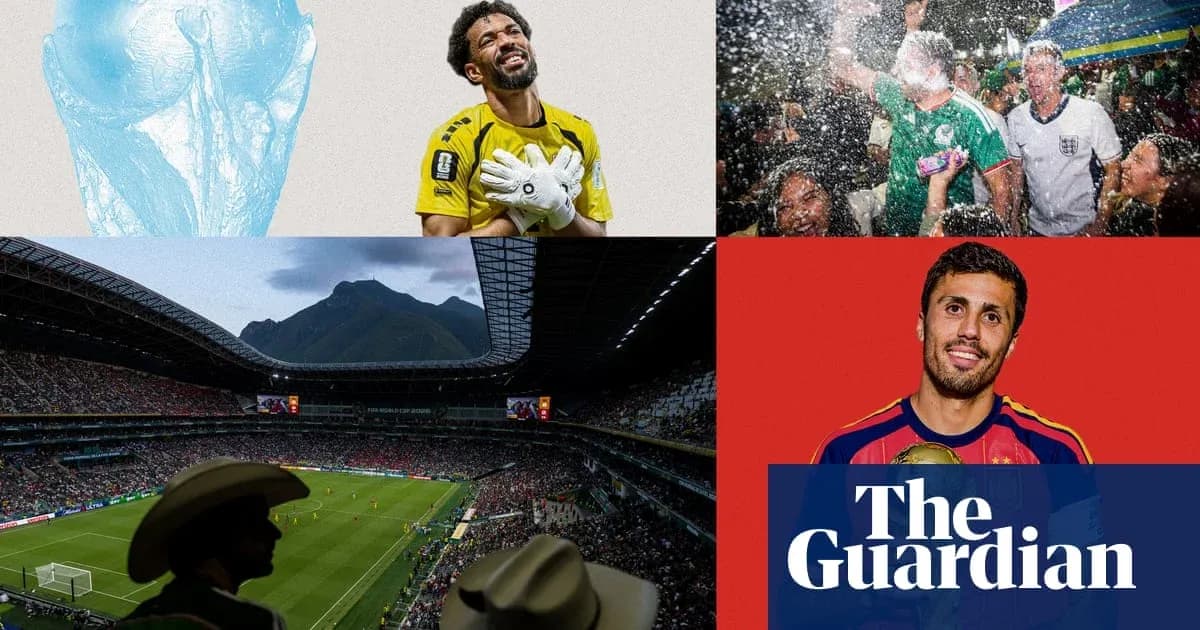
If there was one constant in a tournament of chaos, it was Rodri. Spain’s captain anchored the best team with an authority that never dipped. Operating as the metronome in a side that had returned to a possession-heavy model, he set the tempo, absorbed pressure and, when matches teetered, imposed control. The Golden Ball felt less like an award and more like confirmation.
Others lit up the stage in different ways. Kylian Mbappé racked up the goals, his Golden Boot swollen by a wild third-place play-off but backed by performances that drove France deep into the competition before Spain stopped them in the semi-final. Erling Haaland turned Norway’s campaign into something historic: a first quarter-final appearance, a serious Golden Boot tilt and, with his second goal against Brazil arrowed into the bottom-right corner from distance, a snapshot of brutal, clinical efficiency.
Lionel Messi, even without the trophy at the end, still found space for another defining act, the comeback against Egypt a reminder that his grip on games remains unique. Jude Bellingham, central to England’s best moments under Tuchel, justified his selection with a series of displays that made earlier doubts about his inclusion look absurd.
Yet the story of the World Cup’s goalkeepers belonged to Vozinha. At 40, unattached and representing debutants Cape Verde, he strung together performances that bordered on the miraculous, repeatedly shutting out or frustrating heavyweight opponents. His run felt like a fairytale that needed no embellishment, a late-career surge that resonated far beyond the islands he represented.
In a different corner of the map, Eloy Room had his own night. The Curaçao goalkeeper set a World Cup record for saves in a 90-minute match against Ecuador, seizing his fleeting moment in the global spotlight and enjoying every second of it.
There was room, too, for the future. Pau Cubarsí impressed in Spain’s back line, Michael Olise glided through matches – though he left at least one hat-trick on the table against England – and Kerim Alajbegovic of Bosnia and Herzegovina justified the pre-tournament buzz with a slaloming solo goal against Qatar that seemed to announce a new talent.
A goal that stopped the world
Some tournaments have a single image that defines them. Here, it was Sidny Lopes Cabral, hands on his head in disbelief, then searching the stands to share the moment with his girlfriend.
His equaliser for Cape Verde against Argentina in extra time did not just level a knockout tie; it rewrote the atmosphere. Picking up the ball at distance, he unleashed a long-range strike that bent past a fully stretched Emi Martínez and kissed the far corner. In real time, it felt audacious. On replay, it bordered on outrageous.
The reaction inside the stadium told its own story. Gasps, then a roar, then a kind of stunned laughter. Commentators admitted they would never be able to reproduce the sound they made as the ball curled in. For many who saw it, in the ground or through a screen, it instantly joined the pantheon of great World Cup goals.
Around that moment, other strikes demanded attention. Eldor Shomurodov’s instinctive lob from a tight angle for Uzbekistan against DR Congo offered a different kind of satisfaction, the sort of goal that seems to defy geometry. Julián Álvarez, largely quiet across the month, detonated a vicious, swerving long-range effort in extra time against Switzerland in Kansas City, a single swing of his boot transforming a tense tie into a cauldron.
Kerim Alajbegovic’s solo run and finish against Qatar, off balance yet unerring from outside the box, only sharpened the sense that an 18-year-old had arrived. Wilson Isidor’s long-range thunderbolt for Haiti against Morocco, struck as sweetly as anything the tournament saw, gave a struggling side a moment that will live on even as the results fade.
Harry Kane’s second for England against DR Congo, Haaland’s precise dagger against Brazil, even the long-range rockets that were later ruled out by VAR – they all fed into a competition where the ball seemed to invite risk. Analysts spoke of drag crisis and the quirks of the Adidas Trionda. Players simply kept hitting it, harder and truer, from further out.
Moments that stayed off the scoresheet
Away from the cameras’ main focus, the World Cup built its own private mythology.
In Monterrey, a journalist stood knee-deep in floodwater waiting for a bus, having gone to the stadium only to retrieve a mislaid iPad that would be lost again a week later in Houston. In Dallas, flyovers turned into accidental art. In Foxborough, the sound of Scotland the Brave on bagpipes before the game against Haiti marked the end of a 28-year wait, the prelude proving far more stirring than what followed.
The Azteca, inevitably, played its part. One reporter’s first visit came for Mexico’s win over Ecuador, the noise inside the stadium unlike anything he had heard. Later, Mexico 2-3 England turned the same arena into a theatre of exhaustion, a night where a delayed kick-off, a storm and a brilliant Bellingham performance combined to create England’s greatest away win in years – even if the wider campaign eventually fell away.
Some memories were smaller and sharper. Senegalese journalists sharing malted milk biscuits during their anthem before a collapse against Belgium. A mariachi in a huge sombrero being walked through the permutations that could still send Spain to the Azteca. A live show in Manhattan that began with a full-throated “HELLO NEW YORK!” and ended in stories about chow mein bridges and pancakes at Mile End Deli.
There were family moments, too. Vozinha’s mother, against all odds, made the journey from Cape Verde to watch her son at a World Cup. Roberto “Pico” Lopes, the Shamrock Rovers defender, threw himself into tackles for his father’s homeland, his performances good enough that some wondered if a late-career move to a richer league might yet materialise – even if legend status in Dublin and Praia would not be a bad consolation.
On the pitch, the baton quietly passed between generations. For Australia, Nestory Irankunda revived Tim Cahill’s trademark celebration after scoring against Turkey, a symbolic handover from one era to the next. In Kansas City, England’s base, a community that had never expected to host a World Cup camp embraced the role wholeheartedly.
And in stadiums across the continent, once the final whistles sounded and the crowds drifted away, the pitches briefly belonged to the people who had made the tournament function. Volunteers, stewards, stadium workers and low-level FIFA staffers spilled on to the grass for impromptu kickabouts, selfies and slow, satisfied walks across turf usually kept behind locked gates. For them, it was a rare reward at the end of long, draining days.
Hosts under the spotlight
The three co-hosts emerged from the month with mixed footballing fortunes but broadly warm reviews.
In the United States, the scale of interest surprised even those who expected a bounce. This is a country that loves big events, but something deeper took hold: conversations about lineups and tactics in bars, strangers stopping journalists in the street to talk football, cities where it became impossible to go more than a couple of hours without hearing about the tournament. The USA played some of the prettiest football their national team has produced, only to fall short against Belgium and wonder what might have been.
The welcome, in most places, matched the enthusiasm. Hotel staff, bartenders, even the occasional reality TV personality went out of their way to make visitors feel at home. There were grumbles, of course – the omnipresent tipping culture, the sprawl of cities where public transport barely exists, the sense in some quarters that guests should be grateful simply to be there. Yet the overall impression was of a country that, for a month, opened itself up.
Canada embraced its moment, too. Toronto’s first World Cup game on home soil brought a genuine match-day buzz and a lingering afterglow despite a draw against Bosnia and Herzegovina. In Vancouver, a 6-0 demolition of Qatar underlined a team that, with Jesse Marsch doubling as coach and hype man, played with verve and fearlessness. Canadians, keen to be recognised as a “real” football nation, leaned into the role.
Mexico, though, may have captured the purest footballing energy. The culture around the game there felt fervent, febrile, utterly absorbed. Mexico barnstormed through Group A, outclassed a rising Ecuador and then threw everything at England in that Azteca epic before running out of ideas in the final half-hour. The sense lingered that this was a football country that should never have been overshadowed by its co-hosts.
Not everything impressed. The attempt by the US administration, with FIFA’s compliance, to influence the tournament’s course through Folarin Balogun’s reprieve left a sour taste and a warning about political interference. The decision to centralise organisation under FIFA rather than a local committee raised questions that will echo into future editions. From a player-development standpoint, the US still looked short of a structure capable of consistently producing elite talent, and the need for a new coaching vision became harder to ignore.
Yet across three nations, the same themes kept surfacing: warmth, curiosity, a willingness to be part of something bigger. This World Cup stretched across borders and time zones, across languages and landscapes. It put the “whirled” into World Cup, as one observer put it, resisting easy generalisation.
The football matched that mood. It veered from the sublime to the absurd, from Rodri’s calm authority to Cabral’s swirling miracle, from Germany’s penalty collapse to Messi’s late surge. It left stars burnished, reputations remade and smaller nations walking away with memories that will outlast any medal.
And as the stadium lights went out, one question hung in the air: after a tournament this wild, what on earth can the next one do to top it?