.svg&w=384&q=75 "Pitchgist logo")
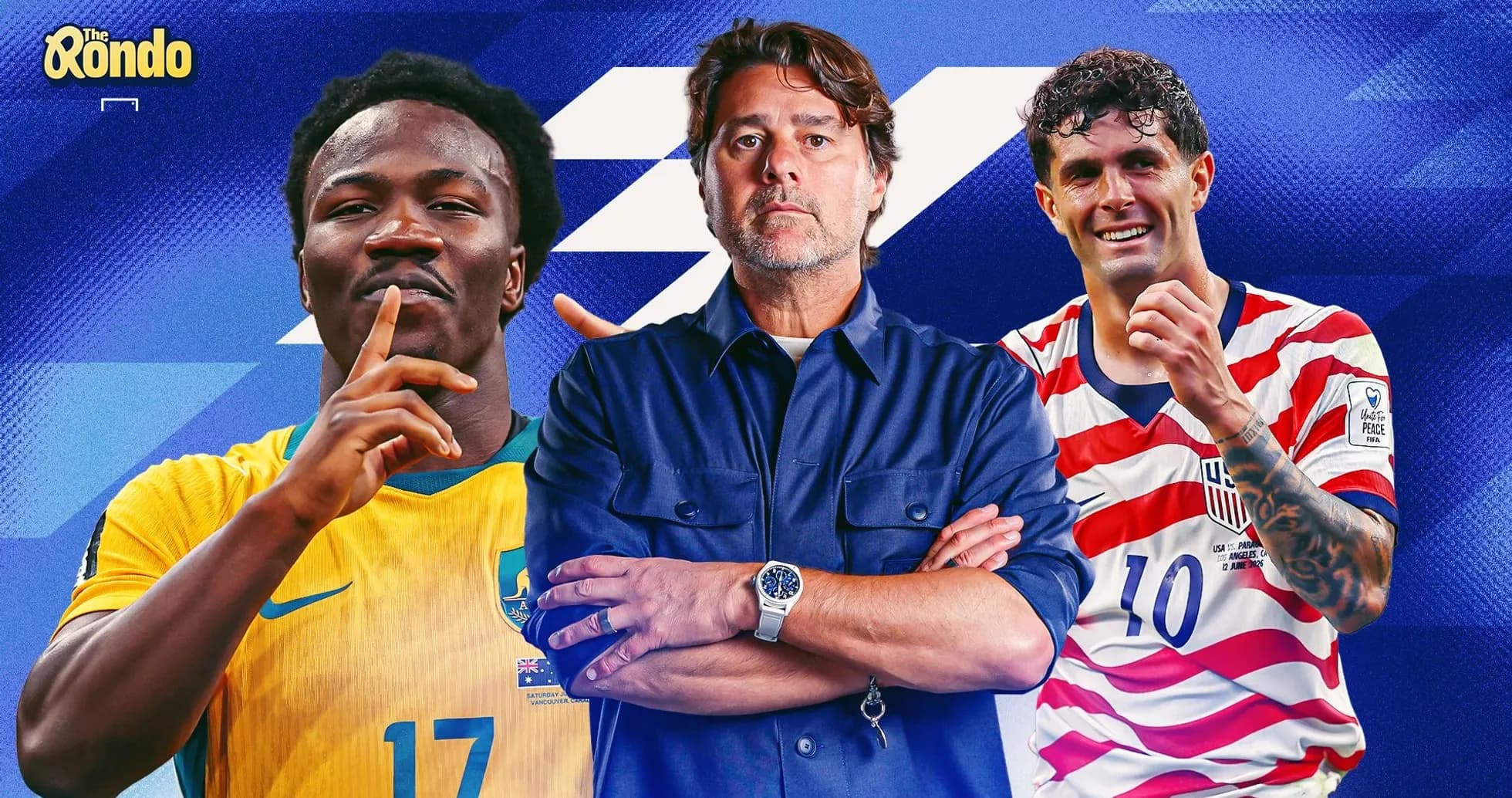
USMNT Faces Australia: A Must-Win Match with Pulisic's Absence
The United States arrive at this one with a swagger. Paraguay were brushed aside, the performance sharp enough to make this next hurdle against Australia look, on paper at least, like a step down in difficulty. The expectation around the camp is clear: this should be a USMNT win.
But nobody inside that dressing room is being allowed to think it will be easy.
A match the U.S. should win – but not without scars
Across the board, the verdict is the same: the Americans are favourites. They have more depth, more game-changers, and the momentum of a statement opening display. Tom Hindle sees little reason to doubt them after that Paraguay outing, calling another victory “comfortable enough” if they hit a similar level.
Ryan Tolmich leans the same way but with a warning label. This will be physical. It will be tight. The kind of game that drags you into a fight before it lets you play. Australia have weapons of their own, and Nestory Irankunda already flashed his threat against Turkey. The difference, in Tolmich’s eyes, is that the U.S. simply have more match-winners across the pitch—and a fresh lesson in humility after Turkey’s downfall.
Alex Labidou also backs the Americans, but he sees drama. Not a cruise, not a procession. A late winner, the type of moment that fits neatly into Gio Reyna’s ongoing redemption arc. He expects this to go right to the wire.
The consensus is firm: U.S. to win. The route there, though, could be anything but smooth.
Life without Pulisic: risk, reward and a manager’s dilemma
Then comes the problem that can flip any script. Christian Pulisic.
“Losing your best player ain’t good,” Hindle says, and there’s no need to dress it up more than that. The USMNT have depth at striker; they do not have another Pulisic. He is the heartbeat of their attack, the one piece everything else seems to orbit. Without him, this side simply isn’t the same.
That leaves Mauricio Pochettino with a decision no coach envies in a tournament setting. Does he roll the dice, use his star, try to kill the group early and then rest him? Or does he lock Pulisic away, exercise maximum caution and trust the rest to finish the job? Hindle would play him, then “wrap him in cotton wool for two weeks.” Pochettino, though, is the one who has to live with the consequences.
Tolmich is openly concerned about what Pulisic’s absence would look like on the pitch. Against a compact, stubborn Australia, you need players who can unpick a block, who can beat a man and turn a half-chance into a real one. Pulisic did exactly that on the opening goal last game, the kind of individual moment that breaks a match open. When Sergiño Dest was asked who, besides himself, is the best 1v1 dribbler in this squad, his answer was simple: Pulisic. Take that away, and someone else has to step into the spotlight.
Labidou’s worry stretches beyond one night. He believes this U.S. team might be on the verge of something bigger in this tournament, something that requires its best player fully fit and fully involved. Australia can be beaten without him, he argues. Winning the whole thing without him? That’s another conversation.
Australia’s wild card: Irankunda and the space behind
This is a different kind of Australian side. Not stacked with Premier League regulars, not built on the familiar faces of old. It’s a group that, at first glance, might be underestimated by those who only look at European club résumés.
Hindle calls it a “weird generation” for that very reason. The talent is there, just not always in the leagues the Eurocentric eye is trained to watch. One player, though, needs no introduction now: Nestory Irankunda. A livewire from the left, a constant nuisance who will ask serious questions of Dest all evening.
Tolmich zeroes in on him as the danger man. The USMNT back line has been loose at times in recent months. It can be beaten by pace, and Irankunda has plenty of it. Put him in a footrace with Tim Ream and there’s only one winner. Add in Chris Richards coming off an ankle injury and fullbacks who love to bomb forward, and you have the perfect recipe for a breakout performance on the counter. If Irankunda explodes, Tolmich warns, it will happen fast.
Labidou, while agreeing on Irankunda’s threat, offers a different Australian name that could tilt the night: Mathew Ryan. The veteran goalkeeper has been talking up his team’s chances all week and has the pedigree to back it up. Matt Freese barely had a glove warmed against Paraguay. If this turns into the kind of tight, edgy match where a single save swings everything, Ryan’s experience could loom large.
U.S. difference-makers: time to justify the hype
Australia are expected to sit in a back five and dig in. Not a parked bus, but a side that will defend in numbers and dare the U.S. to solve the puzzle. That puts the spotlight squarely on the American attackers.
For Hindle, the demand is clear: this is a big day for the U.S. creators. Pulisic is the obvious headliner if he plays, but Malik Tillman sits high on the list of players who need to deliver more in the final third. His off-ball work against Paraguay was “elite,” yet when the ball found his feet, he left something behind. A goal or assist here could transform his tournament.
Tolmich points to Folarin Balogun. Paraguay offered space; Australia likely won’t. The game will be tighter, the margins thinner. If Pulisic is limited or absent, Balogun becomes the focal point, the man who has to shoulder the responsibility—either by finishing chances himself or linking play and bringing others into dangerous areas. His ability to adapt to a more congested game could define the night.
Labidou circles back to Tillman, especially if Pulisic is not at full tilt. Pochettino may have unlocked something by dropping the Bayer Leverkusen man into a No. 8 role, a deeper position for a prototypical No. 10. Tillman did everything but score last week. If he keeps that trajectory and finally adds the final touch, the Americans should have enough to lock up the group.
The cost of a misstep
What if they don’t?
Hindle calls a poor result “bad, but not the end of the world.” In tournament math, three points can still be enough to escape a group. But momentum matters. So does the luxury of heading into a final group game without needing a win. The ideal scenario is simple: get it done early.
Tolmich is harsher. Dropping points here would be “pretty bad,” not just for pride but for the bracket. Failing to win the group could mean a collision course with Argentina later on. That’s the sort of punishment you earn by slipping when you’re supposed to stride.
Labidou views it through a longer lens. It wouldn’t be devastating, he says, but it would feel familiar—another moment when the U.S. had a chance to take a clear step forward and instead stumbled. For two decades, the program has been searching for a genuine breakthrough, only to be dragged back by underperformance at key junctures. U.S. Soccer needs this group win, not just for the table, but to justify the investment in Pochettino and to prove this team can actually progress.
The stakes, then, are layered. Beat Australia and the path opens up, the belief hardens, the narrative shifts from potential to proof. Slip, and it becomes another chapter in a story the USMNT are desperate to rewrite.