.svg&w=384&q=75 "Pitchgist logo")
Tuchel and Bellingham: Navigating Tensions Ahead of Argentina Clash
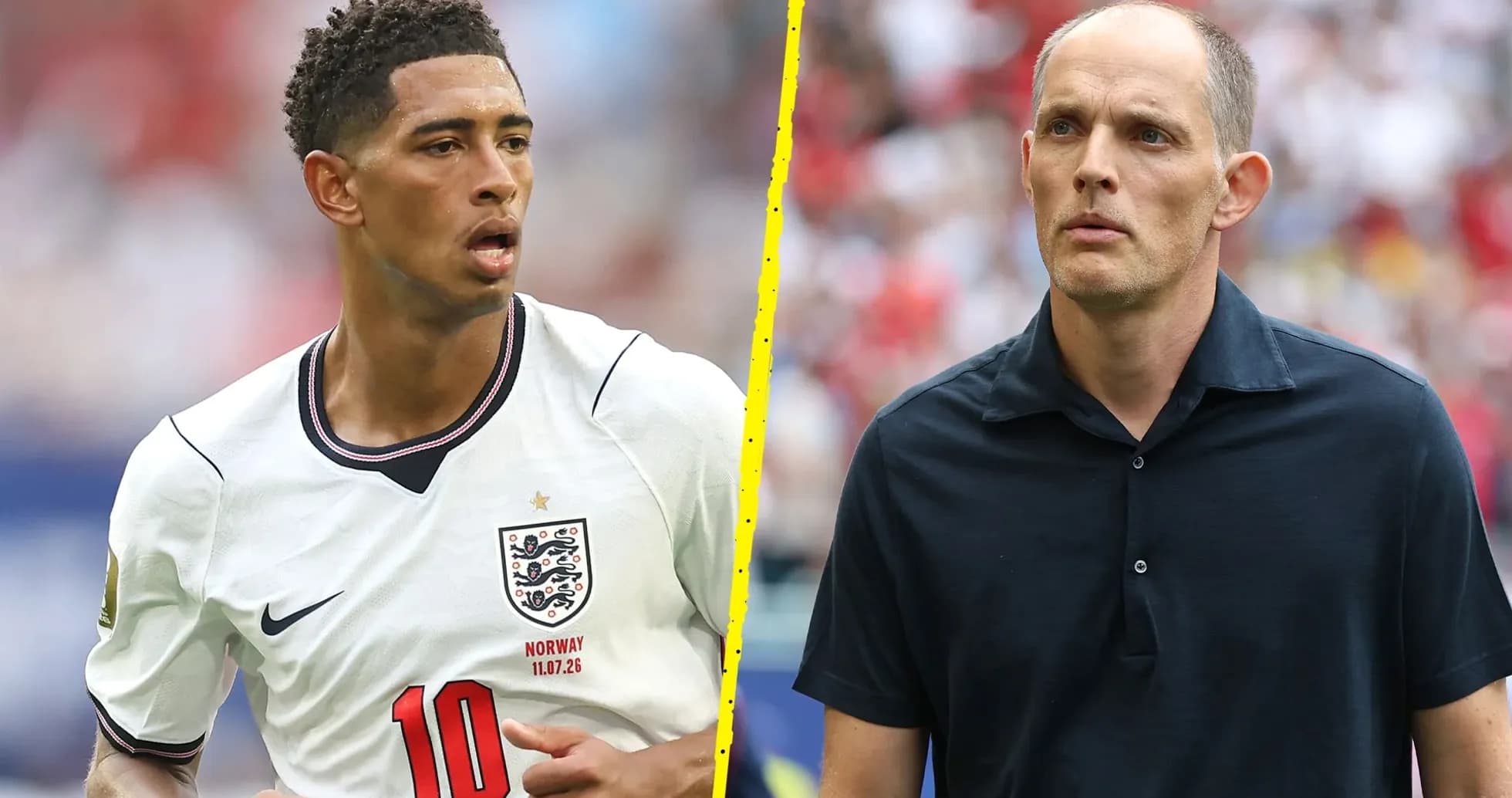
Thomas Tuchel walked into England’s semi-final week with a storm already swirling around his star man. He insists it is all noise.
The relationship between the German head coach and Jude Bellingham has been under the microscope for months, ever since Tuchel’s mother described some of the midfielder’s on‑field behaviour as “repulsive” last summer. An apology followed, the pair moved on, and the story cooled.
Until Norway.
England’s 2-1 extra-time win in the quarter-final should have been a clean step towards Argentina. Instead, Tuchel’s blunt post-match assessment – “not happy with the team performance” – landed badly with his talisman. Bellingham, exhausted and emotional after 120 minutes, fired back by calling for more positivity.
The exchange lit the touchpaper. Questions about fractures, about ego, about whether the bond between coach and leader of the dressing room had finally cracked.
Tuchel says that picture is wrong.
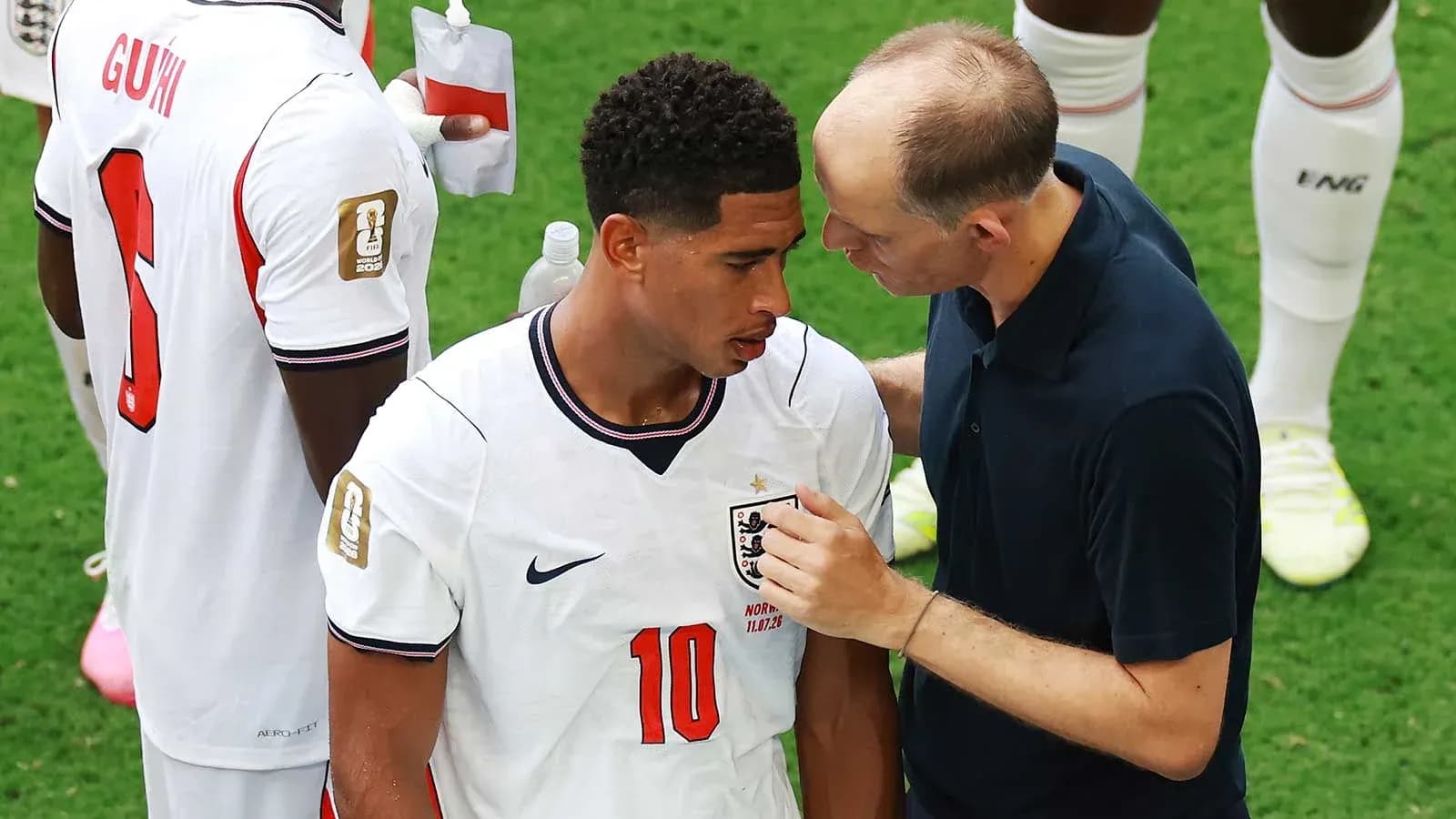
The morning after the Norway game, he gathered the squad for a meeting designed to lance the boil before it grew. No simmering resentment, no cold shoulders, just a manager determined to kill the narrative before a semi-final week turned toxic.
“I wonder who blows these things up, eh?” he told talkSPORT. “So, there is nothing to blow up and if it's blown up, it's blown up in the media, of course.”
He then went straight to the heart of Bellingham’s reaction. This was not a player plotting a rebellion, Tuchel argued, but a 23-year-old who had emptied himself in a knockout tie and then been handed a clipped version of his manager’s words.
“What do you expect of a player that just played 120 minutes and gave literally everything,” Tuchel said, “if you shorten the comment of his coach, if you don't tell him that ‘he was world class,’ if you don't tell him that ‘he has world class actions’?”
That was his key grievance. In his view, the question put to Bellingham stripped away all the praise and left only the sting.
“If you just cut all this and tell him ‘oh, your coach said you were sloppy’ what do you expect?” Tuchel continued. “Yeah, of course you get the comment that you get and then you try to blow it up and people try to create misunderstandings and cracks where no cracks are.”
For Tuchel, this is not a feud. It is the by-product of two ultra-competitive personalities operating at the sharp end of a major tournament.
“We come from the same place,” he said. “We come from being competitive and I am a competitive coach. I push this team to the limit and that was my assessment.
“I think the question was unfair in this moment towards Jude because he cut all the compliments out of my assessment and just asked about the critical points, so I can understand. What do you expect of a player that just gave everything and stands there in front of a microphone in a flash interview?”
The midfielder’s own comments carried a different edge. In the mixed zone, Bellingham appeared to jab at Tuchel’s modest playing background, suggesting “maybe he doesn't know what it's like to play in those kind of conditions” or to face a forward of Erling Haaland’s level.
It was a line that struck at an old fault line in the game: can a coach who never played at the elite level truly understand those who do?
Tuchel brushed it off. No wounded pride, no counterattack. Just a firm belief that his authority does not rest on a playing CV.
He insisted his connection with Bellingham has not been damaged, that the relationship is in fact stronger than ever.
“It's just what it is but we're as close as ever, and close more than ever before,” he said. “You can see that on the field. The energy and mentality in camp is excellent in the last days and we are ready to go for it tomorrow.”
Those words matter. Argentina await, and England cannot afford a split between the technical area and the heartbeat of their midfield.
Tuchel’s own journey feeds into this. He still carries the perspective of a man who never expected to stand in the England dugout at all.
“I would still like to have a player's career, that was my dream,” the former Chelsea manager admitted. “I never thought about being a coach, never dreamt about being a coach on that kind of level, so I think this is basically the dream. I just feel also on the sideline very humbled, and from time to time it just strikes me on the sideline right before the match ‘I couldn't play here on this occasion.’”
He knows he is an outsider in one sense – the coach who never made it as a player – but refuses to accept that as a weakness.
“I don't think that you have to play [to be a coach],” he said, before dropping the line that summed up his stance. “A funny quote, you don't have to be a horse to be a good jockey!”
The tension, the pride, the mutual edge between Tuchel and Bellingham now flows into one night against Argentina. If England reach the final, this episode will be remembered as background noise. If they fall short, those same words will be replayed and re-examined.
For now, Tuchel is betting that competitiveness, not conflict, defines their partnership when it matters most.