.svg&w=384&q=75 "Pitchgist logo")
Tottenham’s Thin Margin: VAR Agony and Title-Race Twist
Tottenham were a few minutes, and a few inches, from the perfect afternoon. Instead, they walked away from a draining 1-1 draw with Leeds United that felt like a punch to the gut and a warning about how thin their margin for error has become.
A Cagey Start, A Relentless Leeds
An unchanged Spurs side from the win over Villa made sense on paper. That performance had been one of their sharpest of the season. This, though, was a very different contest.
Any idea that Leeds might stroll through this, mentally checked out and “on the beach”, evaporated inside the opening 10 minutes. They were compact, aggressive, and well-drilled, snapping into tackles and closing off central lanes. Tottenham had the ball, but they rarely had time.
There were early flashes. Pedro Porro slid a gorgeous ball in behind for Richarlison, the kind of pass that slices through a mid-block and ignites a stadium. Richarlison got there, then wasted it with a heavy touch. It summed up his afternoon: endless running, relentless pressing, but a brutal lack of composure when it mattered.
Leeds carried a threat of their own. Midway through the half, Kinsky produced a staggering save to prevent Spurs from going behind, somehow clawing the ball away when it seemed destined to cross the line. It was the kind of intervention that can define a run-in.
Tottenham still carved out chances. A flurry of half-openings, loose balls in the box, shots blocked at the last second. They even saw a rare “penalty corner” decision go against Leeds – the sort of call referees seem to remember only once a season. Yet for all the volume of opportunities, very little came from controlled passing through central midfield. The pattern was familiar: wide overloads, direct balls, chaos in the box. Not much orchestration.
Right before the break, Spurs had a let-off. Leeds thought they had nicked a late first-half chance, only for VAR to confirm an offside. Without it, a penalty against Danso would have been very much in play.
At least, this time, Tottenham survived first-half stoppage time.
Tel’s Moment of Pure Violence
The tension broke after the restart with a strike of outrageous quality.
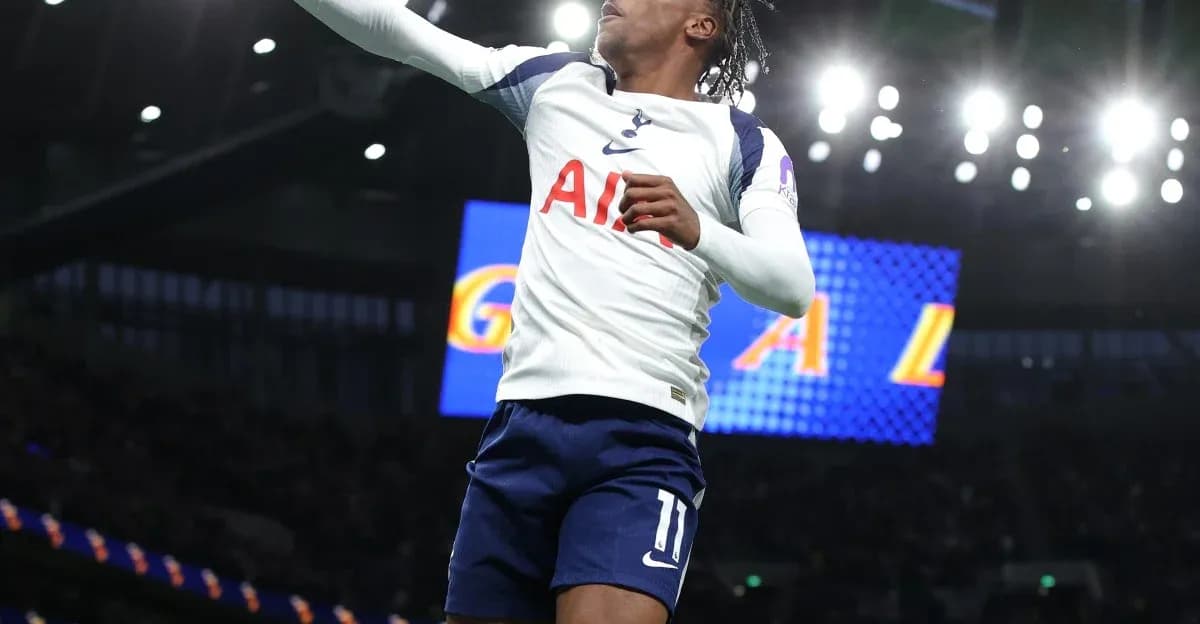
Mathys Tel, the game’s central figure in every sense, picked his spot from distance and detonated a rocket into the top corner. It was the kind of shot he attempts often, usually to groans and rolled eyes. This one was perfect. The ball flew, the net bulged, and for a few glorious seconds the stadium exhaled.
Spurs had the lead. They had momentum. They had Leeds wobbling.
Joao Palhinha almost doubled it with a sliding lunge that nearly forced the ball over the line, the sort of scruffy, sliding finish that would have lived long in the memory. Randal Kolo Muani continued his maddening season in miniature: frustrating overall, but capable of a moment of class, such as the deft touch that set up Richarlison, only for Pombo to lash over.
Tottenham kept Leeds under pressure. The xG told its own story by the end – 1.32 to 1.26 – a near dead heat, but with Spurs feeling they had the better of the chances. They just didn’t finish them.
VAR, Calvert-Lewin and a Twist in the Tale
Then came the incident that changed everything.
Tel, now defending his own penalty area, attempted an overhead clearance with his back to goal. Ethan Ampadu attacked the same ball, stooping in to head it. Tel never saw him. He connected with the ball – and Ampadu’s head.
The contact was clear. The intent was not malicious, but that doesn’t matter in the modern game. After a six-minute VAR check and a slow, inevitable walk to the monitor, the referee pointed to the spot. It was the correct call by the letter of the law, even if the sort that sparks furious debates about consistency. Would the same decision be given if it were Gabriel at the other end? That’s where the argument really lies.
Dominic Calvert-Lewin stepped up and buried the penalty. 1-1. All of Spurs’ earlier wastefulness suddenly felt costly.
Leeds grew again. Spurs, to their credit, did not fold. Kinsky, once more, kept their season intact with a spectacular save from Longstaff’s thunderous effort late on. That stop might yet define where Tottenham finish.
Maddison’s Return, More Controversy
There was at least one shaft of light for the home fans: James Maddison back on the pitch.
It didn’t matter that these were his first minutes of the season, that rust was inevitable. His introduction changed the mood. He found pockets, demanded the ball, and looked surprisingly sharp given the layoff.
Deep into an extraordinary 13 minutes of stoppage time – a figure that seemed plucked from nowhere – Maddison surged into the box and went down under a challenge that had Tottenham screaming for a penalty. It looked, on first and second viewing, like a nailed-on foul. The referee waved play on. VAR stayed silent.
Given the earlier call against Tel, the sense of injustice was raw. The handball against Micky, after he’d clearly been fouled and instinctively grabbed the ball expecting a whistle, only deepened the frustration.
Tottenham pushed to the final whistle. The winner never came.
A Draw That Tightens the Noose
Strip away the emotion and the table still looks manageable for Spurs. They remain two points clear of West Ham with two games left and hold a strong advantage on goal difference.
But this draw shifts the pressure. It means Tottenham now must at least match West Ham’s result away at Newcastle. That alone would be nerve-jangling. Then consider the venue for Spurs’ next assignment: Stamford Bridge, a ground where they have managed just one league win since 1990.
They didn’t play badly here. Last week against Villa, the ball went in. This week against Leeds, it didn’t. The margins are that fine.
The question now is simple and unforgiving: can this Tottenham side, wasteful but spirited, disciplined yet fragile in key moments, walk into Stamford Bridge and hold their nerve when the season is on the line?