.svg&w=384&q=75 "Pitchgist logo")
USMNT’s World Cup Outlook: Hope and Uncertainty
For the first time in a long time, Gio Reyna walked off a pitch with something tangible in his hands. A goal. His first of the season. His first club goal in nearly 18 months.
It came late in a 3-1 defeat for Borussia Mönchengladbach, a consolation on the scoreboard but a significant moment for a player who has lived off potential and memories for far too long. The finish itself won’t change his season, but it might just change his mood. And sometimes, this close to a World Cup, that’s enough to matter.
Reyna has been stuck on the margins for months. His last real surge of influence came in November with the USMNT. Since then, club minutes have dried up, and in March he was reduced to brief cameos in friendlies that were supposed to be stages, not scraps.
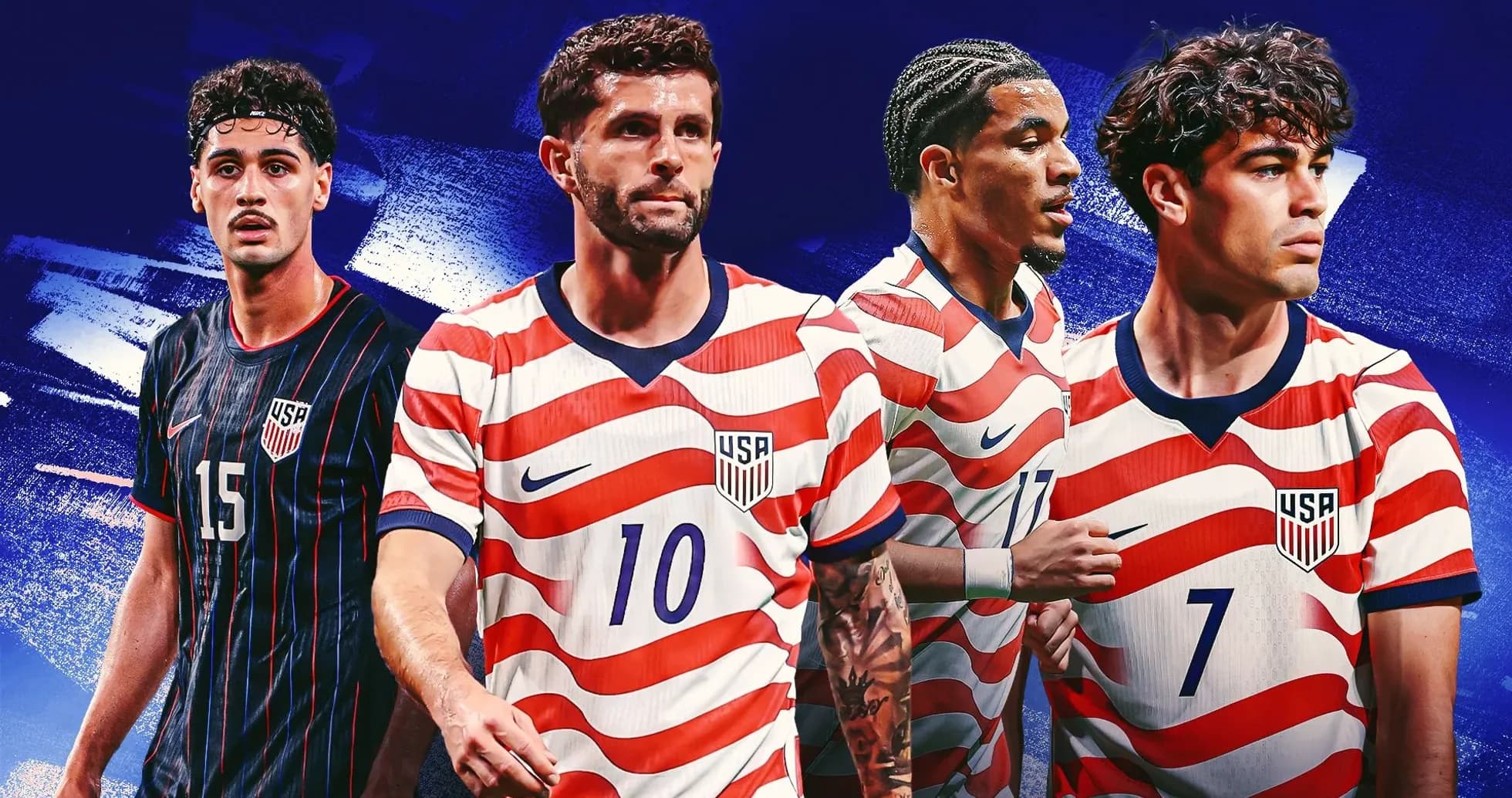
Yet his name never leaves the conversation. There’s a reason. Reyna brings a level of talent the U.S. simply doesn’t have in abundance. When he pulls on the national team shirt, the game tends to bend in his direction. The USMNT’s recent CONCACAF trophies arrived with Reyna heavily involved, and that is not a coincidence.
Still, he is not the spine of this team. Not yet. He’s the flourish, the extra layer, the player who raises the ceiling rather than builds the floor. If he hits form, the U.S. becomes more dangerous. If he doesn’t, there are enough options in his role that the structure shouldn’t collapse. And that’s where Malik Tillman comes in.
Tillman’s Timing Problem
On pure talent, Tillman belongs in any starting XI conversation. He’s shown that repeatedly. The problem isn’t what he can do. It’s how often he’s actually on the pitch to do it.
Since the March camp, Tillman has appeared in seven matches for Bayer Leverkusen. Total minutes: 77. In only two of those games did he even cross the 10-minute mark. When the game opens up behind the striker, the club has leaned on Nathan Tella and Ibrahim Maza instead.
The timing could hardly be worse for Tillman. He remains firmly in the mix to start for the USMNT, but that case would be far stronger if he were arriving with a run of goals and assists. His last strike came on April 4, a two-minute cameo against Wolfsburg that nudged his tally to six goals in 1,615 minutes this season. Respectable numbers overall. Less convincing when recent weeks show him drifting to the periphery.
For the U.S., there is at least one safety net. Weston McKennie’s form gives the coaching staff a different route. McKennie can step into that advanced midfield slot alongside Christian Pulisic if Tillman’s lack of minutes becomes too glaring to ignore.
Pulisic’s Drought and His Burden
Pulisic has addressed the obvious. He hasn’t scored in 2026. It frustrates him. He says he isn’t worried. His point is simple: what he does in the biggest games this summer will define his year, not the dry spell in Milan.
But the reality is stubborn. World Cup contenders want their stars peaking, not searching. Right now, no one can claim Pulisic has been at his best.
The U.S. will still build around him. He isn’t the only factor in how far this team can go, but he is one of the decisive ones. A star. A leader. The player who so often sets the tone with his aggression, his willingness to take the ball when others shy away from it.
They need his output, yes, but just as much they need his presence. His personality. His ability to drag the tempo up a notch when the game starts to drift.
There is still time for him to catch fire. The calendar allows it. But every scoreless week turns the volume up a little more on the outside noise. It shouldn’t become panic, given the context of his season and role, yet the doubts are no longer whispers.
Center-Back Uncertainty
Move back a line and the questions grow sharper.
Chris Richards feels like the one certainty at center back. He has the trust, the form, the profile. After that, the picture blurs.
Tim Ream brings a wealth of experience, but that experience cuts both ways. Is he now on the wrong side of the curve, especially coming off a recent injury that may or may not linger? Mark McKenzie has impressed in Ligue 1, but his USMNT career has included the kind of isolated lapses that cost you at the highest level. Auston Trusty has finally settled in Europe with Celtic, yet six caps is a thin résumé for a tournament of this magnitude.
Miles Robinson remains in the frame, but his form will need to be sharp when camp opens. Noahkai Banks hovers as a possible late answer, the kind of player who could arrive, seize a spot, and change the dynamic in a matter of weeks.
Usually, by this stage of a cycle, the center-back hierarchy is etched in stone. Not this time. Here, it may come down to something as simple and as brutal as who is in rhythm when the World Cup kicks off.
Midfield Hit Hard
If there was one area that looked relatively stable not long ago, it was the midfield. That comfort has vanished.
There was a strong argument that either Johnny Cardoso or Tanner Tessmann could start this summer. For at least one of them, that chance has gone.
Cardoso’s season peaked with a Champions League semifinal. Then came the setback. Atlético Madrid announced an ankle sprain, and the clock immediately started ticking. It ran out on Monday, when the club confirmed he would need surgery, ruling him out of the World Cup entirely.
Tessmann’s situation is less severe but still unsettling. Lyon described his issue as a muscle strain that would sideline him for a spell, though he is expected to recover in time for the tournament. Even before the injury, though, he had drifted in and out of the Lyon lineup over recent months.
Those two knocks have ripped open a hole next to Tyler Adams. Even at full fitness, both Cardoso and Tessmann carried their own questions, but their performances in Europe this season had at least narrowed the field of doubt. Now, the U.S. faces the very real possibility of entering a World Cup with its midfield depth stretched thin in the area where elite teams usually look strongest.
All good sides start from the middle. Right now, as the final squad looms, the USMNT is staring at a summer where the heart of the team might be its most fragile part.