.svg&w=384&q=75 "Pitchgist logo")
Tottenham's Fight for Survival: A Draw Against Leeds
Tottenham flirted with daylight. They finished clinging to survival.
For a few brief minutes after half-time, it looked like a decisive afternoon in north London’s fight against the drop. Mathys Tel, the teenager carrying an ever-growing weight of expectation, stepped in from 20 yards and wrapped his right foot around the ball. It bent gloriously into the far corner, a finish of pure confidence, the kind that usually changes seasons.
Tottenham were on the brink of moving four points clear of 18th-placed West Ham. The stadium exhaled. The table, finally, seemed to tilt in their favour.
Then Tel undid it all.
From hero to hazard
The turning point arrived not through Leeds brilliance, but Tottenham chaos. Protecting a fragile 1-0 lead, Tel went for an audacious bicycle kick inside his own penalty area. It was the wrong idea in the wrong place at the worst possible time.
He caught Ethan Ampadu instead of the ball. VAR stepped in. The replay left little room for debate: reckless, high, and clumsy. The referee pointed to the spot after the review, and the mood inside the ground flipped in an instant.
Dominic Calvert-Lewin, ice-cold from 12 yards, buried the penalty. Leeds, who had chased and harried all afternoon, had their reward. Tottenham, who had one foot out of danger, were dragged straight back into the mire.
From there, the tension suffocated the game. Every misplaced pass felt heavier, every tackle more desperate. Spurs did not collapse, but they wobbled badly enough that a point felt like a let-off by the end.
Kinsky saves the day
If Tel’s error opened the door to disaster, Antonin Kinsky slammed it shut.
Leeds sensed vulnerability and pushed for a winner, and Tottenham’s defensive line retreated, almost inviting trouble. In the dying stages, with the home side stretched and nerves shredded, Leeds carved out the moment they wanted.
Kinsky produced a stunning late save to deny them. Reflexes, strong wrists, and a presence that screamed authority at a time when his defenders were losing theirs. That stop, as much as Tel’s strike at the other end, defined the afternoon.
Tottenham walked away with a point that felt both frustrating and, in the end, absolutely vital.
De Zerbi fumes but bites his tongue
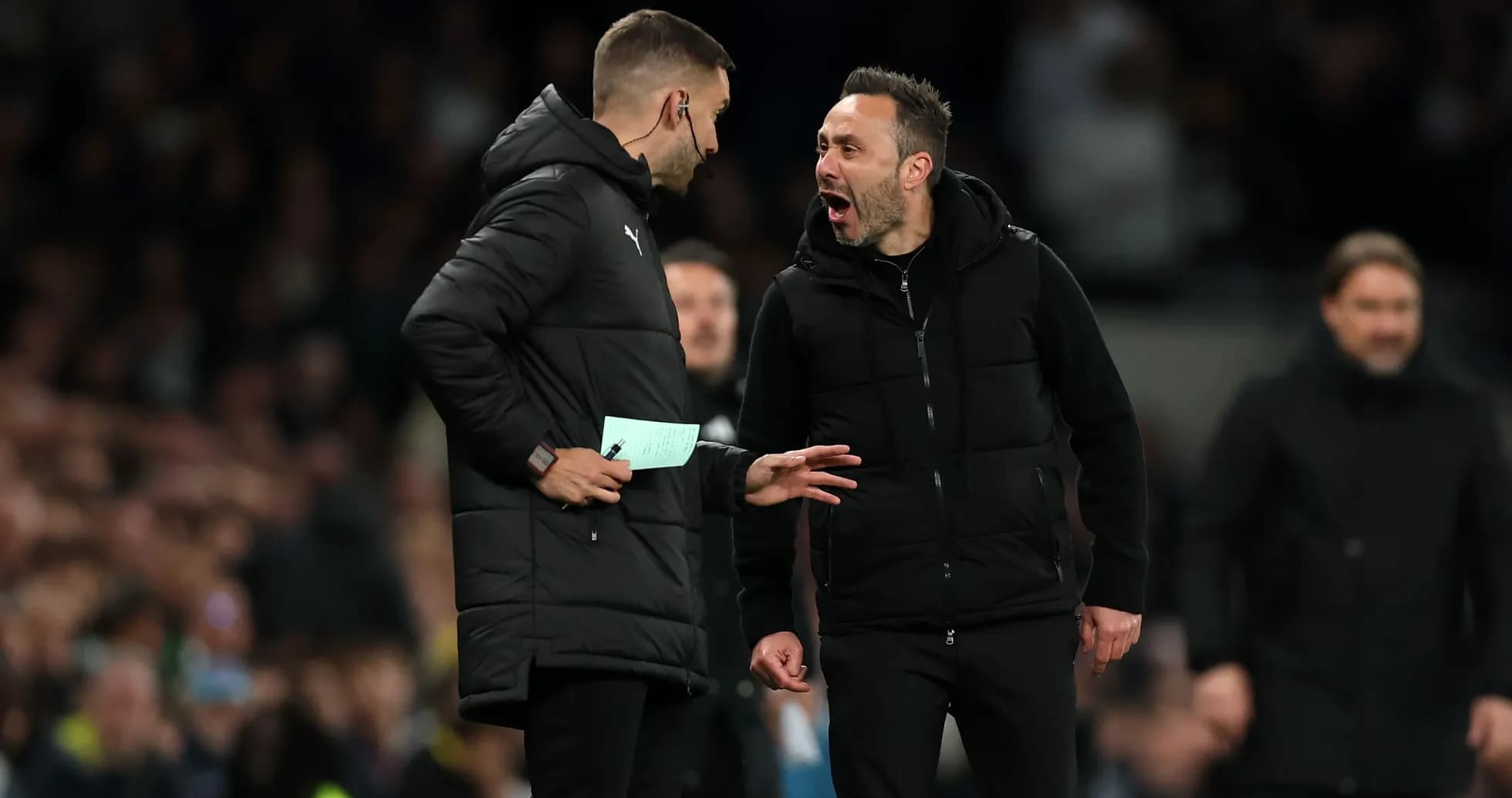
On the touchline, Roberto De Zerbi lived every decision. By full-time, his irritation with the officiating simmered close to the surface.
The flashpoint came late on, when James Maddison tumbled in the box and the home crowd roared for a penalty. VAR checked it. Nothing given. No trip to the monitor, no change of mind. Just a wave of play on that left Tottenham’s bench incredulous.
Speaking afterwards, De Zerbi chose his words carefully, even as he made his feelings clear. He referenced the controversy from West Ham’s defeat to Arsenal, saying the VAR call in that match had been a “clear” foul. Here, he admitted he had not watched the Maddison incident back, saying it “maybe yes, maybe no” should have been a penalty, and insisting he did not want to dive into a full-blown argument over refereeing.
What he did highlight was the referee’s demeanour. De Zerbi suggested the official “was not calm today,” hinting that the pressure from the previous day’s VAR storm might have seeped into this game. Then, almost in the same breath, he softened the blow, calling the referee “good on the pitch” and insisting there was “no problem” as he turned his gaze to the final two fixtures.
It was a manager walking a tightrope: protecting his team, airing his frustration, but wary of the fallout.
A point gained or two lost?
Strip away the emotion and the table tells a stark story. Tottenham sit just two points above the relegation zone. This was a chance to punish West Ham’s controversial loss to Arsenal and create real breathing space. They did not take it.
De Zerbi, though, clung to the bigger picture. He pointed to eight points from the last four games, a run that has at least stopped the bleeding. He praised his players’ display, and he made a point of crediting Leeds, calling their performance “great” and backing them to show the same intensity when they travel to West Ham on the final day.
He knows, though, that plaudits won’t keep Tottenham up. Points will.
Maddison’s return and a brutal run-in
There was one clear shaft of light for Spurs: James Maddison looked like James Maddison again.
Making his first appearance since a major pre-season knee injury, the playmaker brought craft and control back into Tottenham’s midfield. He found pockets of space, demanded the ball, and tried to drag his side up the pitch when panic started to creep in. His sharpness will matter in the weeks ahead.
Yet his return also highlighted the imbalance in this Tottenham side. Going forward, they can hurt teams. At the back, they remain fragile. Tel’s reckless penalty concession was not an isolated moment of naivety; it was a symptom of a defence that too often makes the wrong decisions under pressure.
That cannot continue, because what comes next is unforgiving.
Tottenham now head to Chelsea on May 19, a trip that carries enormous jeopardy. Stamford Bridge is no place for a crisis of confidence. Drop more points there and Spurs could easily slip into the bottom three, depending on how their rivals fare.
Two games left. No margin for error. A club of Tottenham’s stature stands on the edge of a trapdoor that once felt unthinkable.
They have the talent to step back from it. The question is whether, under the brightest and harshest of lights, they can finally stop sabotaging themselves.