.svg&w=384&q=75 "Pitchgist logo")
Tottenham's Season of Reckoning: Injuries and Internal Change
Tottenham did not just flirt with disaster this season. They lived with it, right up until the final day.
Two points. That was the gap between a club that talks about Champions League nights and a club staring at the Championship. Survival came with a tremor rather than a roar, and it has triggered something rare in north London: a full-scale internal reckoning.
This is not a tidy “review” in name only. Spurs are pulling apart almost every strand of their football operation – from the psychology of a brittle dressing room to the science of a retractable pitch that has coincided with a brutal run of serious injuries.
De Zerbi’s rescue act buys time – and leverage
The season only stopped being a full-blown catastrophe because Roberto De Zerbi arrived and yanked the wheel.
Eleven points from the final six games dragged Tottenham clear of the trapdoor. That late surge did more than preserve Premier League status; it gave De Zerbi immediate authority inside a club that has lurched from one head coach to another.
Four different head coaches in 12 months have left scars. Players pushed to impress the new man, then the next one, then the next. Training loads changed, demands shifted, and the injury list ballooned. It became the story of their season.
Now, with De Zerbi in the building, Tottenham are trying to turn the chaos into a line in the sand.
Lange under pressure as power shifts upstairs
One of the first casualties of that chaos may be sporting director Johan Lange.
His position is under serious threat after a wretched year in which the club changed head coach four times and staggered through a relegation scrap. The Dane may yet be moved into a supporting or handover role if, as expected, Spurs recruit a new “world-class” sporting director to reshape the football department.
Non-executive chairman Peter Charrington has already signposted that shift, confirming plans to “modernise our football operation, with a significant focus on raising standards across medical and performance”. In other words: the way Tottenham have been run is no longer acceptable, even to those at the top.
A club broken by injuries
Strip away the tactical debates and recruitment rows and one brutal truth remains: Tottenham’s season was shredded by injuries.
They suffered more injuries than any other Premier League club, and not the minor kind. Key players missed months. The squad never settled. Training-ground plans were ripped up week after week.
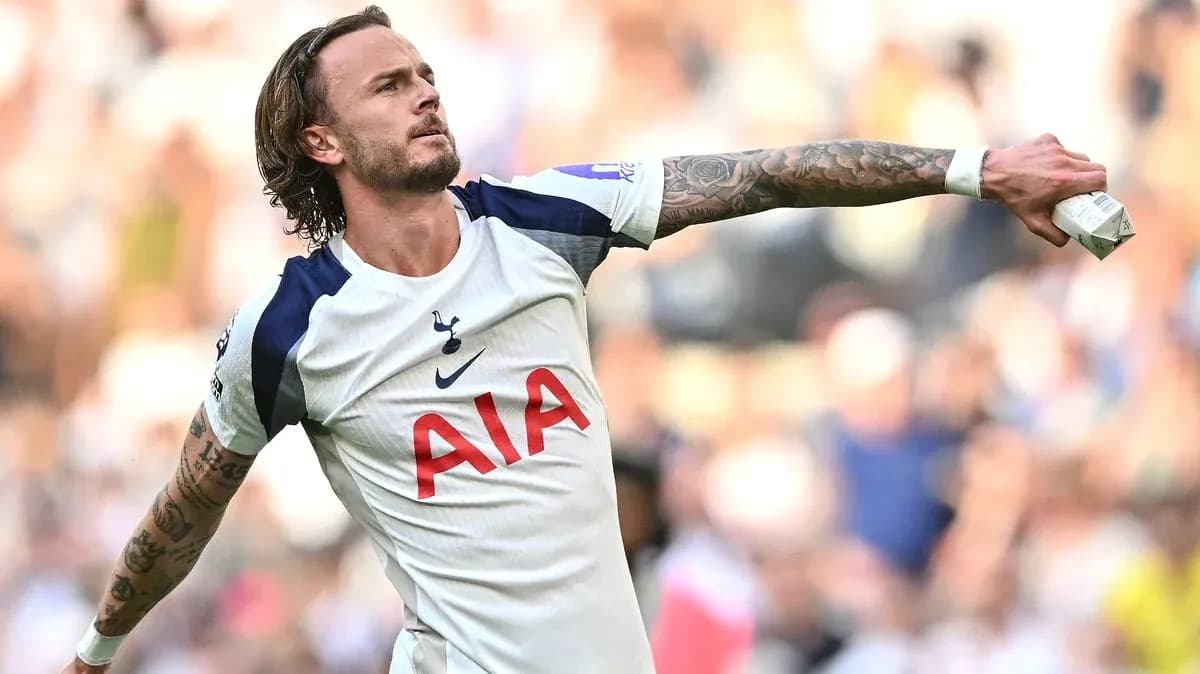
James Maddison, who has only just returned after a partially torn ACL finally gave way last summer, did not hide his frustration.
“Our situation with the injuries has been worse than any other club,” he said after the win over Everton. “People try and say ‘Oh, but we’ve got this and that’, but ours is astronomical, and we need to look at why that is.”
That “why” has become the central question driving Tottenham’s internal investigation.
Enter Dan Lewindon: the fixer-in-chief
The man tasked with finding answers is Dan Lewindon, the new performance director who arrived in February from the City Football Group.
He walked into Hotspur Way the day before Thomas Frank departed, inheriting a club in disarray. What he found was not just a team with too many players in the treatment room, but a medical and performance structure that had been ripped up and rebuilt too often.
For more than 20 years, Geoff Scott oversaw medicine and sports science at Spurs. That era of stability ended when the New Zealander left in 2024 for Nottingham Forest. His departure was followed by rapid turnover: director of performance services Adam Brett and head of sports science Nick Davies both exited after only a year.
Nick Stubbings arrived last summer from Brentford as the men’s team medical lead, part of a wave of former Bees staff crossing the capital. But the churn left fault lines everywhere.
Lewindon, with a background across elite football, tennis and rugby, has been told to close them. Inside the club, there is a growing belief that he can finally drag Tottenham’s medical and performance operation to the level demanded by De Zerbi’s intense style.
The Italian has already built a strong working relationship with him. The pair speak regularly about what needs to change – not in vague terms, but in the day-to-day details of how players train, recover and return from injury.
Is the pitch part of the problem?
One area under the microscope is unusual, but impossible to ignore: the pitch itself.
Tottenham Hotspur Stadium’s retractable surface, which slides under the south stand to make way for NFL games and concerts, has coincided with a spate of ACL injuries. Five at Spurs in recent years alone. Too many, by the club’s own admission.
Real Madrid, who also use a retractable pitch, have suffered a similarly worrying volume of injuries since installing theirs. The parallel is uncomfortable.
Spurs have already commissioned early external, independent testing on matchdays. Those tests, so far, show no measurable difference in bounce or spring between the stadium surface and the turf at Hotspur Way. That has not closed the file. More detailed analysis is planned, stretching over time, to see if subtler factors are at play.
Not every ACL can be traced back to a surface. Some are simply cruel luck, like those suffered by Xavi Simons and Wilson Odobert. The handling of Xavi’s injury at Molineux, when he wanted to continue but could not, has been reviewed internally and backed. Staff believe they took the right precautions and avoided further damage.
Still, coincidence only explains so much. Tottenham want proof – one way or the other.
Killing off ‘Spursy’: the psychological reboot
The physical side is only half the battle. The other half lives in the head.
“Spursy” has become a lazy punchline in English football, but inside the club it represents something more corrosive: an expectation of collapse. A fear that, when pressure rises, Tottenham will find a way to unravel.
Lewindon has been central in driving a response. Spurs are recruiting a new lead psychologist to work full-time with the players and the staff around them, embedding mental preparation into the everyday rhythm of the club rather than treating it as a bolt-on.
De Zerbi, for his part, sees himself as part-coach, part-psychologist. Those close to the dressing room talk about frequent one-to-one meetings, constant attempts to restore belief, and the use of video clips – not of errors, but of each player’s best moments, both for Spurs and previous clubs.
In that tense run-in, those methods mattered. He prioritised the individual over the short-term chase for a win, resisting pressure to rush players back before they were ready. Medical staff have been struck by his consistency. Clear messages. No last-minute gambles with half-fit stars.
A new model: smaller pods, deeper knowledge
The next phase of Lewindon’s overhaul targets how Spurs manage injuries and recovery on a daily basis.
The plan is to move towards a pod-based model. Instead of physios and sports scientists spreading themselves thin across a large group, four to six players will be clustered together with a dedicated team around them. That staff will live with the detail: the player’s position, physical profile, injury history, and even their temperament.
Like teachers with fewer students, the idea is that specialists will understand each player more deeply. That should sharpen decisions about training loads, return-to-play timelines and individual conditioning.
The approach dovetails neatly with De Zerbi’s belief that elite performance depends on understanding the person as much as the player – their family life, their emotional state, their role on the pitch. He wants a club that supports individuals, not just a squad number on a whiteboard.
Winning back trust in the treatment room
Another problem sits quietly in the background: trust.
Some Tottenham players have, at times, leaned more heavily on staff from former clubs or their national teams than on the people at Hotspur Way. That is not unusual in the modern game, where top players often employ their own performance experts, but it can fracture communication and blur responsibility.
Spurs are trying to pull those threads together. The aim is a single, agreed plan for each player – one that club staff, external specialists and international medics all buy into. No mixed messages. No competing agendas.
Once Lewindon’s review is complete, changes behind the scenes are expected. New faces, fresh ideas, tighter integration between departments. Recruitment may also shift, with a stronger emphasis on signing more robust players suited to De Zerbi’s high-energy demands.
Too many managers, too much strain
Inside the club, there is also a blunt acceptance that the revolving door in the dugout has contributed to the injury crisis.
Every new head coach arrives with different training methods, different intensities, different expectations. Players, eager to impress, push themselves harder. Margins are small at the top level; those extra sprints, those extra sessions, can tip a body over the edge.
Tottenham know they cannot repeat that cycle. Stability on the touchline is now a medical issue as much as a football one.
A club at a crossroads
Spurs staggered to safety this season. That is the unvarnished truth.
They have responded not with spin, but with scalpel work: a forensic look at why so many players broke down, why belief drained away, why a club of their resources ended up glancing nervously at the bottom three.
The changes Lewindon and De Zerbi are driving will not transform the picture overnight. There is no magic switch for soft-tissue injuries or brittle confidence.
But if Tottenham are serious about shedding that “Spursy” tag and climbing back towards the elite, this is the moment. Either the course correction takes hold – fewer injuries, stronger minds, a squad built to withstand the strain – or this season’s escape will feel less like a warning and more like a preview.