.svg&w=384&q=75 "Pitchgist logo")
Sweden's World Cup Journey: Potter, Gyökeres, and a Team Reborn
Sweden should not be here. Not after that start, not after that chaos.
One point from the first four qualifiers under Jon Dahl Tomasson, a flat 1-0 defeat in Kosovo and a sacking in October 2025 that felt less like a shock and more like an overdue mercy call. A campaign that had drifted towards irrelevance suddenly needed a saviour.
They found one in a familiar face.
Potter returns to his second home
When Graham Potter walked back into Swedish football, it felt less like a new appointment and more like a homecoming. This was the coach who had taken Östersund from the Swedish fourth tier to the Allsvenskan, lifted the cup and stunned Arsenal in Europe. Sweden knew him. He knew Sweden.
He also knew what had to change.
Out went the muddled identity. In came something far more recognisable: the old Swedish steel. Compact lines, a stubborn back line, and the kind of counterattacking menace that has underpinned the country’s best tournament sides.
Potter had always said he preferred a back four. When the pressure cranked up in the Nations League playoffs, he ditched that idea and went with a 5-3-2. Safety first. Silence the chaos at the back, then let the forwards carry the noise.
The shift worked.
Nations League lifeline – and a new talisman
The Nations League handed Sweden a back door into the World Cup qualifying process. They barged straight through it.
In Spain, against Ukraine in the semi-final, the plan clicked. Sweden were organised, disciplined, and ruthless when it mattered. Viktor Gyökeres tore the game away from Ukraine almost single-handedly, scoring a hat-trick in a 3-1 win that felt like a statement: this was his team now.
The final against Poland was different. Ugly at times. Poland were better for long spells, controlling the ball, asking questions. Sweden hung on.
Then the clock hit 88 minutes.
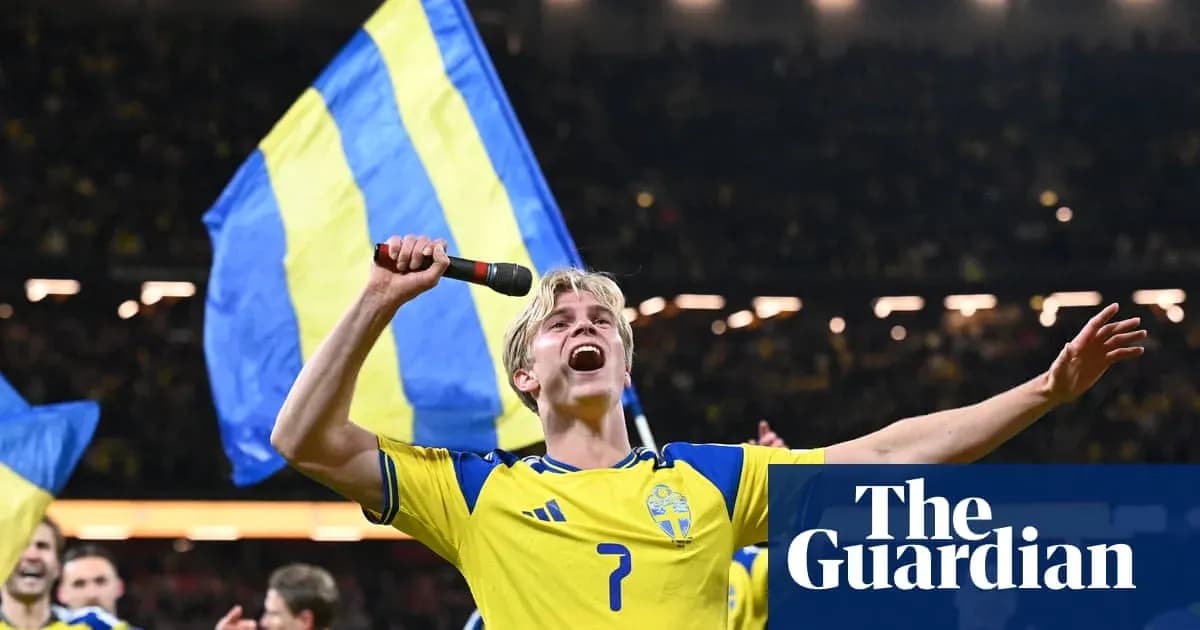
Gyökeres again. A late winner in a 3-2 thriller that flipped a nervous night into one of the great modern Swedish football memories. The Arsenal forward’s celebration – borrowed from Bane in The Dark Knight Rises – spread across the country, recreated in living rooms, pubs and town squares. A nation suddenly had a new hero to cling to.
Potter, usually measured, sounded almost overwhelmed as he tried to process it all. He spoke of an out-of-body experience, of watching the goal and seeing the entire bench sprint past him, of wondering if he was really there. For a man who has worked at Chelsea and West Ham, this, he said, was the best night he had ever had in football.
Sweden, who had taken just two points from six games in their original qualifying group, were going to the World Cup.
From plea to project: Potter’s perfect fit
Potter’s appointment did not come out of nowhere. In October 2025 he had gone on Swedish outlet Fotbollskanalen and effectively issued a come-and-get-me plea.
“I have feelings for Sweden,” he said. He talked about loving the country, loving Swedish football, and described the national team job as an incredible opportunity.
Days later, he had it.
The start was not spectacular. No wins in his first two matches. Yet the Swedish FA were convinced enough by the direction of travel to hand him a contract extension to 2030 as early as March. They saw the fit: a coach fluent in Swedish, emotionally tied to the country, rebuilding his reputation after bruising spells in England, now fronting a long-term project with a squad that mixes hardened pros and emerging talent.
This World Cup is the first major test of that vision.
Life without Kulusevski
The draw has given Sweden a group that could tilt either way: Tunisia, Netherlands and Japan. It is the kind of mix that punishes any lapse – technical, tactical or mental.
They will have to navigate it without their captain.
Dejan Kulusevski’s absence in North America looms over everything. His influence on this side cannot be overstated: creativity, leadership, the ability to knit attacks together when games become stretched and tense. Sweden lose their most natural reference point between midfield and attack.
On top of that, Alexander Isak arrives under a cloud of doubt. The Liverpool striker – who became the most expensive transfer in Premier League history when he left Newcastle for £125m last year – has struggled to truly ignite at Anfield. His form and fitness remain question marks, even if he did come off the bench to score in a sobering 3-1 defeat to Norway on 1 June, a match in which Sweden were largely outplayed.
So the spotlight shifts, fully and unapologetically, onto Gyökeres.
The Arsenal forward had his own teething problems in north London but has found his rhythm at just the right time. He scored four of Sweden’s six goals across the two playoff ties and now stands not just as their finisher, but as their emotional centre. This is his tournament as much as Potter’s.
A baron at the back and a captain in the shadows
Behind Gyökeres, the supporting cast has its own intrigue.
Gustaf Lagerbielke is the name that keeps surfacing. The Braga defender, once of Celtic, delivered a towering performance in the playoff final against Poland: a thunderous header at one end, a disciplined display that kept Robert Lewandowski quiet at the other. That alone would have been enough to push him into the spotlight.
Then there is the footnote that sounds like fiction: Lagerbielke is a baron and 254th in line to the Swedish throne. Royal blood, rugged defending, and a potential move to one of Europe’s big five leagues on the horizon. A strong World Cup could accelerate everything.
Further up the pitch, Jesper Karlström carries a different kind of story.
The Udinese captain is a late bloomer, a player who needed time to establish himself at Djurgården before moving to Lech Poznan and then on to Serie A. He has spoken openly about his battles with gambling addiction during his Djurgården days, and about how the club and his family helped him through it.
On the pitch, he is pure old-school holding midfielder: strong in the tackle, calm on the ball, able to dictate tempo when the game threatens to run away. At 30, his composure will be vital in a midfield that could feature the younger legs of Yasin Ayari and Lucas Bergvall. Against the technical flair of the Netherlands and the relentless, intricate energy of Japan, Karlström’s ability to slow things down and steady those around him may decide whether Sweden survive the group.
The travelling wall of yellow and blue
If Sweden arrive with tactical caution, their fans will bring anything but.
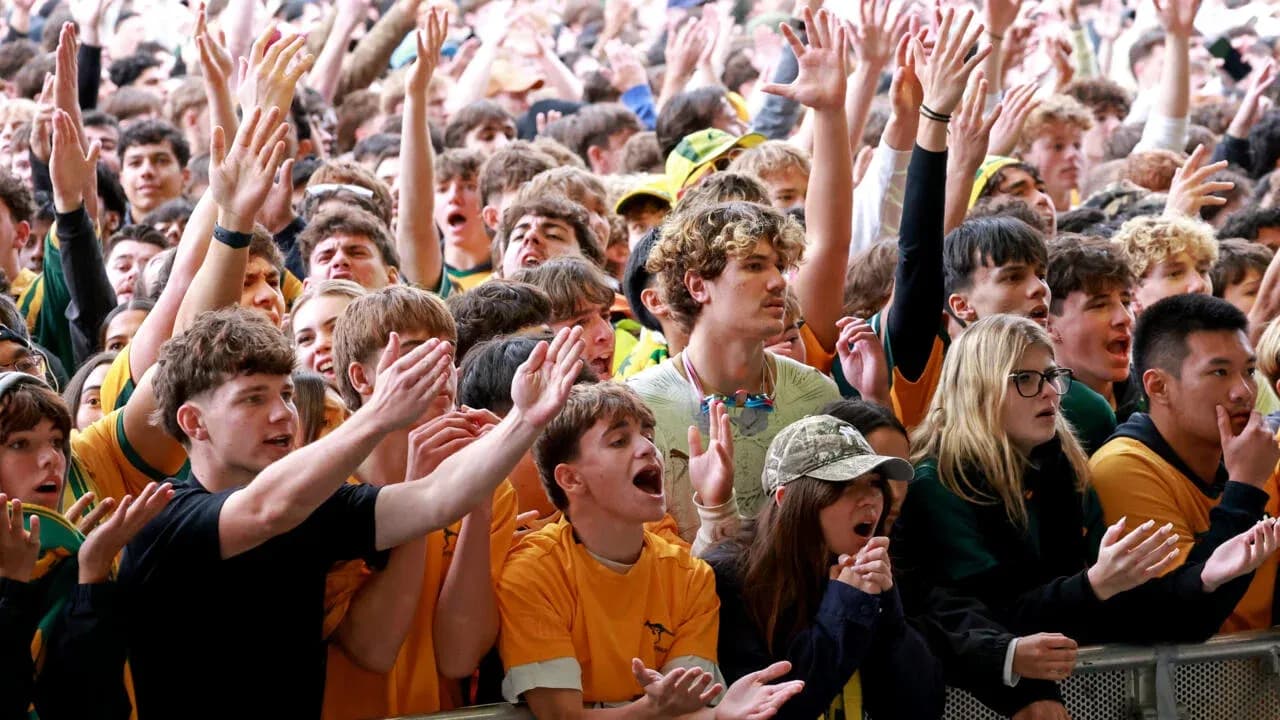
Blågult supporters travel in numbers and volume. Tournament after tournament, they turn host cities into pockets of yellow and blue, loud but approachable, more likely to share a joke than start a fight.
Their soundtrack is “Kanna på”, a raucous ode to beer pitchers that never stop arriving. The lyrics promise: “We are coming with 100,000 men.” It is part threat, part party invitation. North America will not see a Viking invasion, but it will see a sizeable Swedish contingent turning stadiums into temporary outposts of Stockholm, Gothenburg and Malmö.
A strange American subplot
Sweden’s relationship with the United States carries its own strange footnote.
In 2017, Donald Trump stood on a stage and told a rally to “look what happened in Sweden last night” while talking about immigration and terrorism. Sweden, confused, looked around. Nothing dramatic had happened the night before.
Trump later said he was referring to a TV report on Fox News, which did little to clear the fog. Swedish newspaper Aftonbladet responded by listing what had actually happened that day: Owe Thörnqvist, a famous singer, had technical problems in rehearsals. A man set himself on fire in central Stockholm. Roads in northern Sweden were closed due to harsh weather.
That was it. No attack. No crisis. Just a bizarre moment that briefly dragged Sweden into the heart of America’s culture wars.
Now Sweden return to the US on their own terms, with a coach who rebuilt his name in their country, a striker wearing a comic-book villain’s celebration, a baron in defence and a fanbase ready to flood the stands.
From one point in four games to a World Cup in North America, the question is no longer how they got here.
It’s how far this unlikely, Potter-shaped revival can go.