.svg&w=384&q=75 "Pitchgist logo")
Mauricio Pochettino's Bold Contract Offer with US Soccer Through 2030
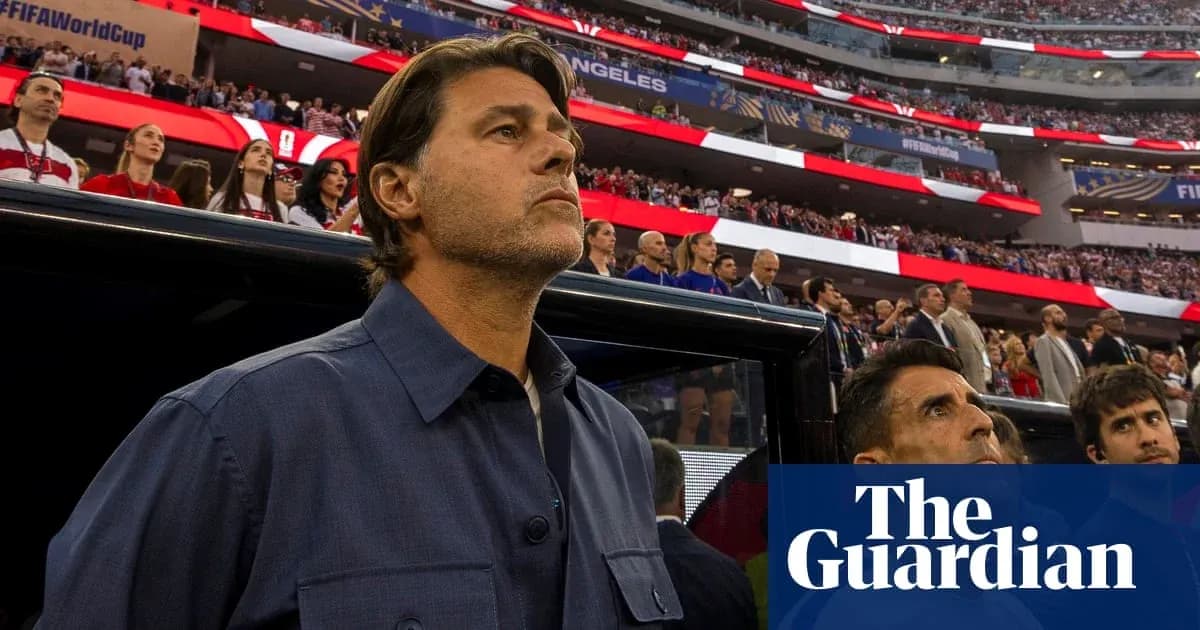
Mauricio Pochettino has a contract on the table that would tie him to the US men’s national team through the 2030 World Cup, a bold offer that underlines just how far US Soccer is prepared to go to keep him.
Multiple sources familiar with the talks confirmed the extension proposal, speaking on condition of anonymity because they are not authorized to discuss the negotiations publicly. The offer has been months in the making, the culmination of a three-month dialogue between Pochettino and the US Soccer Federation that has quietly run in parallel with the team’s World Cup campaign.
This is not a routine renewal. It is a statement.
A coach in demand, a federation on the front foot
Pochettino’s future has hovered over this World Cup run almost from the moment the tournament began. The former Tottenham Hotspur manager has never hidden the fact that he is a wanted man. Reports in late May linked him with talks with Serie A giants Milan, a reminder that his reputation in the club game still carries serious weight.
Publicly, Pochettino played those links down, offering little more than a coy smile when pushed about Milan’s interest. US Soccer CEO JT Batson, though, chose to meet the speculation head-on. He acknowledged that the federation had received “many inquiries” about Pochettino’s availability and made it clear that the coach had options even before he took the US job.
“[Pochettino], and the entire team, has been incredibly transparent [through] the entire process,” Batson said in May. “He had standing offers from other places to come [when we hired him initially], and he wanted to be here. He’s a big believer in what we’re doing at US Soccer. He’s a big believer in soccer in America, and he’s a big believer in this men’s team.”
That belief now has a number attached to it. The most recently available figures place Pochettino among the highest-paid coaches in world football, on a base salary of around $4m a year, with bonuses pushing that total significantly higher. Extending him through 2030 would mean committing to that level of investment — and likely more — across two full World Cup cycles, including the tournament the US will co-host in six years’ time.
The Athletic first reported the existence of the contract offer. The message from Chicago is unmistakable: US Soccer wants stability, and it wants Pochettino at the heart of it.
World Cup performance changes the conversation
If the first 22 months of Pochettino’s tenure have felt uneven at times, the World Cup has sharpened the picture. His reign has been described as a mixed bag, but there is no arguing with the numbers on the biggest stage.
The US have delivered their best-ever group-stage performance at a World Cup under his watch. They swept aside Australia and Paraguay to clinch top spot in the group with a game to spare, then pushed Turkey in a hard-fought defeat against a side that had already been eliminated but refused to roll over.
The pressure of the moment, the scrutiny of his selections, the tactical tweaks under the glare of a global audience — Pochettino has lived all of it before at club level. Internationally, this is new ground. He had never coached a national team before taking the US job, a leap into a different rhythm of football, with fewer training sessions, fewer games, and far less margin for error.
So far, on the evidence of this tournament, he has adapted.
A last-32 clash with Bosnia and Herzegovina now awaits. By reaching the knockout rounds, the US have positioned themselves just two wins from matching their best modern-era World Cup finish. That proximity to history gives every decision around Pochettino’s future an extra edge. Lock him in now, or wait and see how far this run goes?
Pochettino has been clear about his own timeline. He will not decide until the World Cup is over. No distractions. No premature declarations.
Legacy, not just a contract
For all the noise around salaries and suitors, Pochettino has repeatedly framed his decision in terms of legacy and connection, not just trophies or pay packets.
“We told the federation we are open,” he said during a media roundtable this week. “But we don’t want to distract when all the energy needs to be with my players ... If the American people start to show passion in our sport too, why not be here being part of something that can create a legacy? For me, the most important legacy is the connection between the national team and the fans.”
That line matters. It hints at what might keep him in the job even when Europe inevitably comes calling again. Pochettino sees a project in the United States — a growing player pool, a home World Cup on the horizon, and a fanbase that is still discovering how it wants to live this sport.
US Soccer has tried to match that vision with concrete moves. The federation has opened a sprawling $250m training facility in Atlanta, a bricks-and-mortar symbol of its renewed ambition. Hiring Pochettino in the first place was another aggressive swing, a move designed to signal that the US would no longer be a stepping stone or a development lab for unproven coaches, but a destination for elite managerial talent.
Now comes the real test: can they keep him?
A decision that could define a decade
For months, the assumption among fans and pundits has been that Pochettino would walk away after the World Cup, returning to the club game where Champions League nights and league title races await. That narrative has softened as the tournament has gone on and as Pochettino has spoken more openly about the possibility of staying.
The federation has made its move. A long-term offer is on the table, big enough and bold enough to match the scale of the 2030 World Cup, the biggest event the sport can offer and one that the US hopes will cement its place among the global elite.
Now everything pauses, by Pochettino’s design. The focus, as he keeps repeating, stays on the players and on Bosnia and Herzegovina in the last 32.
What happens after that — after this World Cup, after this knockout run — could shape not just the next cycle, but an entire era of American soccer.